Lively, entertaining reviews of, and essays on, old and newer films and everything relating to them, written by professional author William Schoell.

Thursday, September 17, 2020

VENGEANCE VALLEY

Robert Walker and Burt Lancaster 
VENGEANCE VALLEY (1951). Director: Richard Thorpe.

Owen Daybright (Burt Lancaster) was taken in by cattle man Arch Strobie (Ray Collins), when he was a boy, and he grew up with Arch's son, Lee (Robert Walker). Owen has often had to cover for Lee, who can be irresponsible. Lee impregnated Lily (Sally Forrest) --  apparently before he married his wife, Jen (Joanne Dru) -- but Owen has to front for him. This causes Lily's two brothers, Hub (John Ireland) and Dick (Hugh O'Brian), to assume he is the baby's father, and they start gunning for him. Fearing the truth may come out, Owen tells Lee that he should take his wife and make a fresh start elsewhere, but Lee has other plans.

Out for blood: Hugh O'Brian and John Ireland
Vengeance Valley is strange. While this isn't technically a "B" movie, it has all the appearances of one, and aside from the business with the pregnancy,  it plays like something Roy Rogers could have starred in. The acting is all good, although Ray Collins, best-known as the detective on Perry Mason, sometimes seems disinterested. Carleton Carpenter is also in the cast as Hewie, a cowpoke who has a crush on Lily, and he's fine. Ted de Corsia also scores as another rancher who comes afoul of Owen. Director Richard Thorpe doesn't make the most of the film's dramatic moments, but the story is nothing special and doesn't live up to its title. This was Lancaster's first western.

Verdict: So-so western with a very good cast. **1/2. 

AMAZON PRIME

THE WEIRD AND WONDERFUL WORLD OF AMAZON PRIME MOVIES. 

A few years ago I got a free month of Amazon prime and immediately started adding movies to my watchlist. When my list was compiled you can imagine my surprise when I clicked the tab marked "prime" with my mouse and suddenly most of he movies I'd chosen disappeared. All that was left was stuff like Can't Stop the Music with the Village People. Yikes -- what happened to the good stuff?

What I found instead was some schlock and lots of "B" movies, some of which were terrible, and some of which were terrific. Still I didn't stay past the trial period. But then I decided to try Amazon Prime again and found that, so far, I've decided to keep it. Prime offers other advantages, such as free shipping on selected items, but I'm sticking with it -- so far -- because it has literally thousands of movies to stream. It's not for everyone, but real movie buffs, especially those who love older movies, will find lots of stuff to put on their watchlist. Sure there are lots of Bs and horror films, but also classics like Wuthering Heights and The Little Foxes -- they also have more recent and new movies like Rocketman -- and many others, all of which you can watch for free for a monthly fee. (Some people can get it at half price if they qualify.) I also found rare television specials on Prime, such as an adaptation of A Doll's House that I reviewed last week, as well as TV adaptations of the shows Kiss Me Kate, One Touch of Venus and even the fairly forgotten Bloomer Girl 

But the Amazon Prime movie experience can be odd. Not all "Prime" movies are free. Generally you can tell this if you see a price next to the film's description, but there have been times when I've seen no price, put it on my list, but it disappears when I click on "prime." Stranger still is the fact that some films have more than one listing even if its basically the same version. One listing might be free, while another will cost, say, $3.99! I had the horror anthology film Asylum in my queue, only to discover there was another listing for it, this time a remastered version, the one I watched (why didn't Amazon get rid of the other version? Wouldn't most of us want to look at the remastered print?). It's as if someone just throws every movie they can find into the mix but doesn't bother weeding out the  poorer copies. In at attempt to get as many films as possible, Amazon streams some very poor and occasionally incomplete prints (such as Affair in Monte Carlo, which I reviewed this week).

On the other hand, the prints of most of the films are excellent. You can find pictures you hadn't seen in years or never saw (and always wanted to) on Amazon Prime. I'm always coming across something interesting by looking at the suggested titles (same director or actor or similar types of movies ) listed underneath the screen when I've finished watching a movie or TV program (yes, AP has tons of old and newer TV shows as well). My watchlist is growing to frightening proportions.

NOTE This is not an endorsement for Amazon Prime and they have not paid me for my critique, but they certainly can if they want to. 

EDGE OF DOOM

Farley Granger and Dana Andrews
EDGE OF DOOM (1950). Director: Mark Robson.

Father Thomas (Dana Andrews) tells a colleague (Robert Karnes)  -- who wants to leave this impoverished parish and go elsewhere -- the story of young Martin Lynn (Farley Granger), and how meeting him helped renew his faith. Martin's father was a criminal who committed suicide, and he hates the church because he was denied a Christian burial. Now Martin needs a raise to send his ill mother out of town, but his boss can't afford it. When the mother dies, Martin insists that old Father Kirkman (Harold Vermilyea of Manhandled) -- the one who denied the burial -- make up for all the money his mother gave to the church by paying for an elaborate funeral. Kirkman objects and things go downhill from there.

Granger with Mala Powers
Edge of Doom doesn't exactly take an intellectual approach to the material -- few "religious" movies ever do -- but it is nevertheless an interesting picture, and not as simple-minded as it might at first sound. An interesting aspect is the depiction of Father Kirkman. While he is not quite an ogre, he is also not the beneficent Bing Crosby-type of priest, being generally grumpy (and not in a cute way) and unpleasant, out of touch with his parishioners -- I wonder what the Catholic church thought of how he was portrayed. It would also be all too easy to dismiss Father Thomas as a bleeding heart who confuses reasons (for a person's behavior) with excuses, but it is easy to see why he has sympathy for Martin despite the young man's actions. Oddly, virtually no sympathy is expressed for the victim, despite his being an elderly priest! But this is typical of movies that focus more on troubled-young-men who become killers than they do on the ones they kill (especially if the killers are handsome).

In deep trouble: Farley Granger
The performances in the film are generally good. Granger at 25 may be a little old for the part but he certainly has affecting moments. Andrews is solid and convincing in an unusual role for him. Mala Powers is sensitive and effective as Martin's girlfriend. There is also good work from Paul Stewart as a neighbor, Robert Keith as a detective, Vermilyea as the older priest, Houseley Stevenson [Dark Passage] as Martin's boss at the flower shop, and Mabel Paige as an old woman who sees the priest killer outside the rectory and becomes a witness. Adele Jergens is a bit unsatisfactory as Stewart's girlfriend, however, especially in a scene she has with Andrews and Granger at the rectory. Douglas Fowley and Ellen Corby have smaller roles. Oddly Joan Evans, who was with Granger in Roseanna McCoy the previous year, receives top billing with him and Andrews but only has a small and relatively unimportant role as Father Kirkman's niece; she has one tiny scene with Granger. NOTE: Apparently the scenes with Andrews telling Martin's story were added after the film's initial release, as some feel the whole point of the movie and the novel it is based on is that the Church really can't do much to solve the problems of its parishioners.

Verdict: Imperfect but interesting crime drama. ***.

Thursday, September 3, 2020

CONDUCT UNBECOMING

Michael York
CONDUCT UNBECOMING (1975). Director: Michael Anderson.

In Colonial India, two young British men whose fathers were also in the military, arrive to begin a three month probationary period in their distinguished regiment. Arthur Drake (Michael York) is anxious to make good while blase and cynical Edward Millington (James Faulkner) hopes to get thrown out as soon as possible. But there may be more serious consequences when Millington is accused of assaulting Marjorie Scarlett (Susannah York), widow of a legendary hero, and Drake is tapped to defend him in a special private hearing. As the trial progresses, many disturbing revelations come to light ...

James Faulkner and Susannah York
Although based on a stage play, Conduct Unbecoming is not stage-bound or overly talky but is suspenseful, intriguing, and holds the attention throughout. Part of this is due to a compelling story line, and part to some excellent performances.  Michael York and Faulkner are perfection, and Georgia-born Stacy Keach does a dead-on English accent and is absolutely splendid as Captain Harper, who oversees the private hearing. Christopher Plummer, Michael Culver [Goodbye, Mr. Chips], and Richard Attenborough offer riveting portraits of various officers, and Trevor Howard makes a strong and convincing Colonel Strang. Persis Khambatta of Star Trek: The Motion Picture appears briefly as a woman who may have been another victim.

Stacy Keach and Michael York
Susannah York [The Killing of Sister George] is not quite up to the level of the gentlemen, unfortunately, and a stronger actress should have been chosen. York just does her scenes as written in the script but never adds any nuances or layers -- she doesn't make the most of her one big climactic outburst; she has given better performances elsewhere. One could also argue that the inexperienced Drake manages to arrive at certain conclusions as if he were a veritable Perry Mason! -- undoubtedly he has a legal career in front of him. An interesting touch is the role reversal between the two young soldiers, as well as the examination of how keeping one's "honor" is not always so honorable. Director Michael Anderson directed the much less successful Doc Savage the same year and worked with Michael York again the following year on Logan's Run.  By the way, Michael York and Susannah York were not related and were never married to one another.

Verdict: Absorbing, very well-acted courtroom-military drama with some interesting twists. ***. 

OUTPOST IN MALAYA / THE PLANTER'S WIFE

Jack Hawkins and Claudette Colbert
OUTPOST IN MALAYA (aka The Planter's Wife/1952). Director: Ken Annakin.

Liz Frazer (Claudette Colbert) and her husband, Jim (Jack Hawkins of Five Finger Exercise), own a rubber plantation in Malaya. Jim wants Liz to accompany their cute little boy, Mike (Peter Asher), when he goes to school in England, but Liz is sure Jim doesn't want her to return and she's not sure if she will  -- something seems to have gone out of their marriage. A bigger problem are the communist terrorists -- herein referred to as "bandits" -- who are attacking and murdering the people in the area. They wage a bloody attempted siege of the plantation in an exciting climax.

Anthony Steel with Colbert
Two years previously Colbert had filmed Three Came Home in which she played a wife imprisoned in a Japanese camp. Somehow it was decided she would again eschew a glamorous part in Outpost, in which her character had also been in a Japanese camp some years before this story begins. Frankly, I imagine most of Colbert's fans wanted to see her being witty and sophisticated, not firing guns and lobbing grenades (!) as she does in this movie. The amazing thing about Outpost is that -- until the climax and despite some of the dramatic things that happen -- the movie seems quite dull for the most part, the most exciting scene having to do with a fight between a cobra and a mongoose named Mr. Mangles! Things might have percolated more if Colbert's wife had had a steamy affair with handsome Captain Dobson (Anthony Steel of Another Man's Poison), but, alas, nothing like this ever develops.

little Peter Asher
However, the last twenty minutes of the movie, detailing the attack on and defense of the plantation, almost make up for the lethargy of the first hour. It's not just the events that transpire, it's as if somebody took over from director Ken Annakin and decided to actually direct the movie. As for Colbert, she acquits herself well, although there must have been times when she wondered what the hell she was doing there. Jack Hawkins is also good, but he and Colbert don't have very much chemistry. Peter Asher and Jeremy Spenser [The Prince and the Showgirl] as Mike's buddy Mat are talented and effective child performers. Anthony Steel does have chemistry with Colbert and is much better than expected. Ram Gopal was introduced in this film and plays Nair, an associate of the Frazer's. There are also some good performances from Asian actors in supporting roles as well.

Verdict: Give Colbert a cocktail and some good dialogue and keep her out of jungles! **1/2. 

FUN IN ACAPULCO

Elvis, supposedly in Acapulco
FUN IN ACAPULCO (1963). Director: Richard Thorpe.

After the death of his brother in a trapeze accident, Mike Windgren (Elvis Presley of Girl Happy) flees to Acapulco to get his head together, feeling he can no longer continue with the high-wire act. In Mexico Mike encounters a cute little boy named Raoul (Larry Domasin), a highly self-assured youngster who has many relatives and actually becomes Mike's manager. Mike gets assorted singing engagements while romancing a liberated lady bullfighter named Delores (Elsa Cardenas) as well as a pretty lady named Marguerita (Ursula Andress), who is the daughter of the hotel chef (Paul Lukas). Meanwhile high-diver Moreno (Alejandro Rey) does not take kindly to Mike's interference. Elvis does not wind up fighting a bull but he does take a dive off of a 136 foot high cliff.

Little Larry Domasin with Elvis
Since there really isn't much to the plot, Fun in Acapulco throws a song at the viewer almost literally every five minutes. Some of these tunes are quite nice -- "Acapulco;" "Mexico;" "El Toro;" "Marguerita;""Gaudalajara;" and a sexy "Bossa Nova" that Elvis also wiggles his pelvis to in flamboyant fashion -- while others are merely serviceable.  "Mexico" is sung by Elvis and little Raoul while riding on a bicycle, a charming moment.


Paul Lukas and Ursula Andress
By this time Presley had almost become a camp figure, with a decided sameness to each of his movies: bouncy songs with lots of wiggle room; girls fighting over him; some aging supporting players who really act; and a few adorable newcomers. The movie is easy to take, especially for Elvis fans, but it peters out before too long, unfortunately. After this film veteran actor Lukas [Deadline at Dawn] had two more theatrical features along with a host of television credits. Andress is sweet and attractive (and does not appear to be dubbed as she was in Dr. No) but the movie is stolen by the very talented child actor Domasin. Spanish kids who know everything and everybody are a cliche in movies, but Domasin makes the character very lovable.

Verdict: Just can't stay mad at Elvis! **3/4. 

A DOLL'S HOUSE (1959)

Julie Harris and Christopher Plummer
A DOLL'S HOUSE (1959 telefilm). Director: George Schaefer. NOTE: This production was broadcast Live.

Nora Helmer (Julie Harris) is married to a man, Torvald (Christopher Plummer), who is on the verge of great success, and their marriage seems to be happy -- on the surface. Two visitors bring upsetment to Nora's life: her old friend, Kristine (Eileen Heckart), a widow whose life turned out quite differently from Nora's; and Nils Krogstad (Hume Cronyn), who lent Nora money some time ago in order for her to secretly help her husband. Now Nils is pressuring Nora to make sure her husband doesn't fire him, or the truth will come out -- that Nora forged her late father's signature in order to get the money. An added complication is that the Helmers' good friend, Dr. Rank (Jason Robards) tells Nora that he is madly in love with her. Nora can only hope that Torvald will react with understanding if the truth about the loan and her criminal actions comes out, but she may get a very unpleasant surprise.

Eileen Heckart with Harris
This truncated TV version of one of Henrik Ibsen's greatest plays and one of the earliest masterpieces to have a feminist perspective (without hitting you over the head with it) boasts some excellent performances from the entire cast, although Robards never seems capable of playing fervid love scenes convincingly. Although she is certainly given cause, some may find Nora's seemingly abrupt character change to be equally unconvincing, along with some of her actions at the end, although that may be due to the cuts in the text made in the teleplay. In any case A Doll's House is a great play and even this abbreviated version is compelling and suspenseful.

Verdict: Worthwhile to see even this imperfect version of a masterpiece with such a great cast. ***. 

BROTHERS OF THE WEST

Tom Tyler
BROTHERS OF THE WEST (1937). Produced and directed by Sam Katzman.

Ed Wade (Bob Terry) is riding shotgun for a man named Chandler who fears a payroll robbery. When Chandler is shot and killed, Ed is taken prisoner by crooked lawyer Jeff Tracey (Roger Williams), who heads the gang. Tracey is engaged to Celia Chandler (Lois Wilde), who is convinced that Ed murdered her father, a charge devoutly denied by Ed's wife, Annie (Dorothy Short of Captain Midnight). Ed's brother, Tom (Tom Tyler of The Talk of the Town), a detective with the Cattleman's Protective Association up north, cuts short his move to New York City to come and save his brother.

Once upon a time Tom Tyler was a big cowboy hero for Republic pictures, but today he is better known for the classic serial The Adventures of Captain Marvel, in which he played the costumed super-hero. Tyler's career was cut short by health issues -- he only lived until fifty -- and hence he never became a big competitor for Roy Rogers, who also had a natural charm and smoothness that Tyler, at least in this film, lacks. Tyler, however, is handsome and does have the requisite toughness to handle the fight scenes, especially a lively one in the exciting climax. This is one of only five films that were directed by the prolific producer, Sam Katzman. He handles the material well enough that you wonder why he didn't direct more pictures.

Verdict: Adequate performances and a fast pace make this modern-day western easy to take  -- or leave. **1/2. 

Thursday, August 20, 2020

ANOTHER MAN'S POISON

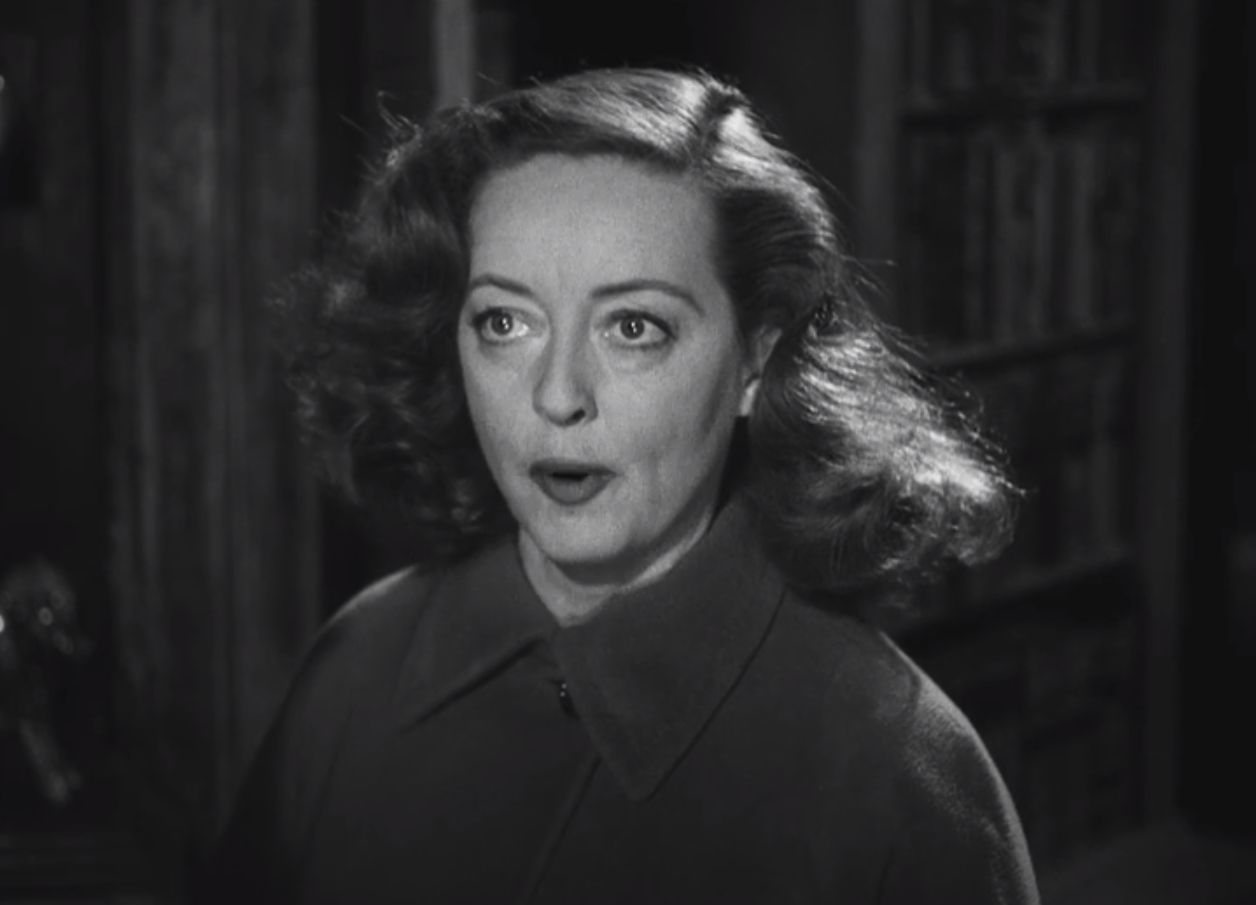
Bette Davis
ANOTHER MAN'S POISON (1951). Director: Irving Rapper.

Janet (Bette Davis) is a well-known English author of mysteries who finds herself with an unwelcome guest at her country estate. George Bates (Gary Merrill of Mysterious Island) tells her that he and her husband pulled off a bank robbery during which a guard was shot. George wants to see hubby immediately -- but there's a problem: he's lying dead, murdered, in the study. George helps Janet get rid of the body but he decides to impersonate her husband for both of their sakes, a decision that leaves Janet most uncomfortable. For one thing Janet is madly in love -- or lust -- with Larry (Anthony Steel), the very handsome fiance of her secretary, Chris (Barbara Murray of Operation Bullshine). And then there's the nosy next-door veterinarian, Dr. Henderson (Emlyn Williams), who is simply asking way too many questions ...

"You Killed Fury!?
Bette Davis -- although she finally has a chance to do a full-on British accent after doing a half-assed one for most of her life -- is not the best casting choice for Another Man's Poison. Fortunately, towards the end of the movie she is afforded some chances for her intense and formidable acting pyrotechnics when she learns that her beloved horse, Fury, is dead.  "You killed Fury!" she screeches at George before launching into a great speech in which she fervently expresses that the horse meant much more to her than any human being possibly could. I suppose she can't be faulted for being stagy when the movie is based on a stage play, even if there are attempts to open it up and get her away from the basic house set. But for much of the movie's length Davis seems to be doing an impression of a drag queen doing an impression of Bette Davis!

Gary Merrill
But Davis is magnificent compared to her then-husband Gary Merrill. Merrill had certainly given some fine performances in other movies, but in Another Man's Poison he seems like a college student merely reciting lines with little emotion or nuance and hoping that he's making a decent impression. True, his character is never well-delineated, which gives him a handicap right from the start, but even so he is utterly mediocre. The only problem with Emlyn Williams is that his character, the Nosy Parker who lives down the road, is so irritating. It's also hard to believe that George would even humor the man. He'd be more likely to tell him to screw off.

Anthony Steel
Barbara Murray gives a pleasant enough performance as the secretary who fears that she just can't compete with her boss, who has decided that she wants her Larry and that's that. As Larry, the very handsome Anthony Steel provides hunk appeal, but his acting is nothing to rave about. As with Merrill, his character is very under-written. In any case, his on-again/off-again dalliances with his fiancee's employer make Larry seem like a sleazeball. Reginald Beckwith and Edna Morris are notable in smaller roles as a villager who pursues George for an appearance with a local club, and the family housekeeper. Another Man's Poison is modestly entertaining, but despite a somewhat ironic and amusing (if not unexpected) wind-up, it's too contrived and even silly to be that memorable. Anthony Steel was one of the husbands of Anita Ekberg. Irving Rapper also directed Davis in two much more memorable movies, Now, Voyager and Deception.

Verdict: Latter-day Davis in a mediocre vehicle that is not without some points of interest. **3/4. 

COME BACK TO THE 5 AND DIME, JIMMY DEAN, JIMMY DEAN

Cher
COME BACK TO THE 5 AND DIME, JIMMY DEAN, JIMMY DEAN (1982). Director: Robert Altman.

In a small town in Texas twenty years have gone by since the last meeting of a James Dean fan club in 1955, the year of Dean's death. Incredibly, several of these "disciples" come back to the Woolworth "5 and Dime" store, where the members used to congregate, for a 20th anniversary reunion. Two of the members -- big-boobed Sissy (Cher) and decidedly weird Mona (Sandy Dennis), who supposedly has a son fathered by Dean -- never left town and still work for Juanita (Sudie Bond) at the store. Then there's big brassy Stella Mae (Kathy Bates of Misery), sweetly naive Edna Louise (Marta Heflin), and a newcomer, Joanne (Karen Black), who knows everyone and claims she was once a member of the group -- but no one remembers her. As the day progresses, the ladies share revelations and bear their souls.

Kathy Bates with Karen Black in the background
Originally presented on stage with (mostly) the same cast, and with Altman as director, the play had its fans -- primarily due to the presence of Cher and perhaps its camp/transgender factor -- but was not a big hit with the critics, finding it awfully contrived and sitcom-like, which it is. As with the stage production, Altman decided to use the same actors playing themselves twenty years earlier in sometimes poorly delineated flashbacks, and it not only doesn't work but just confuses the viewer. The frequent jumps in time eventually become tiresome. But while the play and movie, both written by Ed Graczyk, have some interesting elements to them, the story ultimately comes off more like a stunt than serious theater. The film never quite makes up its mind if it's a drama or a black comedy. The dialogue doesn't come naturally from the situations, but seems forced just so each character can have her big moment

Settling scores: Karen Black
Then there's the acting, which is frequently over-rehearsed (understandably) and over-emphatic. Cher was originally supposed to play a transsexual character, but decided she'd rather play Sissy (ironic that her daughter became a trans man years later). She is okay, but it's not much of a stretch from what she used to do in sketches on The Sonny and Cher Show. Sandy Dennis is somewhat good as that ultimate loser, Mona, but she's a positive riot of pauses, tics, nervousness, and grotesque facial expressions. Mona manages to get over her own mortification rather quickly. Karen Black [Invaders from Mars] comes off the best as Joanne, who has come to town to settle a few scores, and she has quite a few bravura moments. Kathy Bates is also quite good, as are Sudie Bond, Marta Helfin and Mark Patton [A Nightmare on Elm Street Part 2: Freddy's Revenge] as Joe, the one male member of the Disciples, whose character manages to run virtually the entire LGBT gamut before the play is over.

I believe the play is meant to be liberal and kind-hearted, and it can be appreciated on that level, but I think some of the same elements could have been reworked into something with a stronger premise and more interesting situations and characters.

Verdict: It is not true that a remake with Caitlyn Jenner is now in pre-production. **1/2. 

STARLIFT

Ruth Roman and Dick Wesson
STARLIFT (1951). Director: Roy Del Ruth.

Movie star Nell Wayne (Janice Rule of The Swimmer) gets the notion that Air Force Corporal Rick Williams (Ron  Hagerthy) and his buddy Sgt. Mike Nolan (Dick Wesson) are being shipped overseas for combat in Korea when they are merely picking up wounded soldiers and piloting them home. Nell feels betrayed when she learns the truth, but the press come to the conclusion that she and Rick are engaged and the two are forced to go along with the deception. Meanwhile Nell and other celebrities take part in "Operation: Starlift," which brings movie stars and others by plane to visit wounded servicemen.

Ron Hagerthy and Janice Rule
This is the slender plot for another all-star war movie that starts out as a Doris Day film -- Day plays herself and does a couple of numbers -- but then dismisses her in favor of Ruth Roman (also playing herself) and assorted guest-stars. These include everyone from Louella Parsons to Peter Marshall to Patrice Wymore. Jane Wyman warbles a pleasant tune and is acceptable. Gene Nelson dancers with his customary flair and aptitude in a ballet with Rule. Phil Harris [The Patsy] shows up and does little but repulse everyone with his hideous smile. He also appears in a singing sketch with Gary Cooper playing a Texas Ranger. James Cagney puts in a brief appearance and there is a sketch about a chef that you can miss.

Virginia Mayo does her dance
Starlift does have a couple of highlights, however. There's Gordon MacRae splendidly singing "Good Green Acres of Home" backed by a military chorus. And Virginia Mayo [The Kid from Brooklyn] does a kind of Polynesian dance number and proves herself to be quite skilled in the terpsichorean arts. Ruth Roman is on screen almost as long as Janice Rule but she apparently can neither sing nor dance. As for the two Air Force men, Dick Wesson was generally comedy relief in a few movies and TV shows. After this film, most of Ron  Hagerthy's many credits were on television. Others in the cast include Richard Webb as Colonel Callan and William Hudson as a soldier.

Verdict: Some memorable moments, but generally not one of the better "all-star" war films. **1/2. 

THE EXECUTION

Loretta Swit, Sandy Dennis, Valerie Harper
THE EXECUTION (1985 telefilm). Director: Paul Wendkos.

In San Diego in 1970, several women who were survivors of the Birkenau concentration camp and who somehow met up with each other years later, get together each week to play mah jongg. Elsa (Sandy Dennis) spots a restaurant owner named Walter Grauman (Rip Torn of Sweet Bird of Youth) on a TV ad and is afraid that he may actually be Wilheim Gehbert, who raped and brutalized the women at Birkenau and was responsible for several thousand deaths. Marysia (Loretta Swit) agrees to find out if Walter has a certain scar on his back, and winds up sleeping with him when he doesn't. However, she is in for a rude awakening the next morning. The ladies decide that one of them will secretly murder Grauman, but things get complicated when an innocent man is arrested for the crime ...

Rip Torn with Loretta Swit
The Execution has an excellent premise but in its second half it becomes overly complicated, ignores points of law, and is almost sunk by its contrivances; even a final twist doesn't quite make up for the script deficiencies.  In fact, it becomes ridiculous at times. Loretta Swit, however, gives an outstanding performance, giving 150% to the role. The other ladies -- including Valerie Harper, Barbara Barrie and Jessica Walter  -- are good but a notch below Swit. Dennis indulges in her usual quirky all-tics-and-mannerisms acting style and is actually not that compelling. Of the male actors, Torn gives a good if second-rate performance, although Alan Miller and Peter White are fine as two of the spouses. Paul Wendkos also directed theatrical films such as The Burglar.

Verdict: No one expected Judgment at Nuremberg, but a film with this premise should have been much, much, more powerful -- Swit can not be faulted, however. **3/4. 

EMERGENCY HOSPITAL

John Archer and Margaret Lindsay
EMERGENCY HOSPITAL (1956). Director: Lee Sholem.

Dr. Janet Carey (Margaret Lindsay of Club Havana) is a very busy doctor at a state-run hospital during the night shift. Ben Caldwell (Byron Palmer of Ma and Pa Kettle at Waikiki) is a race car driver and playboy who wants Janet to give it all up and marry him, while Dr. Herb Ellis (John Archer) seems to be carrying a torch for Janet as well. Sgt. Paul Arnold (Walter Reed) is the police liaison with the hospital and he is on hand when his son, Jimmy (James Noah), is brought in after an accident and nearly winds up in a nasty incident between father and son. There are other assorted crises and patients during one long night.

James Noah and Walter Reed
Emergency Hospital looks like an especially gritty TV production, and in truth it's the kind of stuff that later wound up in many episodes of assorted medical shows -- life, death, accidents, diseases, assorted mini-dramas with some life lessons passed out by the staff. Lindsay is puffy-looking but gives a good performance, and Reed has some very good moments in the sequences with his son. Archer makes a positive impression as a decent guy who may just have to take a back seat to the flashier Caldwell, who is well-played by Palmer. Rita Johnson [Forty Little Mothers] scores as head nurse Norma Mullen.

The large cast also includes Rhodes Reason and William Boyett as traffic cops; Vera Francis as a lovely African-American nurse also named Vera; and Mary Carver, Maxine Gates, and Jan Englund as semi-hysterical patients.

Verdict: Too bad Ben Casey and Dr. Kildare don't put in an appearance. **3/4. 

Thursday, August 6, 2020

HOME BEFORE DARK

Jean Simmons
HOME BEFORE DARK (1958). Director: Mervyn LeRoy.

Charlotte Bronn (Jean Simmons of Dominique) returns home after a year in a mental institution due to a nervous breakdown. Married to the cold fish Professor Arnold Bronn (Dan O'Herlihy), Charlotte had imagined that her husband was really in love with her stepsister, Joan (Rhonda Fleming of The Nude Bomb), and allowed her alleged delusions to get the better of her. When the Bronns got married Arnold moved into Charlotte's house, and the couple lived with Joan and Charlotte's stepmother, Inez (Mabel Albertson). Bad idea!

Simmons with Efrem Zimbalist, Jr. 
Trying to adjust to her new state of freedom, Charlotte finds her husband as cold as ever, and she is somewhat drawn to their boarder, Jacob Diamond (Efrem Zimbalist Jr.), a Jew who was championed  by Arnold against anti-Semitic colleagues until it no longer suited his purposes. Jacob has feelings for Charlotte, as does her old boyfriend, Hamilton  (Stephen Dunne). Their attentions, however, do not prevent additional feelings of paranoia for Charlotte over a possible relationship between Arnold and Joan. Although Home Before Dark is not a thriller, it does work up some suspense over whether or not there is anything between husband and stepsister-in-law before the final revelations.

Rhonda Fleming, Dan O'Herlihy, Mabel Albertson
Home Before Dark is decidedly overlong at nearly two and a half hours. One could argue that there's really not enough plot for such a lengthy motion picture, but despite some tedious moments the picture manages to be absorbing, in no small part to a superb performance by Jean Simmons. There is a particularly good scene worth waiting for in which Charlotte shows up in a Boston restaurant trying to look like a grotesque imitation of her stepsister. Dan O'Herlihy is fine in the thankless role of a seemingly passionless husband; Dunne scores as the cast-off boyfriend from years ago; Fleming and Albertson are memorable as Charlotte's other family members; and even Zimbalist is okay as Jacob, although it's a wonder why this rather sexless and bland actor was constantly cast as a romantic figure in movie after movie. In smaller roles one can find Joan Weldon [Them], Eleanor Audley, and Lucy's mother Kathryn Card in the peppery role of the housekeeper Mattie. Oddly, the score for the film consists of snippets from various previous films by a variety of composers. Photographed by Joseph F. Biroc.

Verdict: Love-starved wives are always entertaining in these kind of movies, but this is on a somewhat higher level than a soap opera. ***.

23 PACES TO BAKER STREET

Van Johnson as the disheartened playwright
23 PACES TO BAKER STREET (1956). Director: Henry Hathaway.

Phillip Hannon (Van Johnson) is a playwright who has temporarily relocated to London where the British production of his latest show is a hit. Phillip lost his eyesight in an unspecified accident a few years before and remains bitter and unsatisfied with life. His former fiancee, Jean (Vera Miles of Tarzan's Hidden Jungle), comes to see him -- it was not her idea to end the engagement -- but he still seems determined to keep distance between them. He has a likable butler named Bob (Cecil Parker of The Ladykillers) who looks after him. One evening Phillip overhears a conversation between two people -- a man named Evans and a woman named Murch who wears a distinctive perfume -- and realizes there is a strong possibility she is being forced into some kind of criminal mischief. With the help of Jean and Bob, Phillip goes about trying to find this Miss Murch so he can help her and prevent the possible child kidnapping or other skulduggery that might take place. But while he's looking for Murch, Evans is looking for him ...

Johnson with Vera Miles
23 Paces to Baker Street comes off like a combination of Rear Window and The Man Who Knew Too Much, although it lacks the Master's touch, Henry Hathaway not being in the same league as Hitchcock. In spite of that, 23 Paces is a memorable suspense-thriller, with a nifty scene when Phillip is caught on a crumbling roof in a diabolical trap, and an exciting climax when he squares off with the mastermind in his apartment. The performances can not be faulted: Johnson is square-on in his portrayal of the disheartened and embittered blind man who finally allows love in the door, Vera Miles is warm and sympathetic as the woman who adores him, Parker makes a likable helpmate, and Estelle Winwood is winning as a barkeep who also tries to help Phillip in his quest. There are also notable turns from Patricia Laffan as a nurse and Martin Benson [The Cosmic Monsters] as a man who runs an agency for same, among others.

Cinematography by Milton R.. Krasner
The movie greatly benefits from an evocative score by Leigh Harline and impressive CinemaScope photography by Milton R. Krasner; his sweeping shots of London are especially beautiful.  This was hardly the first depiction of a bitter blind man, nor is Phillip the first blind "detective." Edward Arnold played a blind private eye (much more accepting of his impairment) in two films. Years later James Franciscus starred as a blind insurance investigator on the TV series Longstreet, which lasted one season. An Italian giallo film named The Crimes of the Black Cat has a lot of plot similarities to 23 Paces, also featuring a blind man who overhears a plot in a bar, a rooftop trap, and the like. 23 Paces is far superior to Wait Until Dark, which had a blind heroine in a tough spot at the climax.

Verdict: Highly watchable suspense film with some excellent performances. ***. 

TONIGHT'S THE NIGHT

Highly punchable: David Niven
TONIGHT'S THE NIGHT (aka Happy Ever After/1954). Director: Mario Zampi.

"We could be very happy in an unhappy sort of way." -- Jasper.

Aged General O'Leary of Rathbonie Ireland is determined to make a dangerous jump on his horse as he does every year, but this time he has an accident and eventually dies. His estate goes to relative Jasper O'Leary (David Niven of Death on the Nile), who sets the entire town against himself by refusing  to honor his uncle's death bed bequests and the old man's forgiving of certain debts. Meanwhile the recently widowed Serena (Yvonne De Carlo), who had hoped to snare handsome former fiance Dr. Michael Flynn (Robert Urquhart of The Curse of Frankenstein) against her sister Kathy's (Noelle Middleton) wishes, deides that it might be better to set her cap for the obviously interested new Squire, Jasper. But now all of Jasper's many enemies decide the only thing to do is to assassinate Jasper ...

Barry Fitzgerald and David Niven
Black comedies can work --witness the wonderful The Wrong Box -- but Tonight's the Night is an appalling concoction and only has three solid laughs throughout its ninety minutes running time. For one thing the two lead characters, the  heartless priss Jasper and the gold-digging Serena, are too loathsome to be amusing. Character flaws can make people funny, but these two, Jasper in particular, are utterly worthless individuals. One feels sympathy for the wronged townspeople -- Jasper wants to evict one elderly man out of the home he's lived in for decades -- until they start indulging in IRA tactics including bombs and the like. One plan to kill Jasper has to do with tying a rope across the road in the hopes that Jasper will be beheaded when he drives by in his motorcar! Such lovely people!

Robert Urquhart and Yvonne De Carlo
Much of the second half of the film is taken up with the town folks' bumbling attempts at murder, which makes them resemble especially malevolent variations on the Bowery Boys but with even less laughs. Niven, although playing someone whose face you want to punch almost from the first, gives a good performance (nobody could be more obnoxious than Niven when playing a detestable prig); De Carlo is snappy and has an okay Irish brogue; the supporting cast does its best; and Barry Fitzgerald nearly steals the picture -- not that he would necessarily want it -- in his portrayal of Thady, the tippling butler. Niven and De Carlo don't have that much chemistry, and the characters of Kathy and the doctor are never sufficiently developed. A highlight of the film is when a talented Irish tenor sings the lovely ballad "My Heart is Irish." Mario Zampi also directed The Naked Truth, another dark comedy that was much, much better than this..

Verdict: Essentially unfunny and atrocious but for Fitzgerald and the tenor. *1/2. 

LADY IN A CAGE

Trapped but determined: Olivia de Havilland
LADY IN A CAGE (1964). Director: Walter Grauman.

Cornelia Hilyard (Olivia de Havilland of Not as a Stranger) is a determined lady who has apparently been rather stifling towards her probably gay son, Malcolm (William Swan).  Malcolm goes off for a few days, leaving a letter basically telling his "darling" to let him live his own life, while Cornelia -- who has broken a hip -- gets trapped in her home elevator when there is a power failure. Her attempts to draw attention with an alarm system fail, and in short order she is "visited" by everyone from a wino (Jeff Corey of Bright Leaf) and a sluttish friend of his named Sade (Ann Sothern of A Letter to Three Wives) to three young mentally-defective "troglodytes" -- Randall (James Caan), Essie (Rafael Campos) and Elaine (Jennifer Billinsley) -- all of whom are looking for booty. Then Randall gets the idea that the wino, Sade, and Cornelia should all be done away with ...

Billingsley, Caan and Campos
Lady in a Cage is a decidedly repellent film on many levels, but it is also well-directed and well-made, and has many effective and suspenseful moments. The acting is a little more problematic, with virtually everyone seeming stagy and obvious at times as if they thought they were in a play. In spite of this, de Havilland is generally good, and Corey and Sothern are mostly on-target as well. Caan and Billingsley, who were "introduced" in this film (both had previous TV credits), are less impressive, as is Campos as the decidedly weird Essie, as probably none of them had a clue as to what their characters were all about. William Swan, who is fine, mostly had television credits.

Slattern and wino: Sothern and Corey
This pre-Stonewall film tries to suggest that this dominant mother figure "turned" her son into a homosexual, a dated notion to be certain. Arguing that Malcolm is not gay, Cornelia mentions all of his "charming women friends," to which Essie -- who may have sexual identity issues himself -- responds "'women' friends he met in public shower rooms!" When this film played on television years ago, that line, among others, was excised, as was the shot of a certain individual's head after being crushed under the wheels of a motor car.

Verdict: Whatever you think of the movie it gets points for being unpredictable. ***. 

ROUND UP OF NEW AND RECENT FILMS PART SEVEN

The Joker meets Boy Batman
ROUND UP OF NEW AND RECENT FILMS PART SEVEN.

Joker (2019). Not a "super-hero" film as such, Joker looks at the life of Arthur Fleck (Joaquin Phoenix) and shows how he transformed into Batman's arch-enemy, the clown-faced, maniacal Joker. Essentially this is a slow if absorbing study of a lonely and mentally-unstable outsider with show biz aspirations, a horrible mother, and a childhood full of abuse. Batman is still a child at the time this takes place, and Arthur wrongly imagines that he is Bruce Wayne's half-brother. Made fun of by talk show host and comic Murray Franklin (Robert De Niro), he winds up a guest on the show with predictable results. Arthur is presented as an angry victim with some legitimate grievances, but his being turned into a champion of the poor and downtrodden is utterly ludicrous and just doesn't work. Very well-acted by Phoenix and De Niro, Joker is by no means a bad movie -- although it's not always well-paced -- but Best Picture ...? No. Directed by Todd Phillips, this has an interesting score by Hildur Guanodottir. Unless you're a total geek, you'll probably forget about the movie five minutes after you see it. **3/4.

Downton Abbey (2019) revisits the Crawley family from the very popular TV series and works effectively as an especially long episode. The King and Queen are going to spend the night at the estate, and everyone is thrown into a tizzy, especially the servants, who are told that the King's staff will take over and that even the cook, Mrs. Patmore (Lesley Nicol), will have to temporarily turn in her apron. They aren't going to take that lying down! Meanwhile handsome butler Barrow (Robert James-Collier) is also temporarily shunted aside by retired Carson (Jim Carter), but Barrow finds a like-soul after he's caught in a raid on a gay bar. (Barrow is a much more sympathetic character in this than when he was first introduced.) Violet (Maggie Smith) is appalled that a relative is going to leave her fortune to a maid -- goodness! -- instead of Violet's son, but discovers the reason why. And a sneak thief is stealing various items from the household. One could quibble about certain aspects of the story, but for the most part Downton Abbey is delightful and beautifully acted, with equal parts charm, class and sentiment. Directed by Michael Engler. ***1/4. 

Thursday, July 23, 2020

THE BIG SHOW-OFF

Dale Evans and Arthur Lake
THE BIG SHOW-OFF (1945). Director: Howard Bretherton.

Sandy Elliott (Arthur Lake) is a piano accompanist for the nightclub singer June Mayfield (Dale Evans). Their boss, Joe Bagley (Lionel Stander of Tahiti Honey), knows that Sandy is secretly carrying a torch for June. While Joe likes Sandy, he can't stand his obnoxious emcee, Wally (George Meeker of Tarzan's Revenge), who is practically affianced to June. Joe tries to encourage Sandy to tell June how he feels, and to become the kind of man that June might fall for. Somehow it develops that June is convinced that Sandy is the real identity of the masked wrestler known as "the Devil." June is amazed that the mouse is really a lion, but now she's afraid that he might be too brutal for her taste. Sandy wants to give up his alleged career as the Devil, but the real Devil might have something to say about that. What's a boy to do?

Lionel Stander with Lake
The Big Show-Off might sound like a cute picture, and it is, but it's still distinctly minor although it gets lots of help from the likable Lake, best-known as Dagwood Bumstead of the Blondie film series. Lionel Stander is less off-putting than usual, and Dale Evans gets to warble the memorable ditty "There's Only One You." The film throws in some bizarre characters like the Devil (Paul Hurst of Borrowed Wives) and his wrestling cousin and chief opponent, Boris the Bulgar (Sammy Stein). Marjorie Manners plays Mitzi, one of the show girls and June's gal pal. I could swear I spotted a young Nestor Paiva but he's not in the cast list. Anyway, The Big Show-Off is an amiable comedy with a pleasant lead performance. 

Verdict: Lake takes some time off from the Blondie series. **1/2. 

THE BOY FROM INDIANA

Lon McCallister
THE BOY FROM INDIANA (1950). Director: John Rawlins.

Lon Decker (Lon McCallister) is a young man without a family who runs into an old reprobate named MacDougal (George Cleveland of Haunted House). The old scoundrel convinces Lon to become a jockey and ride MacDougal's horse, Jo Jo, in a race. Lon has no idea that MacDougal drugs horses and the like, nor that Jo Jo is actually a famous horse named Texas Dandy; eventually the two men develop a father-son relationship. Lon meets Betty (Lois Richards) who argues that quarter horses can become winning race horses just as much as thoroughbreds -- maybe Jo Jo can compete against the big boys?  Trouble ensues when Jo Jo is gored by a berserk bull (in an exciting and cinematic sequence) and also when Lon realizes how utterly larcenous his "Pa" can be. Nevertheless, Lon is determined to race Jo Jo, providing the horse's injuries can heal in time.

Lon McCallister and Lois Riuchards
The Boy from Indiana benefits from good performances from the charming, boyish McCallister and  a peppery Cleveland, with sweet Lois Richards and an equally peppery Billie Burke [Dinner at Eight] -- as MacDougal's nemesis Zelda Bagley -- thrown in for good measure. McCallister was a handsome and likable performer who appeared in a lot of "outdoors" movies and family films. Lois Butler had only a few credits, and appeared in just three films. On the other hand, Cleveland had nearly 200 credits over a very, very long career. The Boy from Indiana has some limited charm and several likable players. John Rawlins also directed Young Fugitives as well as a number of serials.

Verdict: Amiable movie for horse lovers and racing enthusiasts. **1/2.