Lively, entertaining reviews of, and essays on, old and newer films and everything relating to them, written by professional author William Schoell.
Showing posts with label Susannah York. Show all posts

Thursday, January 5, 2023

X, Y AND ZEE

X, Y AND ZEE (aka Zee and Co./1972). Director: Brian G. Hutton. 

"I got expelled at school because I fell in love with one of the nuns." -- Stella. 

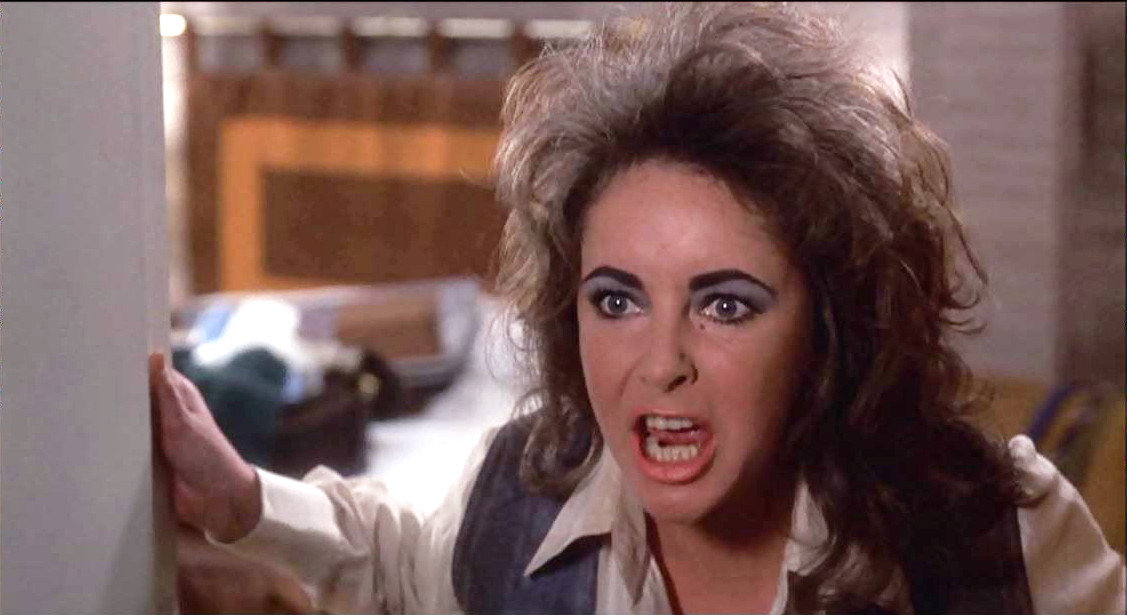
Zee (Elizabeth Taylor) and Robert (Michael Caine of Dressed to Kill) have a toxic marriage that seems to run on ennui and liquor. At a party Robert meets the widow Stella (Susannah York), and while he hopes for just another cheap affair winds up supposedly falling in love with her. Zee seems to have a casual and world-weary reaction to this, but then comes to see Stella and her two small boys -- she and Robert can't have children -- as a threat. Robert makes up his mind to move out and have a life with Stella. What's a wife to do?  Wondering exactly how old Stella might have been when she kissed a nun and got expelled at school, Zee pays a call on her when Robert is out ... 

Frankly X,Y and Zee is over just when it starts to get interesting. For most of its length, it is a fairly dreary marital drama -- wife vs. mistress with a cad caught in the middle -- that has good performances and some good dialogue along with two-dimensional characters. Unlike the "bisexual" comedy Score, which came out the following year, X, Y and Zee turns coy and basically cops out at the end. Made only three years after Stonewall X, Y and Zee has a fairly negative attitude towards homosexuality, with stereotypical gay characters being referred to as "fags" (even right in front of them), so it's hard to think of it as ahead of its time (now if the trio had turned into a "thrupple!"). One also has to remember that Susannah York had already starred in The Killing of Sister George, which was much more explicit on lesbian matters and was released four years earlier.

Liz on the rampage!
Another problem with the movie is that none of the characters are likable. While we can imagine how she became that way, Zee is overbearing and superficial. Stella is, in a word, stupid to even begin a relationship with a man like Robert, who is -- in another word -- a pig. The movie doesn't so much as explore sexual options as exploit them, although many might find the ending amusing. Margaret Leighton (of The Winslow Boy) provides a little bit of fun as an intoxicated party host. Taylor and director Hutton also worked together on Night Watch

Verdict: Who's Afraid of Virginia Mayo? Heads in an interesting direction, and then completely muffs it. **. 

Thursday, December 10, 2020

LOOPHOLE

Albert Finney and Martin Sheen

LOOPHOLE (1981). Director: John Quested.                                                  

Stephen Booker (Martin Sheen), an American architect living in England with his wife (Susannah York) and children, discovers that a certain deal didn't go through and he has lost his job. He also discovers that potential employers find him over-qualified, and there are no openings anywhere. Meanwhile, his and his wife's debts are mounting, the kids are in expensive private schools, bank loans are being called in, and things look pretty dire. Mike Daniels (Albert Finney) does offer Booker a job doing work on a building that he owns, but it turns out that Daniels doesn't really own the building and the job actually has nothing to do with floor extensions and everything to do with robbing the safety deposit vault in a bank. Booker can use his expertise to get the men through the rat-infested sewers below the bank and up to where the booty waits. At first Booker is appalled by Daniel's proposal, but as his debts mount up he decides to join in ... 


Robert Morley
Loophole
 is one of those caper films in which the robbers seem like friendly, nice guys who would never think of shooting anyone or betraying one another, and even Booker -- who was pulled into this scheme in a very duplicitous way and should be furious -- seems to be enjoying their company. The possibility that Booker may have planned or even achieved revenge on all of them is only intimated, and many viewers felt cheated by the somewhat abrupt and ambiguous and even illogical ending. A climax in which the tunnels are flooded as the thieves try to escape is well-handled, but it's hard to believe there would be such raging torrents in the sewers after such a short period of heavy rain. The film holds the attention but the characters are not developed that well. The very American Sheen and very British Finney actually work together very well, and although her part is small Susannah York has some good moments as Mrs. Booker. Robert Morley has only two brief scenes as Booker's anxious banker, but his presence is always welcome. Jonathan Pryce also scores as one of the robbers. 

Verdict: Rats, sewers and floods are always fun. **1/2. 

Thursday, September 3, 2020

CONDUCT UNBECOMING

Michael York
CONDUCT UNBECOMING (1975). Director: Michael Anderson.

In Colonial India, two young British men whose fathers were also in the military, arrive to begin a three month probationary period in their distinguished regiment. Arthur Drake (Michael York) is anxious to make good while blase and cynical Edward Millington (James Faulkner) hopes to get thrown out as soon as possible. But there may be more serious consequences when Millington is accused of assaulting Marjorie Scarlett (Susannah York), widow of a legendary hero, and Drake is tapped to defend him in a special private hearing. As the trial progresses, many disturbing revelations come to light ...

James Faulkner and Susannah York
Although based on a stage play, Conduct Unbecoming is not stage-bound or overly talky but is suspenseful, intriguing, and holds the attention throughout. Part of this is due to a compelling story line, and part to some excellent performances.  Michael York and Faulkner are perfection, and Georgia-born Stacy Keach does a dead-on English accent and is absolutely splendid as Captain Harper, who oversees the private hearing. Christopher Plummer, Michael Culver [Goodbye, Mr. Chips], and Richard Attenborough offer riveting portraits of various officers, and Trevor Howard makes a strong and convincing Colonel Strang. Persis Khambatta of Star Trek: The Motion Picture appears briefly as a woman who may have been another victim.

Stacy Keach and Michael York
Susannah York [The Killing of Sister George] is not quite up to the level of the gentlemen, unfortunately, and a stronger actress should have been chosen. York just does her scenes as written in the script but never adds any nuances or layers -- she doesn't make the most of her one big climactic outburst; she has given better performances elsewhere. One could also argue that the inexperienced Drake manages to arrive at certain conclusions as if he were a veritable Perry Mason! -- undoubtedly he has a legal career in front of him. An interesting touch is the role reversal between the two young soldiers, as well as the examination of how keeping one's "honor" is not always so honorable. Director Michael Anderson directed the much less successful Doc Savage the same year and worked with Michael York again the following year on Logan's Run.  By the way, Michael York and Susannah York were not related and were never married to one another.

Verdict: Absorbing, very well-acted courtroom-military drama with some interesting twists. ***. 

Saturday, June 29, 2013

THE KILLING OF SISTER GEORGE

THE KILLING OF SISTER GEORGE (1968). Director: Robert Aldrich.

"You don't remotely believe you're any young girl's dream of bliss?!" -- Mercy

Alice: "Not all girls are bloody raging lesbians.

June: "That's a misfortune I'm very well aware of."

In 1964 Frank Marcus' play "The Killing of Sister George" reportedly presented three main characters who people presumed were lesbians, even if it wasn't made explicit. Robert Aldrich's film version of the play makes it very explicit, especially in a once-censored sex scene between two of the principals. June Buckridge (Beryl Reid) plays a nurse character named "Sister George" on a very popular TV soap opera entitled "Applehurst." June has lived for several years with a younger woman named Alice (Susannah York), and the two have a loving, affectionate, if not very passionate, relationship. June is very jealous of Alice, who is much more attractive, and imagines her having mythical affairs with men. There is a touch of sadomasochism in the relationship as well [delineated in one ill-advised sequence in which an angry June insists that Alice eat her cigar butt, which the latter turns into a sensual experience to annoy June]. When June discovers the possibility that her beloved character on the show might be killed off, she is frightened and furious and, as usual, takes it out on Alice. Then along comes an initially kindly TV producer named Mercy (Coral Browne), who is appalled at the way June treats Alice but also finds the younger woman quite attractive ... To take this black comedy as any kind of serious look at the lives of lesbians would be a big mistake -- apparently the play was never intended to be seen that way -- but on its own terms it's quite entertaining, has highly interesting characters, and is often very funny. The three leads are all splendid, with Reid giving an especially terrific performance as the fascinating, touchy, oddly likable June, although -- rightly or wrongly -- she resists making her overly sympathetic. One mistake Lukas Heller made in adapting the play [considering that the movie makes their sexual orientation more obvious] is that we never learn how these three women feel about being homosexual in the more oppressive sixties. It is also barely suggested that June could probably get the sack merely for being gay. On the other hand, there is no "Boys in the Band"-type angst about their sexuality, either, which is a definite plus. A bit with a drunken June accidentally getting into a cab with two nuns and supposedly "molesting" them [or at least trying to see what they've got under their robes] is funny but problematic. Another problem area is the aforementioned, protracted sex scene between Alice and Mercy, which begins with the latter coming on to the former while horror movie-type music plays in the background [as if composer Gerald Fried thought what the two women were doing was somehow "evil"]. The music stops once the sex starts, and things get comparatively graphic for the period. The supporting cast includes Cyril Delevanti as an elderly colleague of June's on the show, and Patricia Medina [The Beast of Hollow Mountain] as a prostitute next door; both are fine.

There are times when you may not quite know what to make of Sister George, and it often seems like several different movies in one. Still, as personified by Reid, June Buckridge is a very memorable, three-dimensional [if somewhat exaggerated] character with humanity and imperfections intact. Sadly, the film was probably seen as just a freak show by some [especially given the sexuality of the characters] and one wonders if that was why Aldrich was tapped to direct, because of his work on other "freak" shows such as What Ever Happened to Baby Jane? [Bette Davis herself was considered for the role of June, but thank goodness Reid, who played the role on the stage, got the part.] The ad campaign's tag line was "The story of three consenting adults in the privacy of their own home," which seems a little disingenuous considering the movie doesn't really delve into the true lives of gay women.

Verdict: Certainly arresting if nothing else, but take with a grain of salt. ***.

Thursday, November 17, 2011

SANDS OF THE KALAHARI

Stuart Whitman vs. a ticked off baboon


SANDS OF THE KALAHARI (1965). Director: Cy Endfield.

This was one of two heavily promoted desert/plane crash movies released in 1965, the other being The Flight of the Phoenix. In this a group of travelers, told their regular flight has been delayed, decide to continue on in a small charter plane. Unfortunately said plane runs into a swarm of locusts which clog the engines and cause the craft to crash in the middle of the Kalahari desert. Unlike Phoenix, this picture includes a pretty blond (Susannah York) for some of the men to fight over. Stuart Whitman plays a nasty character who forces one older man (Theodore Bikel) to march through the desert at gun point to try to get help after the pilot, who set off on a similar journey, doesn't come back. [What happens to the pilot is quite ironic.] Eventually a battle of wills develops between Whitman and the remaining passengers, especially Mike Bain (Stanley Baker), who rightly sees the man as the dangerous nut that he is. A miscast Whitman is only adequate in the role of the basically sociopathic O'Brien, and at times York doesn't seem to know what to make of her helpless and unsympathetic character. Baker, Bikel, and Harry Andrews as a German passenger are all excellent. Although the advertisements for the film played up the presence of dangerous baboons in the area, these animals really haven't much to do until the very end of the picture. [Killer baboons later showed up in In the Shadow of Kilimanjaro.]

Verdict: Man vs. man with nature waiting in the wings. ***.

Thursday, September 8, 2011

A SUMMER STORY

A SUMMER STORY (1988). Director: Piers Haggard.

Just before the war two young men are hiking in the area of Devon and Somerset (where A Summer Story was filmed), when the nicer of the two, Frank Ashton (James Wilby), badly sprains his ankle. The two men find a farm that lets rooms, but when his friend gets bored and leaves, Frank stays on and on and on all summer -- drifting into an intense love affair with orphaned Megan (Imogene Stubbs) and promising her his undying devotion and indeed the world. Unfortunately, things don't quite work out that way in this deeply affecting, beautifully done picture that delineates the tragic aspects of romance. A Summer Story also shows in unflinching terms that even supposedly "nice" people can be unspeakably weak and cruel. This is based on the story "The Apple Tree" by John Galsworthy and has been very well dramatized by Penelope Mortimer. Georges Delerue has crafted a memorable score and the countryside is expertly photographed by Kenneth McMillan. Wilby, Stubbs, Jerome Flynn as Joe (who also loves Megan), Susannah York, and the rest of the cast are excellent. Director Haggard, who has done mostly television work, also directed the wretched Blood on Satan's Claw, but is clearly much more inspired by the material this time around. A Summer Story is a decided tearjerker but by no means is it a soap opera. Beautifully done on all levels.

Verdict: This has been known to make grown men blubber. ****.