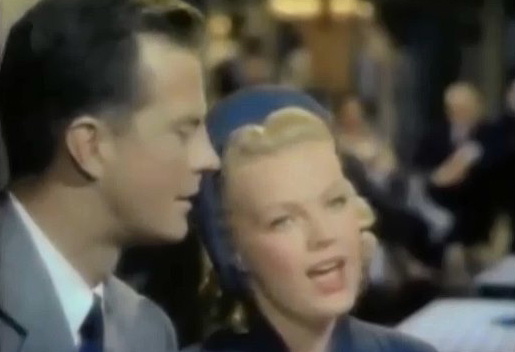
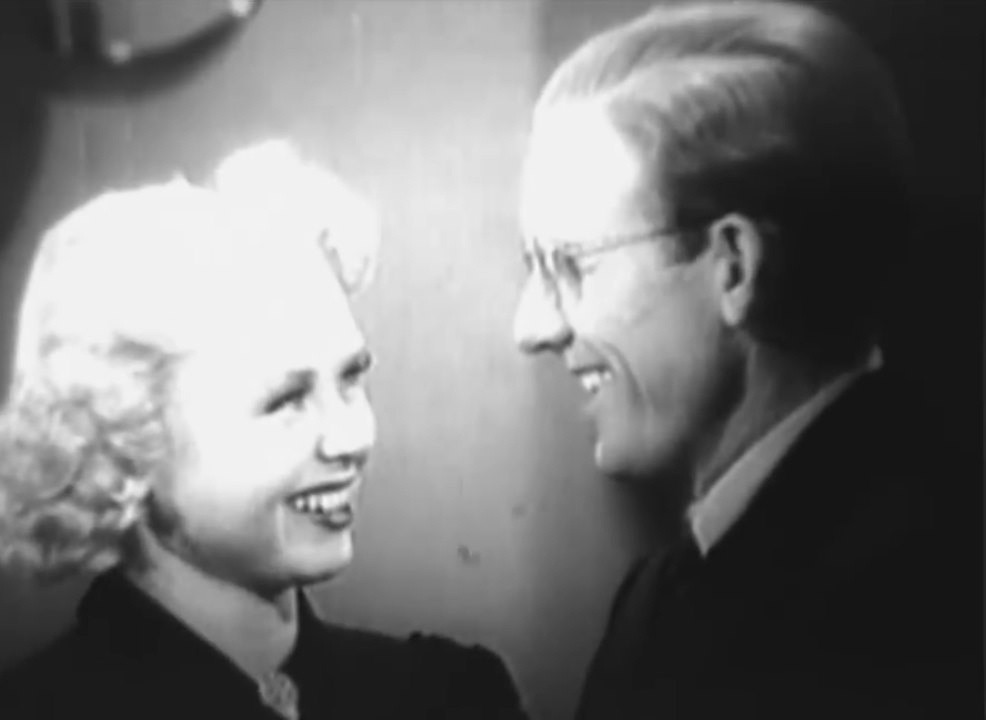
Lively, entertaining reviews of, and essays on, old and newer films and everything relating to them, written by professional author William Schoell.

Thursday, May 28, 2020

THE LOVES OF HERCULES

Jayne Mansfield
THE LOVES OF HERCULES (aka Hercules vs. the Hydra/aka Gli amori di Ercole/1960). Director: Carlo Ludovico Bragaglia.

Hercules (Mickey Hargitay of Bloody Pit of Horror) learns that his wife and child were murdered by the King of Ecalia. What he doesn't know is that the actual murderer was Licos (Massimo Serato of The Killer Nun), who goes so far as to murder the king to cover up the crime. Hercules goes to Ecalia to confront the king's daughter, Queen Delanira (Jayne Mansfield of The Burglar), who goes through a strange, violent ceremony to prove she had no part in the death of Hercules' family. For his part, Hercules seems to forget all about his slain wife and falls in love with Delanira in a trice. When the queen's fiance is found murdered, Hercules is blamed and is forced to go on the run, where he encounters the Amazons, whose Queen Hippolyta is fond of turning her lovers into trees and develops a dangerous hankering for the son of Jupiter. Will Hercules and his new beloved Delanira manage to triumph over the evil schemes of both Licos and Hippolyta and finally be reunited?

The three-headed hydra
Hungarian body-builder Hargitay and his wife Mansfield were two years into their six-year marriage (resulting in three chidren, including the very gifted Mariska Hargitay of Law and Order: Special Victims Unit) when they went to Italy to make this "spectacle," which does feature a few impressive settings as well as the out-sized physiques of the briefly-married couple. As their voices are dubbed it's hard to judge their performances, but one can safely say there were no Oscar contenders in the cast, at least not in this production. The film is briefly and minimally enlivened by the appearances of a huge bull that Mickey wrestles to the ground, an 8-foot-tall caveman, and a full-scale Hydra which is like a funhouse prop, but is very well-designed, has three fire-breathing heads, and looks good despite its limited movement. In the second half of the film Hippolyta transforms herself into Delanira, so Mansfield is given a dual role. The men-turned-into-trees business is a macabre touch.

Verdict: Hardly anything spectacular here but more watchable than you might imagine. **1/2. 

Thursday, May 14, 2020

THE LAST VOYAGE

Robert Stack and Dorothy Malone
THE LAST VOYAGE (1960). Written and directed by Andrew L. Stone.

Robert Adams (George Sanders) is the captain of the cruise liner SS Claridon, which will be retired after only five more voyages. Adams is hoping that he will be given a new ship and a promotion, and is therefore reluctant to see a major problem when a fire breaks out in the hold. Unfortunately, this fire leads to an explosion that not only causes a number of deaths, but traps one lady, Laurie Henderson (Dorothy Malone), under a piece of steel in her shattered cabin. As the captain and crew argue about what to do next, Laurie's husband Cliff (Robert Stack) tries to get someone, anyone, to help him free his wife before the ship goes down, and also importunes a compassionate crew member, Lawson (Woody Strode), to get his little girl, Jill (Tammi Marihugh), into a lifeboat.

Strode, little Marihugh and Stack
Part of the reason that this gut-wrenching disaster film works so well is that it was filmed not on a Hollywood sound stage but on the SS Ile de France, which was retired the previous year. The ship was partially sunk and these sequences certainly add a chilling veracity to the proceedings. The climax with surviving characters racing to get off the boat as gallons of water wash down the corridors and over the decks is thrilling and fantastic. Not only is there the horrible dilemma of whether or not Cliff can leave his wife to die so that he can be a father to their child -- Laurie even contemplates suicide to free him from that choice --  but at one point the little girl is trapped herself over a huge hole in the floor.

George Sanders
There is also some first-rate acting from such players as Malone, Sanders and Strode, although Stack hardly gets across the desperation that his character would be feeling. Edmond O'Brien is fine as the chief engineer, who clashes bitterly with the captain in one especially effective sequence. Little Tammi Marihugh is a natural performer, and when she has to crawl on a board over a deep pit you have to wonder if she was actually acting or not; she certainly out-acts Stack. There are several very good supporting performances as well from such as Jack Kruschen, George Furness, Marshall Kent, and others.

Woody Strode 
The action in The Last Voyage starts even before the credits begin and never lets up, so the screenplay doesn't have much room for character development, but some of the actors are able to get it across in any case. We don't learn that much about Laurie and Cliff, but Lawson emerges as a brave and highly sympathetic figure and Sanders etches a classic portrait of the man in authority who is too concerned about his job and appearances to make sure that people are safe, and we all know how many people there are who fit that description. Andrew L. Stone also directed Doris Day in Julie. Robert Stack and Dorothy Malone were previously teamed in Written on the Wind.

Verdict: Highly entertaining and often nerve-wracking suspense film. ***1/2. 

IRON MAN (1951)

Jeff Chandler
IRON MAN (1951). Director: Joseph Pevney.

Coke Mason (Jeff Chandler) is a coal miner with a girlfriend named Rose (Evelyn Keyes of Dangerous Blondes) and a brother named George (Stephen McNally of The Black Castle). Coke is generally a nice guy, but when he gets riled up he can really go after a guy with his fists, and George thinks his "killer instincts" may turn him into an excellent boxer and get him out of the mines. Initially disenchanted with this notion, Rose eventually thinks of all the money he can make and what it might mean for their future happiness. But as Coke embarks on his career and becomes successful, he is seen not as an athlete but a dirty fighter who will do anything, hit any low blow, to win a match. He may become the heavyweight champion of the world but will he lose everything else, including Rose?

Hudson, Keyes, McNally
Iron Man is an absorbing well-acted drama that may not get points for originality but is nevertheless very well-done and well-directed by Joseph Pevney, who includes several exciting fight scenes. Chandler is on top of things throughout the movie and gives a very good performance, as does Evelyn Keyes. McNally, who is usually solid, strangely plays his role in one note throughout. A young Rock Hudson makes a better impression as "Speed," a fellow miner and friend of Coke's who assists him and then becomes his rival in the ring. Jim Backus is merely okay as a sports writer who doesn't think much of Coke's tactics but eventually becomes his manager. At one point a woman looks at Rock Hudson and says, "You are divine," to which he replies "I know -- but I'm in training." James Arness has a small role as a nasty co-worker of Coke's who nearly gets his head handed to him; he's fine. Pevney also directed Chandler in Foxfire.

Verdict: Memorable boxing film with some good acting. ***. 

I'LL GET BY

William Lundigan and June Haver
I'LL GET BY (1950), Director: Richard Sale.

Aspiring songwriter William Spencer (William Lundigan of Pinky) meets another composer named Freddy Lee (Dennis Day) and the completely fictional team of Spencer and Lee is born. The two men have romances with the singing team, the Martin Sisters: Liza (June Haver of The Dolly Sisters) and Terry (Gloria DeHaven of So This is Paris). Thelma Ritter cracks wise now and then as their secretary; Steve Allen appears as a radio DJ; and Harry James occasionally blows on his trumpet.

Gloria DeHaven and Dennis Day
I'll Get By apparently ran out of real-life songwriting teams when it came up with this concoction, but the soundtrack contains such memorable standards as the title tune, "You Make Me Feel So Young," and "Deep in the Heart of Texas," as well as a host of other songs written by a variety of composers and lyricists including Vernon Duke and Jules Styne. The story, alas, is not up to the music. It begins in 1939 and goes up to the end of WW2, which is almost literally tossed off with a gag. Dennis Day has a nice voice and likable manner, the two leading ladies are pleasing, Lundigan is smoothly handsome and professional, and Ritter probably makes the best impression with her deadpan delivery. Danny Davenport plays the initially naive songwriter Chester Dooley. When he asks Lundigan how much he will have to pay to have his song published, Ritter says "Who let you off the farm?" There are cameos by Jeanne Crain, Victor Mature, Dan Daily (doing a soft shoe routine) and Reginald Gardiner.  The film is fun at first, but the silly misunderstandings that keep the two couples apart eventually become irritating.

Verdict: Some good songs and talented performers can't quite save a tired screenplay. **1/4. 

BRITANNIA MEWS

Maureen O'Hara and Dana Andrews
BRITANNIA MEWS (aka The Forbidden Street/1949). Director: Jean Negulesco.

In Victorian England Adelaide Culver (Maureen O'Hara of The Parent Trap), who comes from a wealthy family, falls in love with her painter-teacher, Henry Lambert (Dana Andrews of Where the Sidewalk Ends), and decides to marry him. The two reside in an area of tenements known as Britannia Mews, which Adelaide has been fascinated by since girlhood. Henry, who has made a group of intricate puppets that Adelaide has no use for, gets little work done and drinks too much, a situation that leads to tragedy. Blackmailed by an ugly and pitiful old woman known as "the Sow," (Dame Sybil Thorndike of The Prince and the Showgirl), Adelaide figures she has little to look forward to in life until she meets a man named Gilbert Lauderdale (also Dana Andrews), who bears a strange resemblance to Henry.

O'Hara and Andrews
Britannia Mews, which was rechristened The Forbidden Street for, presumably, box office reasons, is an odd picture that goes in a lot of different directions but on the other hand is entirely unpredictable. It's completely absorbing, although one can't say that it's completely satisfying. The performances are quite good, however. Andrews was supposedly angry that his voice was dubbed in British prints, but in the print I saw the dubbed voice was only used for bearded Henry, not clean shaven Gilbert, so this may have been intentional all along; in any case it's an excellent job of dubbing by the uncredited actor. Dame Sybil Thorndike, made up to look like the most hideous of harridans, certainly scores as Mrs. Mounsey, AKA the Sow. Anthony Tancred is also effective as Adelaide's sympathetic brother, Treff. Wilfrid Hyde-White has a small role as their father. This has an interesting score by Malcolm Arnold.

Verdict: Interesting aspects to this, but one can't quite escape the impression that this is just a well-polished bodice-ripper with pretensions. **3/4. 

WITH LOVE AND KISSES

Pinky Tomlin
WITH LOVE AND KISSES (1936). Director: Leslie Goodwins.

Homer "Spec" Higgins (Pinky Tomlin), a farmer and songwriter in Huckabee, Arkansas, sends his latest number to radio singer Don Gray (Kane Richmond of Behind the Mask). Months later Homer hears Gray not only singing his song but attributing its composition to himself. An angry Homer takes off to New York to confront Gray, and winds up getting a contract with both Gray and then a shifty nightclub owner named Draper (Kenneth Thomson), with the terms being distinctly unfavorable to Homer. An added complication is that Homer needs his cow Minnie for inspiration, and is also falling for nightclub songstress Barbara Holbrook (Toby Wing), whose brother, Gilbert (Arthur Housman) is a drunken lawyer. Can Gilbert stay sober long enough to get Homer out of his lousy contract?

Toby Wing with Pinky
For those who have been anxious to see a Pinky Tomlin film -- and who hasn't? -- With Love and Kisses is one of a few films the musician starred in in the thirties, with a few further appearances in the forties and fifties. When I first saw Pinky I thought he might be bandleader Kay Kyser, whom he somewhat resembles even down to the spectacles, performing under a different name, but, no, Pinky is Pinky. As a performer Tomlin is perfectly affable, and perhaps a bit more polished than Kyser. Pinky's leading lady in this, Toby Wing, who was briefly affianced to Pinky in real life, is a perky singer with a cute chubby face. As for the other cast members, Housman does an expert and classic drunk act and Olaf Hytten [Shanghai Chest] is very amusing as the butler Dickson. Kane Richmond does little more than look handsome and perturbed. Si Jenks as Sheriff Wade and Robert McKenzie as the deaf Mayor Jones make a silly couplet, and the African-American Peters Sisters Singers offer a snappy number. Morey Amsterdam of The Dick Van Dyke Show does an unfunny radio routine. Billy Benedict has the small role of a dizzy farm boy who tries to give Barbara directions. The songs in this are pleasant, with "The Trouble with Me is You" being the snappiest. Leslie Goodwins directed everything from Mexican Spitfire features to Mummy movies.

Verdict: I have a feeling if you've seen one Pinky Tomlin film you've probably seen them all. **1/2. 

Thursday, April 30, 2020

THE SATAN BUG

George Maharis and Anne Francis
THE SATAN BUG (1965). Director: John Sturges.

Lee Barrett (George Maharis of Sylvia) is called in when several vials are stolen from a government lab. Some of these vials contain a deadly virus that can cause many deaths but will eventually die out itself. But one of the vials contains what scientists have termed "the Satan bug," an airborne, self-perpetuating, basically indestructible virus that can wipe out all of humanity within the space of two months! Barrett learns that a wealthy and mysterious man named Ainsley may be behind the theft after he makes certain demands, but he also fears that this mastermind may have a confederate in the lab. To show he means business Ainsley unleashes the "less" deadly virus on Florida, killing many innocent inhabitants. Now Barrett has to find the flasks and get them away from Ainsley and his associates before the worst can happen.

John Clarke, George Maharis, Simon Oakland
I had wanted to see The Satan Bug for years (although this was probably not the best time to finally take a look at it). It's a strange picture. It has many interesting elements and a few very suspenseful scenes, especially towards the end, but for much of its length the movie just sort of meanders under John Sturge's somewhat stodgy direction and this is its primary problem. The plot of the movie should have had the audience on the edge of its seat biting its nails, but aside from one or two scenes, it never develops that level of tension. George Marahis' role is ill-defined, which is also true of Anne Francis as his sort-of girlfriend and Dana Andrews as her father. The large supporting cast includes everyone from Richard Basehart (who is excellent) as a scientist to Edward Asner as a bad guy to Harry Lauter as a phony FBI agent to James Doohan as a real agent of some kind, and many others.

The film does have its moments. There's a tense business when Barrett enters a lab with a mouse with the realization that if the little creature dies he will have to be shot moments later to protect everyone else. There's the black and white footage the characters watch as a helicopter flies over the corpses all over the ground in Florida. Then there's a wild fight in a careening helicopter. But much of the suspense is minimized by poor pacing and sequences that don't add to the excitement but seem to detract from it. Still, The Satan Bug is undeniably creepy and generally absorbing. Sturges also directed Jeopardy.  A much better film on a somewhat similar theme is the excellent Andromeda Strain.

Verdict: Just misses being a really top-notch thriller. **3/4. 

SLIGHTLY SCARLET

Rhonda Fleming and John Payne
SLIGHTLY SCARLET (1956). Director: Allan Dawn.

June Lyons (Rhonda Fleeming), who is secretary and more to mayoral candidate Frank Jansen (Kent Taylor), brings her sister, Dorothy (Arlene Dahl) home after the latter gets out of prison. Both women get involved with Ben Grace (John Payne), who is the brains behind a criminal outfit run by Solly Caspar (Ted de Corsia), who has had to take it on the lam. Now Ben tries to take over and get all his ducks in a row, including Jansen, the police chief, and the two attractive ladies -- although things get a bit dicey when Solly suddenly returns from Mexico ...

Such devoted sisters? Dahl and Fleming
Slightly Scarlet is entertaining enough but it has a script that goes all over the place, and Allan Dwan's direction is not strong enough to make up for it. What we're left with is some vivid emoting from Payne, going through his bad guy (but not that bad) film noir phase, a solid Fleming, a vivacious and sluttish Dahl making the most of her scenes, and de Corsia also making an impression as the decidedly nasty and nearly psychopathic Solly. Although Payne does a good job in playing Ben, the screenplay never seems to get a true handle on the guy, so there doesn't really seem to be anyone to root for in this mess. Kent Taylor has a few scenes as the man who becomes mayor but he isn't developed enough to be much of a factor. June seems overly devoted to her sister, a trampy shoplifter and worse who doesn't even seem to care when Solly makes it clear that he's going to murder June.

Payne and Dahl at that beach house
Other players include Ellen Corby as June's very pleasant housekeeper, Roy Gordon [War of the Colossal Beast] as a crusader against Solly who meets a horrible fate, George Wallace [Radar Men from the Moon] as a sullen member of Solly's gang, and Myron Healey [Hot Rod] as another colleague who tries to ventilate Ben to his regret. Solly owns a beach house that can best be described as "fabulous." This is based on as novel by James M. Cain. An RKO-Radio production, it was filmed in "Superscope."

Verdict: Not as much fun as the plot might suggest, but fun enough if you're in an undemanding mood. **1/2. 

MISERY

Kathy Bates
MISERY (1990). Director: Rob Reiner. Based on the novel by Stephen King.

"If you don't enjoy your own company, you're not fit company for anyone else." -- Annie Wilkes.

"You'll never know the fear of losing someone like you when you're someone like me." -- Ditto.

Novelist Paul Sheldon (James Caan of Games), who made millions writing about a woman named Misery, has just finished a new book with which he hopes to get more respect as an author. After a car accident he winds up at the home of his "number one fan," Annie Wilkes (Kathy Bates of Cheri), who tells him that the roads are impassable due to a blizzard and the phone lines are down. In reality, Annie wants to keep the bedridden, crippled Paul all to herself. As the weeks go by Paul realizes that Annie is keeping him prisoner and cutting him off from the world and everyone who knows him. He also comes to realize that Annie is a truly dangerous sociopath ...

James Caan
Misery is an enjoyable and absorbing picture that focuses on a frightening dilemma for the protagonist who finds his situation becoming more and more sinister with every day. However, the characterization in the film is lacking, with Paul being a one-dimensional "famous author" and not much else -- you really don't learn much about him except that after making lots of money he now wants the critics' respect. You learn a bit more about the psychotic Annie, who has probably had a long career of killing people, but the origins of her psychosis are never explored.

Desperate struggle: Bates vs. Caan
Kathy Bates won a Best Actress Oscar for her work in this film. Although she's good in her own understated way, I didn't think her performance was Oscar-worthy back when the film was first released and I don't think so today. She often seems over-rehearsed. James Caan, who in general (despite some perfunctory moments) gives a more solid performance in a much, much more difficult role, wasn't even nominated. Reiner's direction is good even if it seems by the numbers at times, and the film could have been cut by a good twenty minutes, tightening up the tension and the pacing. Richard Farnsworth is fine as the cop "Buster," as is Frances Sternhagen [Outland] in the tiny role of his wife. Lauren Bacall is similarly good in the small role of Sheldon's agent.  And we mustn't forget Misery the pig, the cutest hog since Babe.

An amusing sequence has Annie railing about how the cliffhanger serials she saw as a girl often cheated, showing a car with the hero apparently trapped inside going off a cliff one week, and then inserting the hero jumping out of the car beforehand in the next episode. On this, the deluded Annie is mostly right, although there were some serials that played fair.

Verdict: Fun movie with some truly horrifying moments and one pretty good shock. ***. 

A WEEKEND WITH LULU

Leslie Phillips
A WEEKEND WITH LULU (1961). Director: John Paddy Carstairs.

Timothy (Leslie Phillips of Doctor in Love) wants to go on Holiday with his fiancee, Deirdre (Shirley Eaton of Goldfinger). To that end his buddy Fred (Bob Monkhouse) lends him a caravan -- or trailer -- that he borrowed from someone else. They hitch the trailer -- which is called "Lulu" -- to an ice cream van, and all seems set until Tim discovers that Deirdre's rather horrid mother, Flo (Irene Handl), is going along with them, along with Fred. As they sleep the trailer somehow winds up being put on board a train as "freight" and they wind up over the border and in France. In a foreign country and not certain how to get back before the weekend is up, the foursome have various misadventures involving everything from the Tour de France to an amorous French count named de Grenoble (Alfred Marks) before finding their way back.

Eaton, Phillips, Monkhouse and Handl
You want to like the amiable Weekend because the players are more or less likable and there are some amusing situations in the movie, but aside from one solid laugh the movie never really erupts into hilarity. The script seems written on the go, throwing in sequences as the crew and our characters drive around the French countryside hoping to find chuckles. Phillips is fine as the genial Timothy, and Eaton is attractive and more-than-competent as his somewhat out-of-his-league fiancee. Monkhouse, a very popular British comedian, is fine as the more larcenous of the two men, although his schemes often backfire. Handl makes the most of her role as the mother, although through most of the movie she's too unpleasant to really take to. John Paddy Carstairs also directed Made in Heaven.

Verdict: For a classic British comedy watch The Belles of St. Trinian's instead. **. 

MA AND PA KETTLE AT HOME

Marjorie Main and Brett Halsey
MA AND PA KETTLE AT HOME (1954). Director: Charles Lamont.

Ma (Marjorie Main) and Pa (Percy Kilbride) Kettle learn that a New York magazine is offering a scholarship to college as a prize, and that their son, Elwin (Brett Halsey), entered the contest, but in his essay has made their farm sound much more ideal than it is. Complicating matters is that Elwin's girlfriend, Sally (Alice Kelley), has also entered the contest, even though her grumpy, penny-pinching father, John (Irving Bacon), could afford to send her on his own. Two judges (Alan Mowbray of Becky Sharp and Ross Elliott of Tarantula) come out to the farms to inspect each applicant and their way of life, and Ma and Pa hurry to fix up their old farm, although there's really no reason they couldn't have just used their new-fangled house. As usual Pa gets his Indian friends to do all of the work. Much of the humor in the film is centered around Alan Mowbray as a persnickety city fellow who has to use out-dated plumbing and finds a frog in his bath (courtesy of little Billy Kettle, played by Richard Eyer), among other atrocities.

Christmas with the Kettles
Ma and Pa Kettle at Home is not the best of the series but it's an improvement over Ma and Pa Kettle in Waikiki. Lori Nelson and Richard Long as the two oldest Kettle children are nowhere in evidence and are never mentioned. Although he had bit parts before this and appeared on TV, this was Brett Halsey's first credited role in a motion picture and most of the time he just seems scared. Emory Parnell returns as store owner Billy Reed, and Mary Wickes again receives short shrift as a librarian who develops an interest in Mowbray. Kilbride and Main are as wonderful as ever, and Main is given a great bit in which she recites a funny poem at a Christmas party. Pa not only treats his Indian friends like unpaid slaves, but at one point has them dress up in warpaint and go on the warpath so he can "rescue" Mowbray from them and be seen as a hero. At least the Native Americans are pretty disgruntled at doing this.

There were two more Kettle films made without Kilbride in the fifties (who did not pass away until 1964). In one film, The Kettles in the Ozarks, Pa was left out and an uncle was substituted, and in the final Kettle movie, The Kettles on Old MacDonald's Farm, Pa was portrayed by Parker Fennelly.

Verdict: Can't keep those Kettles from coming! **3/4. 

Thursday, April 16, 2020

BLACK SUNDAY (1977)

Bruce Dern and Marthe Keller
BLACK SUNDAY (1977). Director: John Frankenheimer.

German-Arab Dahlia (Marthe Keller) is a member of the terrorist group Black September. She has been able to manipulate her lover, a bitter Viet Nam vet named Lander (Bruce Dern), into helping her in a plot to kill thousands of Americans. She hopes to send a message to the U.S. to stop aiding Israel. A taped message that she had planned to release to the media after the event has been recovered following a raid so that now the government knows something deadly is planned but doesn't know what. (The fact that Lander is one of the pilots of the Goodyear blimp for the Superbowl should give you a clue.) Israeli agent Kabakov (Robert Shaw) and FBI man Sam Corley (Fritz Weaver) join forces with others to find this woman -- whom Kabakov should have killed during the raid but didn't -- and stop her plan before she can kill over 83,000 people -- and the President -- at the Superbowl in Miami.

Robert Shaw
Black Sunday is a thinking man's thriller, the kind they generally don't make anymore, in that it has some great action set pieces and lots of suspense, but it also has interesting characters and heroes who are not quite superhuman. The film is over two hours long but never boring as it follows the deadly exploits of the daring terrorist duo and their equally daring pursuers, with speed boat chases, telephone bombs, hotel shoot-outs and a climax involving a blimp, a helicopter, a sub-machine gun wielded all too well by Dahlia, and a bomb that will fire thousands of metal pellets into a crowd of cheering and clueless fans if something isn't done to prevent it.

Marthe Keller 
The acting in the film could not be bettered. Marthe Keller of Fedora gives another excellent and passionate performance as the terrorist, and Bruce Dern [Coming Home] is simply superb as the tormented and vengeful vet who spent months in a POW camp and whose wife left him for another man when he finally returned home. Robert Shaw is similarly on target, as are supporting performances from Weaver, Steven Keats [The Last Dinosaur] as another ill-fated Israeli agent, and others. There's a horrifying scene in a warehouse when the evil duo test their weapon on an innocent caretaker who only thinks they're going to take his picture, and many other memorable moments. John Williams' score is also quite effective.

This is based on a novel by Thomas Harris. I always thought it was far superior to his over-rated Silence of the Lambs and that this earlier film is far superior to the film version of Lambs. Back in 1977, terrorist plots like this were strictly the stuff of movies and books, not to mention James Bond, but 9/11 certainly changed that notion, as we soon realized, sadly, that now anything was possible ...

Verdict: Terrific thriller with a great plot and excellent performances. ***1/2. 

FATAL ATTRACTION

Glenn Close and Michael Douglas
FATAL ATTRACTION (1987). Director: Adrian Lyne.

Lawyer Dan Gallagher (Michael Douglas) is happily married to wife Beth (Anne Archer) and the two have a small daughter. One night at a party Dan meets Alex Forrest (Glenn Close) and sparks immediately strike between the two. A second chance encounter leads into dinner and a heated sexual liaison, then an intense weekend fling. Alex knows that Dan is married but she is not to be put off when she demands that he see her again. Dan wants to think of this as just a pleasant interlude, but Alex is already making marriage plans. Before long she is phoning and stalking Dan and getting personally involved in the lives of his family. It's a question of who will break first, angry husband or angrier paramour.

Bad boy: Michael Douglas
Fatal Attraction is a well-made and absorbing picture although one could argue that it skirts the tougher questions. The picture also has an old-fashioned tone to it in that the wife in this is pretty much expected (after some initial anger) to meekly put up with her husband's peccadilloes, especially when you consider what Alex puts her and her family through. Then there's the fact that Dan shows not the slightest trace of hesitation or guilt as he throws himself pell mell into an affair when his trusting wife and child are out of town  -- he hardly ever seems remorseful. Some of this is due to Douglas' performance, a glibness that may inadvertently give a clue to Dan's (lack of) character. Anne Archer is more than solid as Beth, and Ellen Latzen makes an adorable young daughter.

Alex having a bad moment
And then there's Glenn Close, who steals the movie. Close herself has remarked how the film does not delve enough into the events or psychological traumas that might have made Alex the unwrapped person that she is, but Close does her best to vividly bring the woman to life in spite of it. Whether she's being flirtatious or murderous, giving vent to a psychotic rage or almost engaging the audience's sympathy due to her loneliness and unrequited feelings, she is always on top of things (she was nominated for a Best Actress Oscar).

Glenn Close
But let's not be too sympathetic for her. While women who have affairs with married men often say, rightfully, that the husbands are worse because they are married, the mistresses (although Alex never quite becomes a mistress) shouldn't be let off the hook. Alex enters into the relationship with Dan even though she knows he's married -- it is possibly her sheer narcissism that convinces her that Dan will almost immediately drop his wife for her. The punched-up ending involving a bathtub and a butcher knife is like something out of a slasher film only not as gory. The film is compelling enough on its limited terms that it probably would have worked with its original wind-up. Considering that Dan is a prick -- not for how he treats Alex so much but for how he treats his wife -- I would not be so quick to say that the film has a happy ending. Dan may choose his next paramour with more care, but there will be more paramours in the future, you can bet. Cheaters cheat.

Verdict: Not exactly Hitchcock, but well-made and occasionally suspenseful and exciting. ***.

LARCENY

John Payne and Joan Caulfield
LARCENY (1948). Director: George Sherman.

"If she's your cousin, I'm a boa constrictor in high heels." -- Tory.

Rick Mason (John Payne of Hats Off) is part of a group of con men led by Silky Randall (Dan Duryea). Silky is nuts about blowsy blond Tory (Shelley Winters), but she is really crazy about Rick and vice versa. Silky tries to send Tory to Havana while Rick starts a new con involving a wealthy war widow, Deborah (Joan Caulfield), but Tory shows up in the same town. Now Rick not only has to keep Deborah from finding out about Tory, but Silky as well. Tory's presence could put paid to Rick's scheme to steal $100,000 earmarked for a youth center, but a different complication is that he finds that he's genuinely falling for Deborah.

Shelley Winters and John Payne
Larceny is an absorbing melodrama with solid performances from the entire cast, although Shelley Winters pretty much walks off with the movie with her zesty and sexy portrayal of Tory. Tory is given the best and most amusing lines (by Margolis, Morheim and Bowers) and Winter's sassy performance makes the most of them. She gets some competition from Dorothy Hart [Tarzqn's Savage Fury] as Madeline, a secretary who can wear glasses and still get passes -- and make some of her own. Patricia Alphin is yet another lady, a waitress, who makes eyes and more at handsome Rick. There are other notable performances from Percy Helton (playing a sweet old guy for a change); Dan O'Herlihy as another con man; and Richard Rober as Max, another one of Silky's associates. Percy and Payne had a different kind of interaction in The Crooked Way. Don Wilson and Gene Evans have smaller roles. The con man who goes soft for love is an old, old stereotype but this is one of the better movies on that theme, even if the conversion isn't entirely believable, and the characters aren't as dimensional as you might like.

Verdict: Absorbing and snappy film noir. ***. 

THE MAGNIFICENT FRAUD

Akim Tamiroff and Mary Boland
THE MAGNIFICENT FRAUD (1939). Director: Robert Florey.

Sam Barr (Lloyd Nolan) is friend and aide to Alvarado (Akim Tamiroff of After the Fox), the president of San Cristobal. When Alvarado is killed by a bomb, Sam importunes actor Jules LaCroix (Akim Tamiroff again) to pose as the president until some papers are signed and a certain loan secured -- only Sam has his own plans for the money. But there are complications in the form of Duval (Ernest Cossart) of the French Surete, who wants LaCroix for murder, and two females who are recent arrivals in San Cristobal: Geraldine (Mary Boland of Nothing But Trouble) is a former opera singer who knew Alvarado -- whom she knew as "El Toro" -- quite well in her youth, and is determined to see again. Then there's her younger friend, Claire (Patricia Morison), whom Sam begins to fall for, even though he knows he really isn't right for her. The biggest complication is that LaCroix is beginning to enjoy his performance -- the best of his life -- a little too much and delays and delays in signing those papers ...

Patricia Morison and Lloyd Nolan
The sad fact about The Magnificent Fraud -- at least for me -- is that even with an interesting plot, a good director, and several of my favorite actors -- Tamiroff, Boland, George Zucco as a doctor -- in the cast, the movie is an effort to sit through. Time and again I thought of stopping and putting it in my next Films I Just Couldn't Finish post, but I somehow managed to make it through. True, it's not the fastest moving of movies, but it's not that slow. Perhaps it's that movies like this which are basically serious in tone yet have a kind of comical premise either work for you or they don't, and this one just didn't. It doesn't help that Lloyd Nolan is simply too homely to make a convincing lover boy. Tamiroff is wonderful, but Boland isn't given that much opportunity to be fun, although she and Tamiroff have a splendid dramatic moment together at the very end of the film. Morison doesn't make much of an impression in this flick; she was more scintillating in later films.  Remade as a comedy entitled Moon Over Parador. The prolific Robert Florey also directed Johnny Weissmuller's last appearance as the Ape Man, Tarzan and the Mermaids.

Verdict: Not one of the classic films of 1939. **. 

NIGHT AND THE CITY

Richard Widmark
NIGHT AND THE CITY (1950). Director: Jules Dassin.

In London Harry Fabian (Richard Widmark of Don't Bother to Knock) is a hustler for a night club and is always coming up with one get-rich-quick scheme after another. His loving girlfriend, Mary (Gene Tierney), sings at the same club and tries her best to keep Harry's flights of fancy from careening out of control. He meets the son, Nikolas (Ken Richmond), of a famous retired wrestler. Gregorius (Stanislaus Sbyszko), and decides to become the younger man's manager. But this doesn't sit well with Gregorius' other son, Kristo (Herbert Lom), who has the fight racket in London sewn up. Besides, Harry needs money to stage a match, and if he can't get it from the corpulent club owner, Philip Nosseross (Francis L. Sullivan of Hell's Island), he'll get it from the man's wife, Helen (Googie Withers), who has a thing for him. But  Harry may find he's bitten off more than he can chew as he attempts to balance all these factions and emerge a winner ...

Tierney and Widmark
Although he does over-act at times (although this also gives a hint of Harry's essentially neurotic and desperate nature), Widmark gives an excellent performance in this, and he's able to make the man sympathetic, despite his flaws, as well. Gene Tierny has such a small role, and is off-screen for so much time, that you wonder why she even bothered to take the part, but she is nevertheless effective. Sbyszko and Richmond were professional wrestlers in real life and are pretty good, especially the former, considering they weren't really actors. Herbert Lom gives another sharp and dynamic performance as Kristo. Sullivan, who had a lengthy career, adds some nuances to his portrayal of Philip, and Googie Withers, who also had a long career, is quite effective as his unhappy wife, Helen. Mike Mazurki scores as the wrestler known as "The Strangler" and Hugh Marlowe, although his acting is solid, is kind of lost in this crowd as an upstairs neighbor who is carrying a torch for Mary. One must also note the contributions of cinematographer Max Greene, and composer Benjamin Frankel.

The Connecticut-born Jules Dassin also directed Rififi. Night and the City was remade in 1992 with Robert De Niro in the Harry Fabian role but the film was not well-received.

Verdict: Unusual drama with a rich and interesting cast. ***. 

Thursday, April 2, 2020

A SONG TO REMEMBER

Cornel Wilde and Merle Oberon
A SONG TO REMEMBER (1945). Director: Charles Vidor.

Child piano prodigy Frederic Chopin (Cornel Wilde of The Big Combo) is urged to go to Paris by his teacher, Professor Elsner (Paul Muni). Chopin's parents won't allow the boy to go so it isn't until Chopin is grown, and forced to flee Poland after insulting the Czar, that he finally arrives in Paris. There he and Elsner have trouble convincing others of his greatness. Chopin's patriotic fervor is dampened by the presence in his life of the writer George Sand (Merle Oberon of The Price of Fear), who insists that a true artist must forget about the petty struggles of the "rabble." But Professor Elsner isn't about to let Chopin forget about where he came from nor about the Polish people.

Cornel Wilde as Chopin
A Song to Remember is a very heavily fictionalized version of the life of the great composer, with some incidents simply being made up to propel the story along and add some drama. The funny thing is that the lives of Chopin and Sand were already quite dramatic and full of incident, so the fabrications weren't even necessary. Still, there are basic factoids about the composer in the film, and one could argue that it portrays his essence if not his reality. Cornel Wilde is quite good as the Hollywood version of Chopin and was nominated for a Best Actor Oscar. If there is any problem with his portrayal it is within the script, as it makes Chopin out to be an ungrateful snob who literally snubs the man who has done so much for him. He redeems himself at the end, but still ...

Paul Muni and Maurice Tauzin
George Sand doesn't fare much better, coming off as monstrously self-absorbed. In this case, Oberon doesn't help with her one-dimensional emoting. Oberon is unable to get across the possibility that it is her need for Chopin that turns her into a selfish creature who makes outrageous statements. However, Paul Muni gives an excellent performance as the professor. He can be forgiven some "cutesy" moments because his role borders at times on the comic, but he is otherwise superb. Little Maurice Tauzin [Tarzan and the Huntress] also makes an impression as the great composer at age ten. There is also very good work from Stephen Bekassy as Franz Liszt, George Coulouris as impresario Louis Pleyel, Nina Foch as Chopin's concerned sister, and Howard Freeman as the critic Kalkbrenner. Even if you're unconvinced by the dramatics, the score consists of some of Chopin's most beautiful and memorable pieces -- you might be surprised by how many works you will be familiar with.

Verdict: Fine performances, a beautiful score, and lushly romantic. ***1/4.  

THE SECOND GREATEST SEX

Jeanne Crain
THE SECOND GREATEST SEX (1955). Director: George Marshall.

In the old west of 1880 there are range wars between three towns who are all trying to get the lawful county seat by getting their hands on the papers inside a big safe. The men have been gone for a long time but when they finally come home with the safe, Matt Davis (George Nader) and Liza McClure (Jeanne Crain) finally get hitched. Unfortunately, before the marriage can be consummated, the safe is stolen and the war is back on. Liza and the other ladies decide to take a page from Aristophanes "Lysistrata" and hole up in a fort, withholding favors and everything else from the men folk until they give up fighting. Considering that men are "the second greatest sex," it us up to the women to set things right.

'With All My Heart" George Nader
I had heard of this flick for years but had trepidation about it because I was afraid it might be terminally cute, but while it's not quite a laugh-riot, it's still an entertaining movie. It is also a musical, with several songs by teams I'd never heard of. Things get off to a lively start with "What Good is a Woman Without a Man?" Matt (dubbed) sings a nice romantic ballad to Liza ("With All My Heart") and Reverend Maxwell (Keith Andes) leads the men in a rousing chorus of "Send Us a Miracle." And then there's the dancing, with which the picture really distinguishes itself.

Dancer Tommy Rall as Alf
The chief dancer in this is Tommy Rall [World in My Corner], who plays Alf Connors. First he is featured in an outstanding post-wedding number when he competitively dances with two other men who drop from exhaustion while he goes on to triumph. Later he does a ballet as his wife Katy (Kitty Kallen) dreams about him. As for the acting in this, Jeanne Crain makes the perfect leading lady, and Bert Lahr [Mr. Universe] makes a good impression as her father, Job. Jimmy Boyd is fun as Job's teenage son, who is always asking about S E X although -- as usual -- Job hasn't a clue as to how to discuss it with him. George Nader is fine as the hero, and we've also got good work from Paul Gilbert [So This is Paris] as a traveling salesman, Edna Skinner as the old maid schoolteacher who falls for him, and even Mamie Van Doren as a pretty maiden who sets her cap for the town preacher! George Wallace is one of the men trying to get the safe away from Matt and the others. Not as good as the earlier Seven Brides for Seven Brothers but fun.

Verdict: Say what you will about it, it's different. ***. 

THE FEMALE ANIMAL

Heartbroken: Hedy Lamarr
THE FEMALE ANIMAL (1958). Director: Harry Keller.

Tippling unhappy aging actress Vanessa Windsor (Hedy Lamarr) almost has an accident on her film set, but she is saved by handsome extra Chris Farley (George Nader). Entering into a romance with Vanessa, Farley moves into her beach house as a "caretaker," but he bridles at the thought of being seen as a gigolo. He accidentally gets involved with a pretty blond named Penny (Jane Powell) -- also coming to her rescue -- and is unaware that she is actually Vanessa's daughter. The fur will fly when Vanessa finds out she's competing with her own daughter for the man she's falling in love with ...

Jane Powell as a "drunken slut?" 
The Female Animal was forty-four-year-old Lamarr's last picture. It's likely that she wasn't crazy about being cast as Jane Powell's mother,  as Powell was only fifteen years younger, although Lamarr was still quite beautiful. She also gives a good performance in this, vividly bringing to life the sad situation of a successful woman who fears aging and being alone in the twilight years but who is doomed to meeting mostly men who just want to use her. Her emoting makes her character more sympathetic than she might have been. Most of Powell's great pictures [Seven Brides for Seven Brothers] were also behind her at this point, but she was obviously trying to broaden her range -- as a drunken slut, no less! -- and succeeds admirably, giving a terrific performance as a young woman who feels abandoned by her self-centered mother -- Vanessa fears the public even knowing that she has a daughter that age.

George Nader and Hedy Lamarr
George Nader is also good in the film, and there are notable turns from Jan Sterling as a fading actress with a yen for younger men, James Gleason as a bar owner, Jerry Paris as Chris' buddy, Mabel Albertson as Chris' landlady, and Ann Doran as Vanessa's sympathetic nurse. The movie is, in essence, a soap opera, but it works quite well on that level, and features the occasional saucy line, although it does not boast what one might call a brilliant screenplay.  Harry Keller also directed The Unguarded Moment with Nader and Esther Williams (also trying to broaden her range).

Verdict: No Sunset Boulevard, perhaps, but entertaining and generally well-acted. ***. 

MA AND PA KETTLE AT WAIKIKI

Percy Kilbride and Marjorie Main
MA AND PA KETTLE AT WAIKIKI (1953). Director: Lee Sholem.

Pa Kettle's (Percy Kilbride) cousin, Rodney (Loring Smith of Shadow of the Thin Man), who once hoped to marry Ma (Marjorie Main) but instead stayed in Hawaii to run a pineapple business, has been told to take it easy by his doctor. Rodney and his associates decide to importune Pa -- whom they wrongly think is rich and successful -- to temporarily run the pineapple business in Honolulu until Rodney's health improves. They also think Pa's brilliance will put the company on the fast track again. Against all odds, the ever-lazy Pa seems to come up with schemes that enrich the firm's coffers. But then he's kidnapped and taken to an island where he thinks there's buried treasure.

Percy Kilbride as the lazy Pa Kettle
Ma and Pa Kettle at Waikiki starts out well with several amusing sequences revolving both around Pa's efforts at the pineapple plant and Ma's encounters with the snobby bank president's wife, Teresa Andrews (Mabel Albertson of The House That Would Not Die) and her condescending lady friends. Unfortunately, the flick falls apart in the second half with the introduction of the thoroughly uninteresting kidnappers (including Russell Johnson and Myron Healey) and the whole dull business with the treasure hunt. Even the insertion of a Hawaiian version of Ma and Pa and their huge brood doesn't help, but leads to even more tedious sequences when these characters attempt to rescue Pa with Ma's super-butch assistance and a lot of coconuts. Okay, there's a cute business with a crab but that's about it.

Lori Nelson returns as the Kettle's grown daughter, Rosie, and goes to Hawaii with them, and her new love interest is Bob Baxter (Byron Palmer), who works for Rodney Kettle. Birdie Hicks (Esther Dale) returns briefly and is back to hating Ma again, leading into a funny sequence involving an air-conditioner that doesn't work the way Pa intended. This script has Ma seeming much more stupid than usual.

Verdict: Some fun, but otherwise a disappointment. **1/4.