![]() |
| Warren Beatty and Faye Dunaway |
![]() |
| Estelle Parsons and Gene Hackman |
![]() |
| Warren Beatty and Faye Dunaway |
![]() |
| Estelle Parsons and Gene Hackman |
| Cornel Wilde and Anne Bancroft |
In 18th century France Jean Paul (Cornel Wilde) becomes the bonded servant of his hateful uncle the Marquis de St. Malo (George Macready). Jean also falls in love -- and vice versa -- with his cousin Marie (Anne Bancroft). Jean is the rightful heir to the estate and money but there is no proof that his parents, who died at sea, were ever married. Jean figures only money can get him out of his predicament, especially after he is arrested for assaulting his uncle and trying to flee, so he takes off on a treasure hunt in Guatemala with a man named MacDougal (Finlay Currie).
| Wilde with Finlay Currie |
Verdict: Good cast can only do so much with comparatively weak and derivative material. **1/2.
![]() |
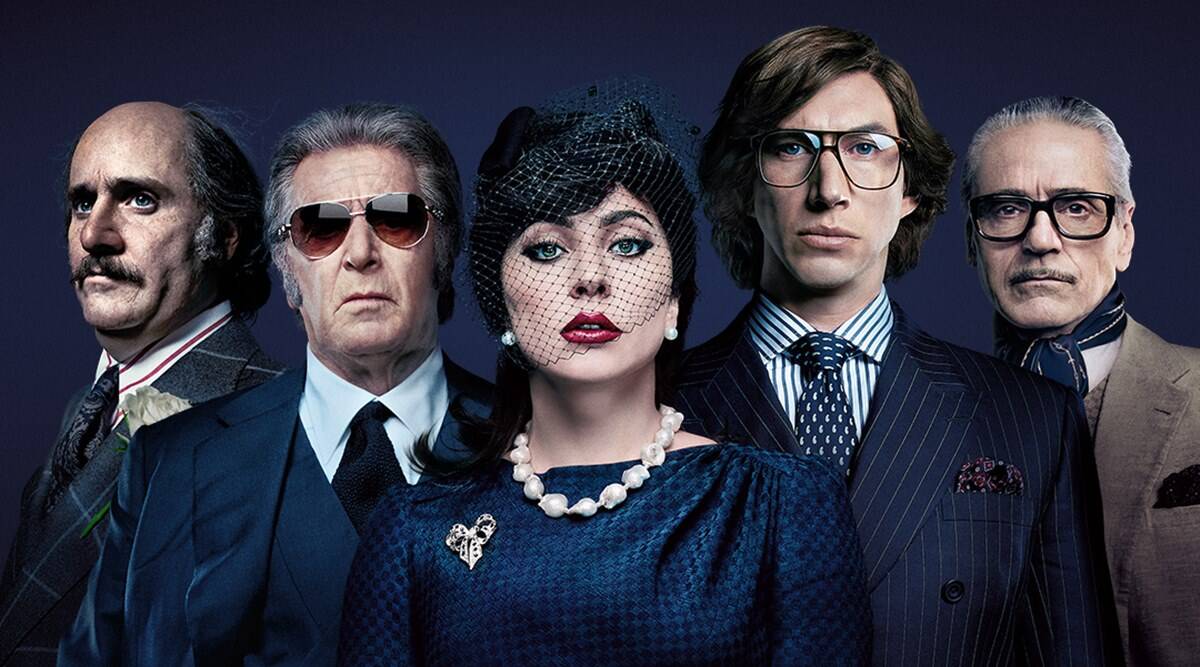
| The cast of House of Gucci |
![]() |
| Lady Gaga was a determined Patrizia |
TALES OF MANHATTAN (1942). Director: Julien Duvuvier. Special projects have caught up with me temporarily. GREAT OLD MOVIES will return in May 2022, if not before.
For those who subscribe by email the posts come with the wrong, outdated email attached at the very bottom. I'm working to correct this. In the meantime you can contact me anytime at wmschoell@gmail.com.
Thanks!
William Schoell
![]() |
| Zero Mostel and Jack Gilford |
![]() |
| Leon Greene and Zero Mostel |
| Meredith Baxter |
| Kelli Williams and Stephen Collins |
| Betty on trial: Meredith Baxter |
| Judith Ivey versus Meredith Baxter in court |
![]() |
| Madeleine Stowe and Ed Harris |
![]() |
| Harris, Charles Dance, Del Toro |
| William Haines and Irene Purcell |
Lord Robert Brummel (William Haines) finds lots of female companionship with married women who have no problem cheating on their husbands. His Uncle George (C. Aubrey Smith) thinks his nephew is an overspending mountebank who doesn't know the value of a dollar. For some reason George thinks a match between Bob and equally upper-crust Roxana Hartley (Irene Purcell) would make the perfect union. But before he consents, Robert wants to make sure that Roxana isn't like (to his eye) most other women, and tests her by pretending to be a paid dancer and gigolo.
Just a Gigolo is a mildly amusing comedy that boasts a winning performance by the likable Haines, and an especially notable turn from the equally charming C. Aubrey Smith. Although a trifle off-putting at first, Irene Purcell proves an attractive and capable leading lady. This was her first full-length film and she only appeared in five more. (Ironically, Haines only had five more films to go before his movie career was over.) An interesting aspect of the film is the fury felt by Roxana when she learns of Bob's deception, his gall at testing her morals when he himself is hardly above reproach. The movie gets across the unjustness of the double standard without hitting you over the head with it. Although released in 1931, Just a Gigolo isn't creaky and moves at a fairly fast pace. Charlotte Granville is fun as Roxana's mother, and although Ray Milland is listed in the cast, if you blink you will certainly miss him. C. Aubrey Smith and Haines
Verdict: A good chance to see Haines, once a top box office attraction, in a sound film. **1/2.
What Ever Happened to Orson Welles? is not a biography of the famous actor and director, but rather a study of his career and an attempt to correct misconceptions about the man that have proliferated both before and after his death. McBride is often successful at this, and sometimes not, and the book -- while well-written and well-researched -- occasionally has a petulant "fan-boy" tone to it. Film buff McBride became acquainted with Welles and was even cast in The Other Side of the Wind as a nerdy film geek (a talented writer, the less said about his acting the better), and spoke and dealt with him on and off over the years. McBride argues against some of the assertions made against Welles, but at other times makes clear that these assertions are often true. Welles clearly was a narcissist, and clearly expected those under his spell to do what he wanted, come hell or highwater. However, McBride argues that Welles was not some corpulent figure of fun but an artist who not only made some successful and brilliant films, but, like a true artist, kept on working right up to the very last minute of his life. McBride dissects many of Welles's lesser-known film projects, and does make it clear that Welles's career did not begin and end with Citizen Kane. One suspects he's just too close to The Other Side of the Wind to see how really bad it is. To his credit, McBride doesn't shy away from examining Welles's flaws, and even goes into the man's ambivalent feelings about his sexuality.
Verdict: Whatever you think of Welles, this is an interesting and thought-provoking read. ***.
| John Huston as Jake Hannaford |
"He's so crooked he has rubber pockets so he can steal soup!"
"I'm bored with the whole story."
Director Jake Hannaford (John Huston) is celebrating his 70th birthday with a large assemblage of friends, enemies, and sycophants, while bemoaning the fact that he apparently can't complete his latest movie because his leading man, John Dale (Robert Random), has run off, not to mention the usual financial difficulties. Attending his party are such people as director-acolyte Brooks Otterlake (Peter Bogdanovich); critic Julie Rich (Susan Strasberg), who asks too many questions; associate Billy Boyle (Norman Foster); cynical actress Zarah Valeski (Lilli Palmer); and other characters played by Edmund O'Brien, Cameron Mitchell, Mercedes McCambridge, Paul Stewart, Gregory Sierra, Dan Tobin, John Carroll, and others. Interspersed with scenes from the party are sections of the uncompleted film-within-a film being made by Hannaford.
| Peter Bogdanovich |
| Robert Random and Oja Kodar |
| Hannaford celebrates his birthday with a cake |
| Lilli Palmer |
Verdict: What a shame! An Orson Welles Home Movie. **.
| Constance Ford, Daniel O'Herlihy, Glynis Johns |
When her car breaks down, Jane Lindstrom (Glynis Johns of The Vault of Horror) seeks shelter at a sanitarium run by Dr. Caligari (Daniel O'Herlihy of Invasion U.S.A.). But her gratitude turns to fear and outrage when she discovers that there's no apparent way out of the establishment and she is being kept prisoner. The other "guests" don't seem to be much help: old Ruth (Estelle Winwood); romantic young Mark (Richard Davalos); friendly Vivian (Doreen Lang of The Wrong Man); firm and deceptively helpful Christine (Constance Ford); and others. When Jane sees Ruth being assaulted by one of the other patients as the others calmly watch, she determines to find her way out of this nuthouse no matter what she might have to do ...
| Johns is "helped" by Constance Ford |
Verdict: A waste of talent and celluloid. *1/2.
| James Franciscus and Jack Klugman |
| Elizabeth Ashley |
| William Powell and Kay Francis |
| Scott Kolk with Powell |
| Marvel Marceau and Marcel Marceau |
| Chelton, Marceau and Clay |
| John Hodiak |
| Walter Abel and Ann Harding |
Stanley Whit-taker (Dou-glass Dumbrille) is found dead of a gunshot in his office. Although he left a suicide note admitting to embezzlement, the police determine that his death was really a homicide. Whittaker's associate, Jim Trent (Walter Abel of Fired Wife) is put on trial for the murder, but other suspects and interested parties include secretary Paula Young (Ann Harding of When Ladies Meet), bookkeeper Grace Franklin (Margaret Hamilton), office boy Benny Ryan (Billy Benedict), and even Trent's daughter, Constance (Frances Sage), who inexplicably wanted to run off with the much older and not especially attractive Whittaker. During the trial, the truth behind the murder eventually comes out.
The Witness Chair is an entertaining if very minor crime/court-room drama with generally good performances and a tidy if unspectacular screenplay. Ann Harding is as efficient as ever, even if her performance is of the long-suffering, hand-wringing variety. Back in the day, Harding was a major star -- this is a lesser vehicle for her -- but today she is known only to film buffs. Like Kay Francis and others, her films didn't show up on the late show until the days of TCM. Walter Able, a fine actor, was a leading man who later became a supporting player. The prolific Billy Benedict almost steals the film with his comic turn as the office boy, who hopes for a singing career and is annoyed that he gets such a short time in the witness chair. Margaret Hamilton is snappy as the outraged bookkeeper who insists that her boss, Whittaker, was innocent of theft. William "Billy" Benedict
Verdict: Smooth easy watching if nothing to get excited about. **1/2.
| Doomed lovers: Boyer and Darrieux |
MAYERLING (1936). Director: Anatole Litvak. French-language version with sub-titles.
Rudolph (Charles Boyer), the Crown Prince of Austria, is trapped in a loveless arranged marriage, disagrees with his father's politics and edicts, and spends most of his time carousing and womanizing. Until he espies the pretty young Marie Vetsera (Danielle Darrieux) and the two fall in love. Rudolph tries to have his marriage to the archduchess Stephanie (Yolande Laffon) annulled, but neither the Pope nor his father will allow this. The Emperor finally tells his son that this affair must end within 24 hours. The lovers spend one last fateful night together.
| the real Prince Rudolph in younger days |
Based on a novel, Mayerling -- named for the prince's retreat where the final rendezvous takes place -- is a fictionalized version of the story. There were at least three subsequent versions: The Secret of Mayerling, a French film that delves into the now-discredited theory that the lovers were murdered; a 1957 version with Audrey Hepburn and husband Mel Ferrer; and the 1968 version with Omar Sharif, which includes another lover of the prince's, an actress/possible prostitute that he apparently also tried to impress into a death pact. I have a feeling the real facts about our prince are much more interesting, and perhaps even less savory, than what happens in this movie.
| Boyer |
Verdict: If taken with a grain of salt, this is an impressive and well-made romantic picture. ***.
| Chris Noth and Kevin Spacey |
Chris Noth, star of Law and Order, Sex and the City, and others is accused of drunken, inappropriate behavior decades ago and is also dropped from his latest TV series, dropped by his agency, turned on by his wife and former co-stars (who throw him under the bus) and becomes persona non grata in Hollywood.
All of this happened without either gentleman even being given a chance to defend themselves. (Spacey has since been acquitted in one trial and I don't believe there are any criminal charges against him any more.)
Yes, we know guys can act like pigs, especially under the influence of alcohol and drugs, But I've no doubt the "victims" were also under the influence and their memories, after many, many years, are undoubtedly hazy. But in the long run it doesn't matter who's right or who's wrong.
Whatever happened to Innocent Until Proven Guilty?
Neither of these gentlemen have been accused of out and out rape, which would certainly make them unsympathetic, to say the least, if they were guilty. Spacey was excoriated less for what he may have done at a party (or for allegedly groping other "victims") than for coming out years too late just after the charges went public, meaning he was attacked by both gays and homophobes. (And make no mistake -- a large part of what happened to him has to do with homophobia.)
Chris Noth helped some gal get an acting gig on Law and Order: Criminal Intent, but apparently she didn't turn into the next Lady Gaga so somebody has to pay. Noth has become a victim of the originally well-intentioned me-too movement, which has blown up to include virtually any man who even looks at a woman the wrong way. (Former governor Andrew Cuomo was certainly a victim of this.)
Should people be held accountable for alleged sloppy drunken behavior decades later, have their lives and careers utterly destroyed, simply on somebody's say-so, someone who may have an ax to grind, rent to pay, grievances to air, someone who needs both attention and cash, some redress to the "wrongs" they've suffered because their careers didn't amount to cat shit? The alleged victims may claim in lawsuits -- the whole reason for the accusations in the first place -- that their lives were destroyed, but somehow I don't think so. That's just legalese for let's-jack-up-the-bounty.
The horrible thing is this can happen to anyone. Yes, anyone can be accused of supposedly doing something many, many years in the past and before they even have a chance to answer the charges, suddenly their careers are over! There is no fair hearing, no trial, no nothing. To say this is unfair is an understatement. I'm not saying that people shouldn't be held accountable for their actions, but let's not just throw someone into the garbage bin a literal second later!
I hope there are producers out there who will hire both Spacey and Noth for their projects, because it all has to do with talent and not with private lives and unsubstantiated accusations. I've never met either gentleman -- perhaps they are both arrogant and unlikable (another reason for the accusations) --but that doesn't mean they should be wiped out by possibly false and exaggerated allegations.