Lively, entertaining reviews of, and essays on, old and newer films and everything relating to them, written by professional author William Schoell.
Showing posts with label Terence Young. Show all posts

Thursday, November 7, 2024

SERIOUS CHARGE

Andrew Ray, Sarah Churchill, Anthony Quayle
SERIOUS CHARGE (1959). Director: Terence Young. 

Reverend Howard Phillips (Anthony Quayle of Tarzan's Greatest Adventure) lives with his wise, feisty mother (Irene Browne) at the vicarage. Hester Peters (Sarah Churchill of Royal Wedding) is an aging spinster who is almost desperately in love with him. One of the parishioners, Mary (Leigh Madison of The Giant Behemoth), has been knocked up by juvenile delinquent Larry (Andrew Ray), who now wants nothing to do with her. Rejected by Howard, Hester has a bad reaction, especially when she sees Mary coming out of a back door of the vicarage. But just when you're thinking Howard will be accused of fathering Mary's child, the picture -- based on a play by Philip King -- pulls a neat twist: Larry accuses bachelor Howard of "interfering" with -- in other words, molesting -- him in the latter's study. Hester backs up Larry, and now Howard is subjected to a whole barrage of homophobic poison pen letters and more. But Mrs. Philips isn't going to take this lying down ... 

Quayle with Churchill
Thanks to a swift pace and some excellent performances, especially from Quayle, Serious Charge, despite some dated aspects, emerges a credible, entertaining and fairly frank British drama. The juvenile delinquents seem a little too much like the Hollywood version, and due to the casting of singer Cliff Richard, "introduced" in the movie, scenes of the kids dancing as if they were on a TV show look like very weird production numbers -- Richard even sings on more than one occasion. Fortunately, these scenes don't ruin the movie. Of all the things Larry -- played with marvelous sleaziness by Ray -- could have accused Howard of, what he chooses makes one wonder what put it into his mind in the first place. As for Howard's sexuality, this fifties film remains mum on that although Howard's mum seems convinced he only needs a good woman. Well ... This was an early film for director Young, most famous for Dr. No and Thunderball. Percy Herbert of Mysterious Island plays Larry's father. 

Verdict: Fine acting, a good script, makes this a worthwhile watch despite its flaws. ***.   

Thursday, May 26, 2022

BLOODLINE

Audrey Hepburn
BLOODLINE
(1979). Director: Terence Young. 

"People who don't pay up end with their knees nailed to the floor." 

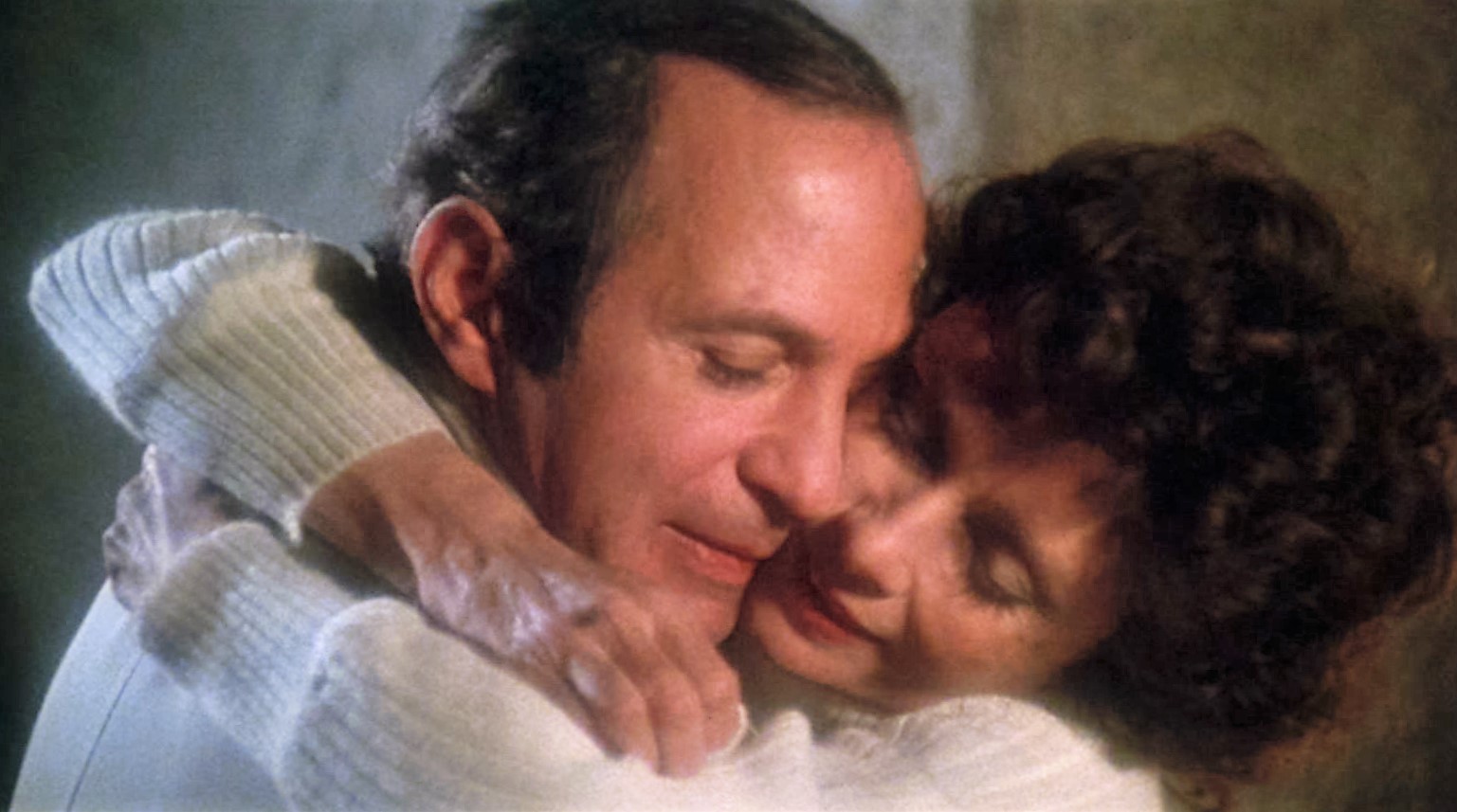
When her father, the head of an international pharmaceutical firm, is murdered, Elizabeth Roffe (Audrey Hepburn of The Unforgiven) takes over the company with the help of Rhys Williams (Ben Gazzara of The Young Doctors), whom she marries. But virtually all of the board members, all of whom are Elizabeth's relatives, are desperate for money, and appalled that she refuses to make the firm public, whereupon they could get ready cash. Before long, there are several attempts on Elizabeth's life, including an elevator crash that kills her secretary (Beatrice Straight). Who is the culprit: Ivo (Omar Sharif), whose mistress is demanding money; Helene (Romy Schneider), a ruthless race car driver; Sir Alec (James Mason), whose wife (Michelle Phillips) has run up huge gambling debts; or someone else? And who is responsible for the murders of several young women in snuff films? 

Ben Gazzara and Audrey Hepburn
Certainly an entertaining movie could have been made from Sidney Sheldon's absorbing page-turner, but this is a by-the-numbers effort with some unfortunate casting, slack direction, and an obnoxious musical score by Ennio Morricone, who simply layers the same treacly tune over every scene whether it is appropriate or not.  Director Young seems to have forgotten all he knew about directing, and despite an okay climax, Bloodline has virtually no suspense. The aforementioned elevator crash sequence is so brief and inept that it's positively comical. The best passages in the book, which concern Elizabeth's grandfather's ordeals in a Polish ghetto and the origins of Roffe Industries, get only a little screen time. This was sort of the second "comeback" picture for Hepburn, who gives a competent performance and looks good, if a little scary-skinny with, as one viewer put it, "ribs up to her neck." Gert Frobe from Goldfinger plays an inspector who tries to track down the culprit, but James Mason positively walks off with the picture, which is no surprise. 

Verdict: So much happening and still so dull. **.

Thursday, December 10, 2020

WOMAN HATER

Stewart Granger
WOMAN HATER (1948). Director: Terence Young. 

Lord Terence Datchett (Stewart Granger of Footsteps in the Fog) is a confirmed, rather misogynous bachelor who at the opening helps a friend run away from his own wedding. When Terence learns that French film star Colette Marley (Edwige Feuillere) is bored with men and only wants to be "left alone" to write her memoirs, he offers her his estate, but pretends he is not Lord Datchett but only the estate agent. When Colette learns that the deceptive Terence plans to prove that she is definitely not bored with men, she decides to turn the tables on him. Bolstering one conspiracy after another are butler Jameson (Ronald Squire), Colette's maid. Clair (Jeanne De Casalis), the stableman, and Terence's lovely mother, Lady Datchett (Mary Jerrold). 

Woman Hater is a British version of a battle of the sexes (but hardly screwball) comedy that falls flat due to a lack of real laughs and occasional slapstick that backfires. Granger is adequate as Terence, although he lacks that certain skill at comedy a la Cary Grant. Edwige Feuillere was a well-known and celebrated French film and stage actress who tried her hand at an English-language film but soon went back to France. She is more than credible if not that amusing in a part that Claudette Colbert could have walked away with. The supporting cast, including Miles Malleson [The Thief of Bagdad] as the Vicar and Peter Bull [Dr. Strangelove] as Mr. Fletcher, are perfect, however. 

Verdict: Very, very predictable and not at all funny. **. 

Thursday, October 3, 2013

WAIT UNTIL DARK

Alone in the dark with a killer
WAIT UNTIL DARK (1967). Director: Terence Young.

Blind Susy Hendrix (Audrey Hepburn) is unaware that some men who have come to her apartment pretending to either be friends of her husband or police officers are actually crooks looking for a drug-filled doll that a woman handed off to Susy's unsuspecting husband, Sam (Efrem Zimbalist Jr.). Gradually she realizes that something is wrong, and prepares to fight for her life when the gentlemen come back from a wild goose chase she's sent them on. The main trouble with Wait Until Dark -- which was based on a stage play by Frederick Knott (Dial M for Murder) -- is that the suspense is minimal because the audience is clued in to what's going on from the very beginning. Hepburn gives a very good performance and the rest of the surprisingly C List cast are fine, although Alan Arkin seems about as threatening as Boris Badenov. Julie Herrod is excellent as the neighbor child Gloria who is alternately helpful and bratty. Henry Mancini's score does what it can to increase the limited excitement. It's hard to figure why Arkin and Crenna were billed above the title along with Hepburn.

SPOILER ALERT: Susy has been encouraged by her husband to be as independent as possible despite her blindness, which leads to two problematical developments. We already know she can walk by herself to her husband's office, so instead of barricading herself in her apartment, why doesn't she just leave and ask for someone to help her get to the nearest precinct? [St. Luke's Place where this takes place runs right into Seventh Avenue and the men watching her place have gone off on the wild goose chase.] At the very end when Sam sees her bloodied and huddled by the refrigerator, he waits for her to get up and make her way towards him, but surely in a situation like this he would forget his independence edict and go hug the woman he's supposed to be in love with after such an ordeal? Also, in a moment that made some nervous nellies in the audience jump in fright, Alan Arkin leaps out of the darkness at Susy after he's been stabbed and falls to the ground unconscious. Maybe he might have been able to painfully lurch after her, but leap? The moment is ludicrous instead of startling.

Verdict: If you want to see a better Frederick Knott adaptation watch Dial M for Murder instead. **.

Sunday, June 15, 2008

THUNDERBALL

THUNDERBALL (1965). Director: Terence Young.

Overlong but generally very entertaining Bond film is a handsome production with excellent photography and some great set-pieces. SPECTRE, headed by an unseen Blofeld (voice of Dr. No's Joseph Wiseman), assigns Number 2, Emilio Largo (Adolfo Celi), to arrange the theft of two atom bombs with which to blackmail the world's governments into a huge pay-off. Bond, accompanied by Felix Leiter (Rick Van Nutter) and female agent Paula (Martine Beswick) travels to Nassau to investigate Largo, where he meets the man's beautiful mistress Domino (Claudine Auger), who winds up helping him. The theme song, sung with zest by Tom Jones, is memorable, as is the prologue sequence, wherein Bond exposes and kills an enemy agent who attends his own funeral in drag. The bit with the sharks in Largo's swimming pool that eat a couple of his henchmen and nearly munch on Bond, is interesting, and the finale on the speeding, runaway hydrofoil is thrilling [none of these sequences are in Fleming's novel; neither is Bond's souped-up car or the lady assassin, Fiona (Luciana Paluzzi)]. 
Another change from the novel is that Domino's late brother is a good guy. He doesn't steal the atom bombs and kill his colleagues, but is murdered by Fiona and replaced by a double.

Thunderball is a nearly excellent 007 adventure but it does have its detractors. Sometimes the music, while attractive, is much too languid for an action picture, making the pace seem slow. It doesn't help that some sequences could certainly have been trimmed. The sequence when Largo and his men recover and move the bombs from the downed plane goes on forever, for instance. Another problem is that Claudine Auger, while competent enough as Domino, exhibits little personality [Paluzzi is much better as the evil hit woman]. Adolfo Celi is somewhat striking and dynamic as Largo, but his performance isn't that great. Of the supporting cast, Martine Beswick makes the best impression, but she has little to do and is quickly killed off [she also appeared in From Russia with Love as one of the battling gypsy women]. There are a couple of dumb moments. In the novel the lovely gal at the Shrublands health spa uses a mink glove to soothe Bond's muscles after his “accident” on the rack (a well done sequence in the movie). In the film, Bond uses the mink glove on her and tells her how soothing it is as if it's his glove that he carries around in his luggage. When Bond tries to convince Domino how evil Largo is, he says “Largo had him [your brother] murdered – or it was on his orders.” Of course, that means the same thing. What Bond really meant was “Largo killed your brother – or it was on his orders.” Thunderball was remade as Never Say Never Again with the same star.

Verdict: Whatever its flaws, Thunderball is one of the best of the Sean Connery Bond adventures. ***.

Tuesday, April 22, 2008

DR. NO [revisited]

DR. NO (1962). Director: Terence Young.

Asked what he thought of the film adaptation of his novel "Dr. No," Ian Fleming replied thusly: “Those who've read the book are likely to be disappointed, but those who haven't will find it a wonderful movie. Audiences laugh in all the right places.” Well ... score one for Fleming, who was right on target: the book was better. Still, Dr No is an entertaining, essentially well-made thriller which introduced James Bond 007 to the world (notwithstanding the Casino Royale television production) and started the practice of him giving out with black comedy quips which were not in Fleming's novels. Dr. No also began the practice of featuring a cinematic Bond who was much less dimensional than he was in the books. Bond is assigned to investigate the disappearance of two agents in Jamaica, and comes afoul of the sinister Dr. No (Joseph Wiseman), who is taking over the guidance systems of the super-powers' missiles. The best and most suspenseful sequences have to do with Bond trying to keep from being captured by the doctor's men on his island of Crab Key. [Although the fictional James Bond has a scar on his cheek, this detail has always been omitted from the films.]

Although the movie is relatively faithful to Ian Fleming's novel, there were quite a few changes made. Felix Leiter does not appear in the book, but he shows up briefly in the film in the form of Jack Lord. Bond winds up with a tarantula in his bed instead of the much more dangerous giant centipede that appears in the novel [the deadliness of the tarantula has always been greatly exaggerated]. There are no birds or bird dung on Crab Key, and we learn what the doctor is up to almost from the very start. Honey (Ursula Andress) does not have a broken nose, but she does relate the story, as in the novel, of dropping a black widow spider into the bed of a man who raped her. [Although no reference book states this outright, Andress appears to be dubbed; for one thing the Swiss actress has a British schoolgirl accent, and her voice sounds different from subsequent film appearances.] Dr. No is working for SPECTRE instead of for the Russians, and at the end Bond enters a tunnel simply as an escape attempt – it is not “doctored” with Dr. No's traps as a test of endurance as in the novel. Finally, there is no giant squid at the end of the tunnel. Perhaps the filmmakers felt the audience just wouldn't buy this [to date there is no live giant squid in captivity.] 

Handsome and well-produced, Dr. No is not a great movie, but it is a good one, and a not-bad introduction to the World of 007. There is one rather dumb moment, when Bond kills Professor Dent, who is in the employ of Dr. No. While one can't blame Bond for wanting to snuff Dent, who has tried to kill him more than once, what about keeping him alive for questioning? The cast members give adequate to excellent performances with Wiseman the best as the sinister and strangely elegant Dr. No.

Verdict: Definitely has its moments. ***.

Sunday, January 6, 2008

DR. NO


DR. NO (1962). Director: Terence Young.

The film that introduced James Bond 007 to moviegoers is not a classic, but it does hold the attention and establish the filmic counterpart to Ian Fleming's literary creation. The black comedy quips came from the screenwriter, not Fleming, whose Bond was a bit more dimensional than he has ever been in the movies [although Timothy Dalton, and then Daniel Craig, perhaps came closest]. In this Bond is up against the sinister part-Chinese mastermind Dr. No (an excellent Joseph Wiseman), who takes control of missiles on behalf of SPECTRE. In the novel his front was a guano operation, but the filmmakers decided to – if you'll pardon the expression -- drop the s--t and make a few other changes. Gone are the broken nose on Honeychile Ryder (a probably dubbed Ursula Andress, looking luscious), the three-inch scar on Bond's cheek, and the giant squid that nearly makes a meal out of 007 at the end of the novel. Instead of running Dr. No's survival test tunnel as in the book, Bond simply crawls through an access tube to escape. The tarantula that nearly bites Bond when he's in bed is relatively harmless; Fleming used a much more deadly giant centipede instead. Some nice scenery and scenic design helps, but this is nowhere as good as the book. Still, it led to a great many more Bond films, some of which were excellent.

Verdict: Fun if you're in the mood. **1/2.

NOTE: For more on James Bond films and novels check out THE JAMES BOND 007 PAGES by clicking here: http://jamesbond007pages.tripod.com/.