Lively, entertaining reviews of, and essays on, old and newer films and everything relating to them, written by professional author William Schoell.
Showing posts with label John Beal. Show all posts

Thursday, October 4, 2018

THE LEGEND OF LIZZIE BORDEN

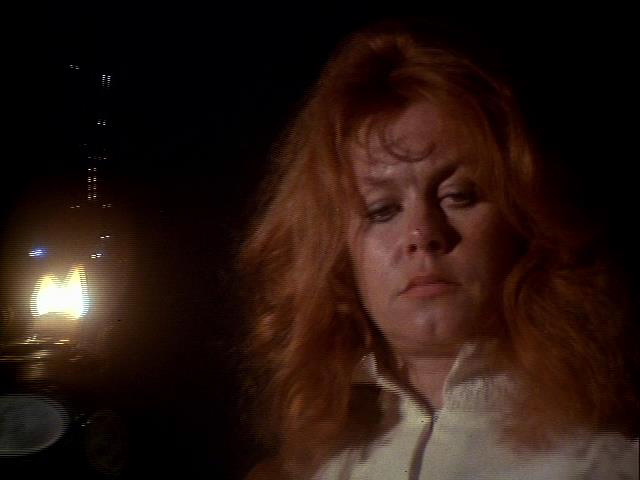
Liz Montgomery as Lizzie
THE LEGEND OF LIZZIE BORDEN (1975 telefilm). Director: Paul Wendkos.

In Falls River, Massachusetts in 1892, Andrew Borden (Fritz Weaver) and his wife, Abby (Helen Craig) are found axed to death in their home. The chief suspect immediately becomes Andrew's daughter, Lizzie (Elizabeth Montgomery), who maintains her innocence both in court and to her sister, Emma (Katherine Helmond). With flashbacks showing the troubled life of the family, the movie shows us the investigation, the trial, and the outcome. The Lizzie Borden story remains one of the most fascinating unsolved mysteries and double murders in history, and this early look at the case, sticking mostly to the facts, makes for a compelling TV movie. It leaves out the fact that a cousin was staying in the house at the time of the murders but he was apparently out of the house during the actual gruesome event. The movie's explanation for how Lizzie did not get blood on her clothing is somewhat suspect, however. The biggest problem with the telefilm is the lead performance, with Montgomery often acting as if she were in rehearsal, and hardly giving what could be called a committed performance for much of the film's length. Helmond is more on the mark as her sister, as are Weaver and Craig, and Fionnula Flanagan as the maid, Bridget. Ed Flanders [The Exorcist III] makes an efficient prosecutor, and John Beal [The Vampire] is fine as a doctor who ministers to family friend, Lizzie. Helen Craig, who plays the unpleasant stepmother, is better in this than she was as the evil nurse in The Snake Pit. This is superior to the Lifetime movie Lizzie Borden Took an Ax, (although the fictionalized series that followed, The Lizzie Borden Chronicles, was quite entertaining).  Paul Wendkos also directed the excellent telefilm The Brotherhood of the Bell. NOTE: A new Lizzie Borden theatrical film, focusing on the character's lesbianism, has just been released, and it seems based (without crediting him) on Evan Hunter's novel, Lizzie, which also posited the theory that Lizzie and maid Bridget were lovers.

Verdict: Entertaining, but just misses being really special. **3/4. 

Thursday, February 25, 2016

THE FIRM

Gene Hackman and Tom Cruise
THE FIRM (1993), Director: Sydney Pollack.

Mitch McDeere (Tom Cruise) is signed up with the law firm of Bendini, Lambert and Locke at a six figure salary with lots of percs. He and his wife, Abby (Jeanne Tripplehorn), are ecstatic, but there's a serpent in paradise. Partners in the firm seem to die on a regular basis, and Mitch realizes there's something not quite kosher about the outfit. Before long he finds himself between a rock and a hard place where his employers and interested agents of the FBI are concerned. Can he manage to help the agents without getting himself killed? Years ago there used to be thrillers that lasted maybe 80 or 90 minutes, included lots of plot twists and turns, and even at times a bit of characterization. The Firm clocks in at over two and a half hours, doesn't really have enough plot to sustain it, doesn't retain a grip on the suspense, and doesn't even include that much characterization. One problem is that the vastly overrated Sydney Pollack couldn't direct a true thriller if his life depended on it, and his attempts in that area always fail. The movie starts off quite well and sets up an interesting situation, but then it just plods along its dreary course until you lose interest in the proceedings. Cruise isn't bad, although he sort of just walks through it looking "concerned." Tripplehorn is better, and Gene Hackman [The French Connection] really steals the picture as a conflicted associate of Mitch's as well as his mentor. There are also nice turns by Gary Busey [A Star is Born] as a private eye, Holly Hunter as his secretary-lover (the murder scene involving both of these characters is one of the best things in the movie); Hal Holbrook as a law partner; Ed Harris as an FBI agent; David Strathairn as Mitch's convict brother; Steven Hill as another agent; and John Beal [The Vampire] as another of the partners.

Verdict: Too many characters and detours eventually add up to tedium. **1/2.

Thursday, August 22, 2013

ALIMONY

Dumbrille, Lind and Vickers set a scheme in motion
ALIMONY (1949). Alfred Zeisler.

Composer Dan Barker (John Beal) relates the story of a woman he was once in love with, Kitty Travers (Martha Vickers), to her estranged father (James Guilfoyle), who hasn't seen her in years. Show biz aspirant Kitty stayed in the same boarding house with Barker, who was affianced to pretty Linda (Hillary Brooke). But Kitty works her wiles on Dan, who is just about to sign to do a Broadway show, and before long the man has dumped poor Linda in favor of Kitty. Unfortunately for Dan, the Broadway deal comes a cropper and Linda is soon off looking for greener pastures. But even when Dan and Linda are finally married, Kitty comes back into their lives because she was the inspiration for a song Dan composed that becomes a big hit [and isn't that memorable]. Again Dan acts like a complete jerk, Kitty a total skank, and as for dopey Linda ... let's just say that Alimony is the kind of irritating melodrama where a perfectly nice and attractive woman is treated abysmally by her man but still seems to think only the other woman is to blame. Neal, Vickers and Brooke give good performances, as do Douglass Dumbrille as an oily lawyer who works with Kitty and her friend Helen (a snappy Laurie Lind, who was introduced in this picture and never made another movie) and Marie Blake (AKA Blossom Rock of Hilda Crane) who plays the landlady of the boarding house. The title refers to the fact that Helen and Kitty marry or try to marry wealthy older men so that they can divorce them and collect you-guessed-it.

Verdict: Nice actors and premise but this is forgettable. **.

Thursday, March 28, 2013

LES MISERABLES (1935)

March and Laughton in a tense confrontation


LES MISERABLES (1935). Director: Richard Boleslawski.

Jean Valjean (Fredric March) goes to prison for stealing a loaf of bread, whereupon he makes an impression on Inspector Javert (Charles Laughton) when he uses steely shoulder muscles to lift a fallen beam off of a fellow inmate. Years later, when Valjean has become the respected citizen Mssr. Madeleine, Javert witnesses him lifting a cart off of a man and gets suspicious, leading to a lengthy and convoluted pursuit. Victor Hugo's novel has been compressed a bit, certain characters [such as the innkeeper and his wife] become less important, but the basic plot is all there. This is a well-mounted and elaborate production with fine cinematography from Gregg Toland and an expert editing job by Barbara McLean; a montage depicting Valjean fleeing from Javert by coach is especially breathless and exciting. Although he has his moments, this is not one of March's better performances; in fact he's surprisingly perfunctory in the opening scenes when he explains why he stole the bread for his starving family. Ironically, some of his best moments come not when he's playing Valjean, but Champmathieu, a man who looks like Valjean and is arrested in his place! Laughton gives a stunning performance, however, and Rochelle Hudson scores as the grown-up Cosette, who falls for the protesting student, Marius (well-played by John Beal). Cedric Hardwicke, Florence Eldridge [as Fantine, mother of Cosette], and Frances Drake are also notable.

Verdict: If you prefer your Hugo without the pop music. ***.

Monday, February 11, 2008

THE VAMPIRE

THE VAMPIRE (1957). Directed by Paul Landres.

A small town doctor (John Beal) with a young daughter accidentally ingests some pills created by a dead scientist and reverts into a strange creature that attacks and kills several neighbors. Although he leaves two bite marks on the neck, he is not a vampire in the usual sense, but causes capillary breakdown or something along those lines which causes the bodies of the victims to eventually disintegrate. With its nice-guy-turns-into-tormented-monster theme, the film is along the lines of Neanderthal Man and Monster on the Campus. There’s a skeleton with eyeballs intact that pre-dates a similar bit in 1959's Caltiki. The make up is a little too comical at times, but otherwise effective. The performances from Kenneth Tobey as a cop and Coleen Gray as a nurse-receptionist are solid, but the stand-out is John Beal, who gives a very good and sensitive performance as the haunted, horrified (and horrifying) doctor. The always reliable Dabbs Greer is also good as a colleague – and late victim – of Beal’s. Pretty standard and without much style or atmosphere, but it holds the attention and has several exciting sequences. Gerald Fried's musical score is a plus.

Verdict: Worth a look. **1/2.