Lively, entertaining reviews of, and essays on, old and newer films and everything relating to them, written by professional author William Schoell.
Showing posts with label Helen Craig. Show all posts

Thursday, October 4, 2018

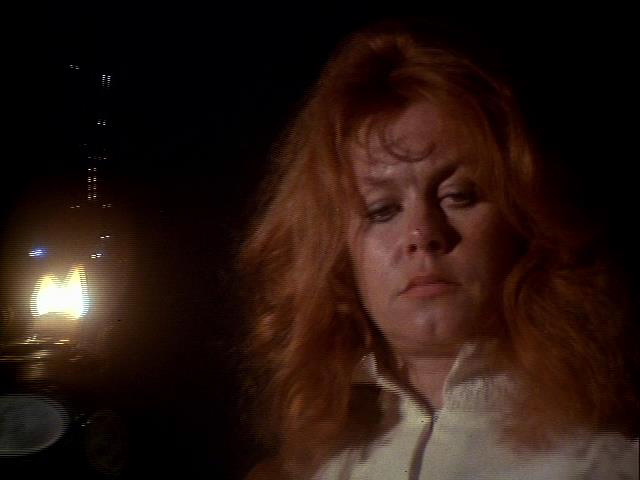
THE LEGEND OF LIZZIE BORDEN

Liz Montgomery as Lizzie
THE LEGEND OF LIZZIE BORDEN (1975 telefilm). Director: Paul Wendkos.

In Falls River, Massachusetts in 1892, Andrew Borden (Fritz Weaver) and his wife, Abby (Helen Craig) are found axed to death in their home. The chief suspect immediately becomes Andrew's daughter, Lizzie (Elizabeth Montgomery), who maintains her innocence both in court and to her sister, Emma (Katherine Helmond). With flashbacks showing the troubled life of the family, the movie shows us the investigation, the trial, and the outcome. The Lizzie Borden story remains one of the most fascinating unsolved mysteries and double murders in history, and this early look at the case, sticking mostly to the facts, makes for a compelling TV movie. It leaves out the fact that a cousin was staying in the house at the time of the murders but he was apparently out of the house during the actual gruesome event. The movie's explanation for how Lizzie did not get blood on her clothing is somewhat suspect, however. The biggest problem with the telefilm is the lead performance, with Montgomery often acting as if she were in rehearsal, and hardly giving what could be called a committed performance for much of the film's length. Helmond is more on the mark as her sister, as are Weaver and Craig, and Fionnula Flanagan as the maid, Bridget. Ed Flanders [The Exorcist III] makes an efficient prosecutor, and John Beal [The Vampire] is fine as a doctor who ministers to family friend, Lizzie. Helen Craig, who plays the unpleasant stepmother, is better in this than she was as the evil nurse in The Snake Pit. This is superior to the Lifetime movie Lizzie Borden Took an Ax, (although the fictionalized series that followed, The Lizzie Borden Chronicles, was quite entertaining).  Paul Wendkos also directed the excellent telefilm The Brotherhood of the Bell. NOTE: A new Lizzie Borden theatrical film, focusing on the character's lesbianism, has just been released, and it seems based (without crediting him) on Evan Hunter's novel, Lizzie, which also posited the theory that Lizzie and maid Bridget were lovers.

Verdict: Entertaining, but just misses being really special. **3/4. 

Thursday, September 12, 2013

THE SNAKE PIT

Olivia De Havilland as the troubled Virginia
THE SNAKE PIT (1948). Director: Anatole Litvak.

Virginia (Olivia de Havilland) is a troubled woman who has been committed to a psychiatric institution. Dr. Kik (Leo Genn) interviews her confused but loving husband, Robert (Mark Stevens), and tries to figure out what is responsible for Virginia's fragile mental state. Flashbacks show her life with Robert, as well as the earlier years before she met him. It's all rather psychologically dubious, but the film is generally well-acted and entertaining. Fellow patients in the institution, some of whom are crazier than others, include Beulah Bondi as a haughty old lady with delusions, Betsy Blair as the delicate Hester, as well as Lee Patrick, Celia Lovsky, Barbara Pepper, Minerva Urecal, Marie Blake (Blossom Rock), and others, most of whom just have bits. Mary Treen, Glenn Langan, and Ann Doran are on the staff; Helen Craig gives a terribly unsubtle performance as the evil Nurse Davis. Natalie Schafer is cast as Virginia's mother and Lora Lee Michel plays her as a child; both are quite good. While The Snake Pit is an uncertain mixture of sentiment and silly moments, and is a bit on the exploitative side, it does have some undeniably effective scenes, such as the poignant climax when Laura (Jan Clayton, who was Julie Jordan in the original Broadway production of Carousel) sings "Going Home" at the dance. Alfred Newman's score and Leo Tover's cinematography are also assets. Arthur Laurents, among others, worked on the screenplay and disavowed this in his memoirs. Seven years later, The Shrike was a somewhat grittier look at life inside a mental ward. Litvak also directed This Above All and many others.

Verdict: Hardly the final word on the subject but not without its merits. ***.