Lively, entertaining reviews of, and essays on, old and newer films and everything relating to them, written by professional author William Schoell.
Showing posts with label 1972. Show all posts

Thursday, October 24, 2024

RAW MEAT

RAW MEAT (aka Death Line/1972). Director: Gary Sherman. 

When an important dignitary vanishes from a London subway station, Inspector Calhoun (Donald Pleasence of Halloween) questions American student Alex Campbell (David Ladd) and his girlfriend, Patricia (Sharon Gurney), who discovered the man unconscious (he later disappears). You learn very early on from Inspector Richardson (Clive Swift of Keeping Up Appearances and Frenzy) that before the turn of the century some male and female workers were trapped in a cave-in while scooping out a new station nearby. Apparently they managed to survive via cannibalism. Now the last survivor (Hugh Armstrong) of the descendants of this group is plucking hapless people from the subway to become his supper, and the latest would-be victim is poor Patricia -- Alex goes in search of her. 

Raw Meat benefits from some highly atmospheric and creepy underground settings (and some gross, explicit and well-done make-up effects), but suffers from very, very somnambulistic pacing. Virtually every scene and shot goes on for far too long. Because you know exactly what's happened to the people who disappeared almost from the very first, there's absolutely no suspense. In fact, the film is pretty tedious until the final few minutes. Donald Pleasence is also hard to take, playing his character in a fashion that is meant to be humorous but is merely obnoxious. The best performance in the film comes from Christopher Lee, who shows up for five minutes as an understandably condescending (to Pleasence) member of MI5. Gary Sherman also directed Dead and Buried, which is much better than this. 

Verdict: Nice idea but poor execution. **. 

Thursday, February 15, 2024

ONCE UPON A MATTRESS (1972)

Carol Burnett sings "Shy"
ONCE UPON A MATTRESS (1972 TV adaptation). Directed by Ron Field and Dave Powers. Music by Mary Rodgers. Lyrics by Marshall Barer.

Having done a black and white TV adaptation of her Broadway triumph, Carol Burnett decided to do it again -- this time in color -- about a decade later. Jack Gilford and Jane White reprise their roles as the king and queen, Bernadette Peters and Ron Husmann play the young lovers, Wally Cox is the jester, Ken Berry is Prince Dauntless, and Lyle Waggoner is the wizard, Sir Studley. At first you might think that Burnett is a little off her game, having lost that sort of gauche quality that she had before she became so famous, but then she digs into her showstopper "Happily Ever After" (left out of the earlier version) and brings the house down. She's sensational. 

Jane White and Ken Berry
However, she almost has to take a back seat to Jane White, who is even better than she was in the first version, and who is given a little more to do, such as being flirtatious with Sir Studley. One of the love duets, "In a Little While," arguably the best song in the show, has been reinstated, and the lovers -- the gal is pregnant -- are once again unmarried, this being the swingin' seventies. Ken Berry reveals a pleasant singing voice and while not quite as good as Joseph Bova in the original telecast, works well with Burnett. Ron Husmann was a busy Broadway performer. 

Verdict: Another charming and tuneful adaptation. ***.                    

Thursday, March 2, 2023

SLEUTH (1972)

Lawrence Olivier and Michael Caine
SLEUTH (1972). Director: Joseph L. Mankiewicz. Screenplay by Anthony Shaffer from his play.

"Sex is the game; marriage the penalty." -- Andrew

"You are the complete clown." -- ditto

Mystery writer Andrew Wyke (Lawrence Olivier) receives a visitor at his country estate: Milo Tindle (Michael Caine), who owns his own hairdressing salon and happens to be the lover of Wyke's wife. Milo is hoping that Andrew will agree to give his wife a divorce, but Andrew has other plans. He wants Milo to steal some of his wife's jewelry -- Milo can sell the jewels and have enough money to keep his lover in style, and Andrew will get a huge insurance pay-out. But Andrew may have a more sinister scheme in mind than insurance fraud. It isn't too long before Inspector Doppler comes a calling ... 

Inspector Doppler deals with Andrew
Based on Anthony Shaffer's stage play, this is a twisty mystery-thriller that provides two good actors with some juicy roles and real opportunities for scene-stealing. While Caine is marvelous, Olivier is outstanding, putting on a thespian show of grand proportions. That's what makes the film entertaining even if you've seen it before and remember the plot twists (although it's a bit more fun when you're seeing it for the first time). The film is overlong at over two hours, and I confess this business at the very end with police showing up out of nowhere makes little sense, but the movie is certainly worth one look. The play is intelligently opened up by Shaffer, and Mankiewicz's direction is inobtrusive and keeps things moving. The picture is quite amusing until things get serious -- and even afterward. 

Verdict: Perhaps not nearly as wonderful as people remember -- even back then one of the twists seemed obvious -- but memorable in spite of it. ***. 

Thursday, January 5, 2023

X, Y AND ZEE

X, Y AND ZEE (aka Zee and Co./1972). Director: Brian G. Hutton. 

"I got expelled at school because I fell in love with one of the nuns." -- Stella. 

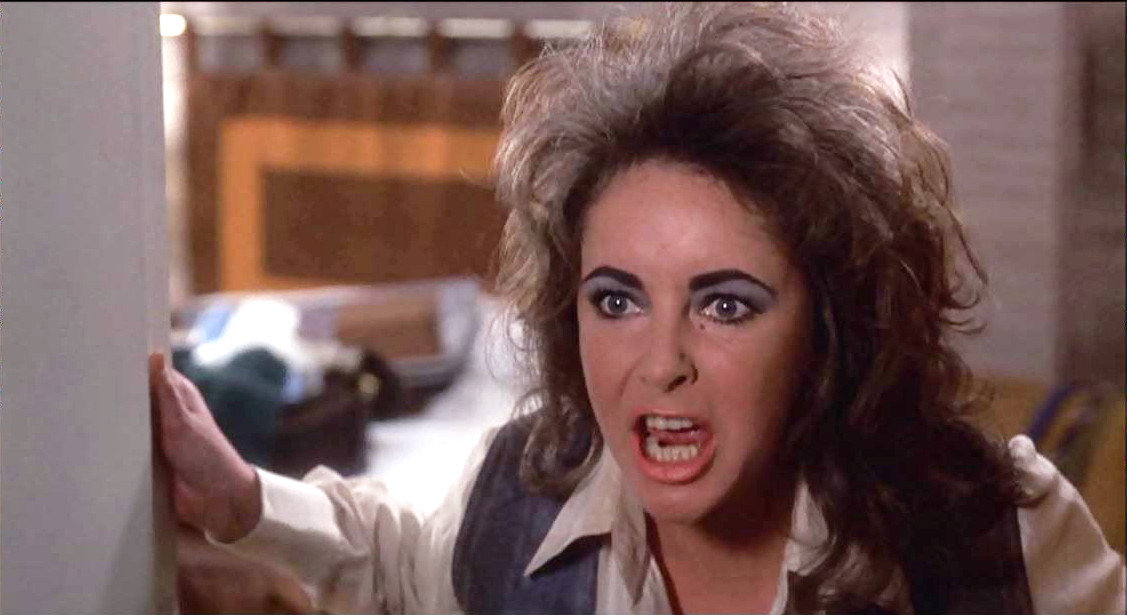
Zee (Elizabeth Taylor) and Robert (Michael Caine of Dressed to Kill) have a toxic marriage that seems to run on ennui and liquor. At a party Robert meets the widow Stella (Susannah York), and while he hopes for just another cheap affair winds up supposedly falling in love with her. Zee seems to have a casual and world-weary reaction to this, but then comes to see Stella and her two small boys -- she and Robert can't have children -- as a threat. Robert makes up his mind to move out and have a life with Stella. What's a wife to do?  Wondering exactly how old Stella might have been when she kissed a nun and got expelled at school, Zee pays a call on her when Robert is out ... 

Frankly X,Y and Zee is over just when it starts to get interesting. For most of its length, it is a fairly dreary marital drama -- wife vs. mistress with a cad caught in the middle -- that has good performances and some good dialogue along with two-dimensional characters. Unlike the "bisexual" comedy Score, which came out the following year, X, Y and Zee turns coy and basically cops out at the end. Made only three years after Stonewall X, Y and Zee has a fairly negative attitude towards homosexuality, with stereotypical gay characters being referred to as "fags" (even right in front of them), so it's hard to think of it as ahead of its time (now if the trio had turned into a "thrupple!"). One also has to remember that Susannah York had already starred in The Killing of Sister George, which was much more explicit on lesbian matters and was released four years earlier.

Liz on the rampage!
Another problem with the movie is that none of the characters are likable. While we can imagine how she became that way, Zee is overbearing and superficial. Stella is, in a word, stupid to even begin a relationship with a man like Robert, who is -- in another word -- a pig. The movie doesn't so much as explore sexual options as exploit them, although many might find the ending amusing. Margaret Leighton (of The Winslow Boy) provides a little bit of fun as an intoxicated party host. Taylor and director Hutton also worked together on Night Watch

Verdict: Who's Afraid of Virginia Mayo? Heads in an interesting direction, and then completely muffs it. **. 

Thursday, July 21, 2022

THEY ONLY KILL THEIR MASTERS

THEY ONLY KILL THEIR MASTERS
(1972). Director: James Goldstone. 

Chief of Police Marsh (James Garner) investigates when a woman is found dead and it is at first assumed that she was the victim of a Doberman Pinscher. But it turns out that she was murdered by a much more human adversary. Her husband (Peter Lawford) says she told him she was going to leave him for another woman. Interestingly enough, she was also pregnant at the time of her death. Suspects include a vet (Hal Holbrook), his assistant (Katherine Ross), who becomes involved with Marsh, and the vet's wife (June Allyson, who is quite good in a brief sequence). Edmond O'Brien plays the owner of a liquor store, and Tom Ewell and Ann Rutherford have supporting roles as well; Harry Guardino is another cop. This is typical of slick TV-like movies released theatrically in the seventies that try to be "hip" by adding homoerotic elements, but Lane Slate's script is pretty dated when it comes to the subject of homo and bisexuality and swinging. Garner is Garner; Ross is pretty. The best scene has the Doberman going a little nutty when Garner and Ross are in bed. 

Verdict: If you're a swinger you gotta die. **.

Thursday, May 12, 2022

ENDLESS NIGHT

Hywel Bennett and Hayley Mills
ENDLESS NIGHT (1972). Director: Sidney Gilliat. 

Michael Rogers (Hywel Bennett) drives wealthy people across Europe but wants a better life for himself. He greatly admires a piece of property called Gypsy's Acre in a small English village, and dreams of having his dying architect friend, Santonix (Per Oscarsson), design a house for him there. Dreams do come true after Michael meets and falls for Ellie Thomson (Hayley Mills), a lovely young woman who turns out to be an American heiress. Michael is disturbed by the discrepancy in their incomes, but Ellie is determined to marry him, despite her family's and advisors' objections. She is helped in her goal by her friend, Greta (Britt Ekland), who becomes an unwelcome presence in the couple's lives after they tie the knot. Santonix does design a magnificent house for them on the desired property, but events occur which make them feel ill at ease. Then there's a death ... 

Bennett with George Sanders
Endless Night is based on the novel by Agatha Christie, one of the author's personal favorites, and it is a suspenseful and especially well-written book which is told, as in the film version, from the point of view of Michael. Endless Night is quite well-acted by all the participants -- George Sanders adds a touch of class as a deceptively friendly lawyer -- the house is something to see (particularly the inside of it), and the viewer may or may not catch on to the twist that occurs at the finale. 

Britt Ekland with Mills
The trouble is that Endless Night is just blah. There's only one possible twist, not a lot of serious suspects, and the whole production just comes off as second-rate. Even Bernard Herrmann's score seems to consist of snatches from other and better movies. Bennett and Mills first worked together in The Family Way, then reunited for Twisted Nerve and then this film. Hayley Mills married Roy Boulting, who was 33 years older than her, and it is said that his choices for her all but ruined her career. Mills is still acting although her profile is comparatively low today. Bennett passed away in 2017. Britt Ekland's [The Wicker Man] last credit was in 2006. 

Verdict: Read the novel instead. **1/2.

Thursday, May 27, 2021

EVERYTHING YOU ALWAYS WANTED TO KNOW ABOUT SEX BUT WERE AFRAID TO ASK

EVERYTHING YOU ALWAYS WANTED TO KNOW ABOUT SEX BUT WERE AFRAID TO ASK
(1972). Director: Woody Allen. 

Woody Allen took some questions from the book of the same name and filmed several segments supposedly relating to these questions. "Do aphrodisiacs work?" is a very funny medieval sketch where Allen winds up with his hand locked in the chastity belt of his horny married queen (an excellent Lynn Redgrave). "What is Sodomy?" actually looks at bestiality as Gene Wilder plays a doctor who falls in love with a sheep. It's a bit yucky, like anything pertaining to the subject, but it has its moments. 

"Why do some women have trouble reaching orgasm?" is a spoof of Italian movies with Allen discovering that his wife (Louise Lasser) only gets turned on in public places. "Are transvestites homosexual?" presents Lou Jacobi (who's terrific) as a husband who gets caught wearing the clothing of his hostess at a dinner party. "What are sex perverts?" first has a homoerotic hair tonic ad, and then presents an episode of the TV show What's My Perversion? an erotic take on What's My Line? "Are Sex Research Findings Accurate?" has John Carradine letting loose a giant breast upon the world in a spoof of monster movies. In "What happens during ejaculation?" Woody plays a nervous sperm who doesn't really like the idea of being thrust out into the big wide womb. This is probably the most inventive segment. Everything You Always Wanted to Know is certainly not for all tastes but it has its share of laughs and holds the attention. You'll probably learn no more about sex than you did from the book. 

Verdict: Watch out for giant boobs! ***.

Thursday, April 19, 2018

DRACULA A.D. 1972

New Blood: Christopher Neame as a young vampire
DRACULA A.D. 1972 (also known as Dracula A.D./1972). Director: Alan Gibson.

A prologue set in 1872 shows the deaths of both Dracula and Van Helsing after a final, furious battle, then the film jumps ahead 100 years in this first of Hammer's 20th century Dracula flicks. Lorrimer Van Helsing (Peter Cushing) is the grandson of the great vsmpire hunter, living in modern London with his granddaughter, Jessica (Stephanie Beacham of Schizo). Jessica is friends with a man named Johnny Alucard (Christopher Neame), who is apparently the reincarnation of one of Dracula's human slaves. Johnny enlists his friends in a black mass, the sole purpose of which is to revivify the ancient, blood-sucking count (Christopher Lee). Dracula snacks on several of Johnny's nubile friends and turns a decidedly willing Johnny into a vampire, but Drac wants revenge on the Van Helsing family and sets his sights on Jessica ... Dracula A.D. 1972 with its jazzy score is like a pop version of Dracula but it mostly works, primarily because of a fast pace and some excellent acting. Cushing and Lee give their usual classy and committed performances, and Neame is a real find as the dynamic and evil Alucard. Michael Coles makes an effective Inspector Murray and Caroline Munro [The Spy Who Loved Me] is fine as one of the count's first victims. The action sequences are well-staged by director Gibson. The vampire folklore in the film is confusing, as Dracula turns people into vampires with one bite without their dying first, and his other victims never rise from the grave. The group Stoneground perform the catchy enough "Alligator Man" in a party sequence. Neame has amassed nearly 100 credits and is still working today. Followed by The Satanic Rites of Dracula.

Verdict: Fun Dracula flick with excellent performances. ***.

Thursday, December 14, 2017

THE RED QUEEN KILLS SEVEN TIMES

Barbara Bouchet
THE RED QUEEN KILLS SEVEN TIMES (aka La dama rossa uccide sette volte/1972). Director: Emilio Miraglia.

The inhabitants of Wildenbrook Castle are supposedly under a legendary curse where every hundred years a bad sister murders the good sister and several others. Speculation about this curse was started by a very old painting depicting a "red queen" murdering another queen dressed in black. When their grandfather dies, it precipitates a series of vicious murders centering around three sisters: Kitty (Barbara Bouchet of Casino Royale), Franziska (Marina Malfatti), and Evelyn, who has supposedly gone to America. We learn early on that Evelyn is dead, but who is that who is dressing up like the Red Queen and killing people she encounters, especially those associated with a fashion house where Kitty works? A police inspector (Marino Mase) works the case and his suspects include Martin (Ugo Paglial), who takes over when the original managing director is stabbed to death; model Lulu (Sybil Danning); Martin's crazy wife, Elizabeth (Carla Mancini); and others. A couple of the murders are fairly inventive, but the picture has no style whatsoever, although it does have some suspense and holds the attention if you're in the mood for a second-rate giallo. An Italian-West German co-production. Miraglia also directed The Night Evelyn Came Out of the Grave, which was better.

Verdict: Beware those cackling queens! **1/2.

THE CASE OF THE BLOODY IRIS

Franco Agostini and Giampiero Albertino
THE CASE OF THE BLOODY IRIS (aka Perché quelle strane gocce di sangue sul corpo di Jennifer?/1972). Director: Giuliano Carnimeo (Anthony Ascott).

A performer named Mizar (Carla Brait) finds a woman's body in the elevator of her building. Not much later Mizar herself is forcibly drowned in her apartment's bathtub by an unseen killer. In spite of this Jennifer (Edwige Fenech) and her friend, Marilyn (Paola Quattrini), move into the murdered woman's flat. One of the chief suspects for the murders is Andrea Barto (George Hilton), who is manager for this and other apartment houses. Jennifer is befriended by a neighbor named Sheila (Annabella Incontrera), who lives with her elderly father, a violinist (George Riguad). (It is made clear that Sheila is a lesbian who is attracted to Jennifer, but she is not exactly "predatory" as she has been described in write-ups of the film.) The masked killer breaks into Jennifer and Marilyn's apartment, but doesn't manage to kill them just yet. Most sensible people would move out of the apartment as fast as possible, but Jennifer needs to stay there so that the rest of the plot can be played out. The Case of the Bloody Iris holds the attention, but the murders will not be gruesome enough for some viewers. Fenech [The Sins of Madame Bovary] has a mostly European following, and seems competent enough as Jennifer, although Gampiero Albertino and Franco Agostini perhaps offer more flavorful performances as Police Commissioner Enci and his assistant, Redi.

Verdict: Acceptable giallo film, **1/2.


THE CRIMES OF THE BLACK CAT

Shirley Corrigan and Anthony Steffen
THE CRIMES OF THE BLACK CAT (aka Sette scialli di seta gialla/1972). Director: Sergio Pastore.

Blind musician Peter Oliver (Anthony Steffen of The Night Evelyn Came Out of the Grave) overhears what appears to be a murder plot while in a restaurant. A drug-addicted woman, Susan (Giovanna Lenzi), is being forced to participate in several murders that are very cleverly achieved. With the help of his major domo, Burton (Umberto Raho of That Man in Istanbul) and lady friend, Margo (Shirley Corrigan), Peter tries to trace Susan's trail and uncover who is behind the murders. Other characters include Francoise (Sylva Koscina of Deadlier Than the Male), who runs a modeling agency; her lover, Victor (Giacomo Rossi Stuart); the blackmailing Helga (Annabella Incontrera); and her lover, Wendy (Liliana Pavlo). There is a harrowing sequence when Peter is lured onto a roof with gaping holes in it, and a rather disgusting, overly gross lady-gets-slashed-in-the-shower sequence that is out of sync with the rest of the movie. The Crimes of the Black Cat holds the attention and has interesting aspects, but it hasn't much style. Anthony Steffen appears to have been dubbed by Edmund Purdom.

Verdict: Reasonably absorbing giallo film. **1/2.

SEVEN BLOOD-STAINED ORCHIDS

SEVEN BLOOD-STAINED ORCHIDS (aka Sette orchidee macchiate di rosso/1972). Director: Umberto Lenzi.

Someone is murdering women in grisly ways and leaving behind half-moon shaped medallions. When Giulia (Uschi Glas) nearly becomes the next victim on her honeymoon, the police decide to let everyone but her new husband, Mario (Antonio Sabato), think she's dead. Assuming she will be safe enough, Mario embarks on his own investigation after Guilia tells him she first saw the half-moon medallion with an American man at a hotel she then owned. The killings continue as Mario tracks down a heroin addict named Barrett (Bruno Corazzari) who thinks he can identify the American. But every lead only seems to cause frustration. Inspector Vismara (Pier Paolo Capponi) thinks he's found the killer, but the true murderer is only revealed at the climax. Seven Blood-Stained Orchids is quite entertaining, with some gruesome if not too repulsive murder sequences, one involving a power drill that reminds one more of the American slasher films that would follow. Umberto Lenzi also directed the very weird Spasmo. If you're hoping to see something stylish like a Dario Argento film, you'll be disappointed, but at least the movie doesn't bore.

Verdict: Enjoyable minor giallo. **1/2.

Thursday, November 23, 2017

WHEN MICHAEL CALLS

Elizabeth Ashely gets a call
WHEN MICHAEL CALLS (1972 telefilm). Director: Philip Leacock. An ABC Movie of the Week.

Helen Connelly (Elizabeth Ashley of The Carpetbaggers) begins getting phone calls from a boy who claims he is her nephew, Michael -- unfortunately Michael died in a blizzard fifteen years before. Helen tries to dismiss the phone calls and what they may signify from her mind, but then some of her friends and acquaintances wind up dying in mysterious ways. Did Michael somehow survive and is he out for revenge, or is someone else carrying out a grudge plot against the townspeople? Based on a novel by John Farris, When Michael Calls is minor but suspenseful and well acted, with good performances from Ashley, Ben Gazzara [Bloodline] as her concerned ex-husband, and especially Michael Douglas [The China Syndrome] as Michael's older brother. John Farris turned to directing the same year for Dear Dead Delilah with Agnes Moorehead.

Verdict: Holds the attention. **1/2.

Thursday, November 2, 2017

BEWARE! THE BLOB

Gwynne Gilford and Robert Walker Jr. 
BEWARE! THE BLOB (aka Son of Blob/1972). Director: Larry Hagman.

Chester Hargis (Godfrey Cambridge) brings home a frozen specimen that defrosts and turns into the Blob, and it rapidly devours the residents of a small town, including bowlers and ice skaters. Beware! The Blob could have been a perfectly good sequel to The Blob if the approach had been different. Larry Hagman, who was in-between I Dream of Jeannie and his career-reviving role on Dallas, decided to turn this into a free-wheeling borderline parody despite the fact that the whole premise already has black comedy aspects to begin with. So Hagman cast some friends and character actors and guest-stars -- such as Carol Lynley, Burgess Meredith, and Shelley Berman -- all of whom seem to be having fun, but not one of whom is actually funny. Most of the death scenes are also played for laughs. The shame of it is that the script is workable and there's genuine suspense in the situation at the climax, with hero Bobby (Robert Walker Jr.) trying to freeze the monster while the cops outside start to set fire to the building. Walker and Gwynne Gilford [Fade to Black] as his girlfriend, Lisa, wisely play their roles straight and are all the more effective for it -- there's also a good scene when their car is engulfed by the creature. The special effects are, if anything, even more low-tech than in the original. Veteran Richard Webb [The Invisible Monster] plays Sheriff Jones and Cindy Williams is a party guest who has one excruciating scene with a guy singing and playing guitar. Hagman directed a few television episodes, but mercifully this is the only film he ever helmed.

Verdict: Almost makes the original look like a masterpiece. *1/2.

Thursday, August 24, 2017

UN FLIC / DIRTY MONEY

Alain Delon
UN FLIC (aka Dirty Money/1972). Director: Jean-Pierre Melville.

Simon (Richard Crenna of The Evil) owns a nightclub in Paris but is secretly head of a gang that robs banks and steals a load of heroin off of a train. Simon's girlfriend, Cathy (Catherine Deneuve), is shared by Simon's friend, Edouard Coleman (Alain Delon), who happens to be a cop investigating these very crimes ... Un Flic (which means "a cop" in French) certainly has an intriguing premise, but the approach -- which is either minimalist or merely indicative of too much being left on the cutting room floor --  strips it of real intensity, as the characters are all stick figures. We never learn how Simon and the other gang members fit together, how he got to become friends with Edouard, the true relationship between Cathy and either man etc. and all we're left with is some modestly well-crafted "caper" scenes, one of which features some unfortunate and unconvincing miniatures of a train and helicopter. Delon [The Yellow Rolls Royce] is terrific, in spite of the fact that we don't learn too much about him except that he's quite tough and rigorously unsentimental. Deneuve is given so little to do it's a wonder why she even bothered showing up on the set. Michael Conrad, who appeared with Joan Crawford on The Virginian,  plays one of the gang members, and there's nice work from an unknown actress (?) who plays a transvestite who provides Eduoard with information. One expects a final revelation or twist that never comes, and some moments are simply inexplicable.This was Melville's last film.

Verdict: This example of French film noir holds the attention but you keep hoping for more. **1/2.

Thursday, August 3, 2017

THE STEPMOTHER

John Garfield Jr., and John Anderson
THE STEPMOTHER (1972). Director: Howard Avedis.

In the prologue to The Stepmother, jealous businessman Frank Delgado (Alejandro Rey of Blindfold) comes home early, realizes his friend, Alan (Mike Kulcsar), has slept with his wife, and strangles him. As he's burying the body, a fight breaks out between a couple nearby and the man starts strangling his girlfriend, and this man becomes a suspect in Alan's murder. If you're expecting a riveting, clever suspense film to follow, be forewarned that the script for this movie seems to have been written each day of filming, and there are lots of unanswered questions. The picture is half over before Frank's son, Steve (Rudy Herrera Jr.) shows up and the "stepmother" of the title -- Frank's younger wife, Margo (Katherine Justice) -- who has already caused enough problems, begins to make a play for Steve ... The Stepmother is a cheap exploitation item that has competent acting but needs a tighter script, to say the least. Rey has his moments, but he is put into situations that would test any actor's mettle -- and you can only understand about a third of what he's saying --  and perky Justice, while professional, is a bit insufficient as the resident femme fatale, if that's what you can call her. Larry Linville of Mash plays another friend of Frank's, and Marlene Schmidt is his wife, who develops a yen for Frank. John Anderson [Zane Grey Theater] is as professional as ever as the cop assigned to Alan's murder, and John D. Garfield (aka David Garfield or John David Garfield), son of the famous John Garfield, amiably plays a photographer nicknamed Goof. Young Garfield died at only 51, lasting 12 years longer than his father.

Verdict: From Crown International, so you get what you expect. **.

Thursday, March 10, 2016

THE ASPHYX

Robert Powell and Robert Stephens
THE ASPHYX (1972). Director: Peter Newbrook.

Sir Hugo Cunningham (Robert Stephens) is a scientist who is interested in capturing pictures of the soul leaving the body after death. He comes upon an odd apparition or creature that seems to appear just before death, realizing this when he sees pictures of his natural son, Clive (Ralph Arliss), and fiancee, Anna (Fiona Walter), just before they die in a boating accident. Heartbroken, Hugo turns to his adopted son, Giles (Robert Powell of Asylum), for help in isolating the creature so that immortality can be achieved by capturing it. Alas, things don't always work out the way you intended, especially when Hugo tries to make his daughter, Christina (Jane Lapotaire), immortal, leading to a horrific climax. The Asphyx boasts an interesting idea, even it if seems influenced by certain E.C. horror comics, and it's also well-acted, especially by Stephens and Lapotaire [Crescendo], with good work from Powell as well. It is also not as predictable as you might imagine. Director Peter Newbrook was also a cinematographer for such films as In the Cool of the Day, but he did not do the photography for this film.

Verdict: Not entirely successful, but different. ***.

Thursday, January 21, 2016

CHILD'S PLAY (1972)

James Mason and Robert Preston
CHILD'S PLAY (1972). Director: Sydney Lumet. Based on the stage play by Robert Marasco.

Odd things, including outbreaks of violence and secretive behavior, have been happening at a Catholic boys school. While Frank the headmaster (Ron Weyand) tries to figure out what's going on, a conflict arises between stern, old-style professor Malley (James Mason) and the younger, more beloved coach, Dobbs (Robert Preston of The Lady Gambles). There are rumors going around about Malley, and certain magazines have been sent to his home, along with other harassment; Malley is convinced that Dobbs is behind it all. But whatever Malley's peculiarities, is Dobbs quite the good guy that he pretends to be, and who is actually behind the sinister events at the school which threaten to close it down? Child's Play is very suspenseful and boasts an absolutely superb performance by James Mason. A particularly good scene has him reacting to news of his mother's death. Robert Preston is also good, although a cut below Mason. Beau Bridges is not bad as a student who has returned to the school as a teacher, although he is occasionally on the amateurish side. There are some sharp performances by the younger actors who play the besieged students. Threatening to turn into Children of the Damned at times, Child's Play is a bit far-fetched and theatrical, even maddening, but it is also quite absorbing, suspenseful and fascinating. And that Mason! Robert Marasco, who wrote the stage play upon which this is based, also wrote the novel, Burnt Offerings, the film version of which starred Bette Davis. Sidney Lumet directed a number of stage to screen adaptations, of which The Last of the Mobile Hot Shots was undoubtedly the worst.

Verdict: Much, much better than that "Child's Play" about the killer doll. ***.

Thursday, October 29, 2015

DR. PHIBES RISES AGAIN

"Hackett isn't saying anything!"
DR. PHIBES RISES AGAIN (1972). Director: Robert Fuest.

In this sequel to The Abominable Dr. Phibes, the not-so-good doctor (Vincent Price) is after certain Egyptian scrolls that he hopes will bring his beloved Victoria (Caroline Munro) back to life, but first he has to get rid of anyone who might get to the scrolls first. Phibes' chief adversary is archaeologist Darrus Biederbeck (Robert Quarry of A Kiss Before Dying and Count Yorga, Vampire), but Phibes has absolutely no problem ridding himself of everyone in Biederbeck's party by various inventive, diabolical -- and often quite funny-- means. There's a fog that melts away flesh; a phone device that snaps a spike through the caller's ear; a body- crushing device; an attack by falcon; crawling scorpions; and the like, all served up with ghoulish and amusing relish. Peter Cushing, Beryl Reid, Fiona Lewis, Hugh Griffith, and Terry-Thomas have smaller roles, while Price himself seems to be having a ball.

Verdict: Gruesome and funny in equal measure, this is a sequel that's as good as the original. ***.

Thursday, April 16, 2015

CABARET

Threesome: Minelli, Griem,York
CABARET (1972). Director: Bob Fosse.

"I feel just like Kay Francis!" --Sally.

Brian: "Screw Maximilian!" Sally: "I do!" Brian: "So do I!"

In 1931 Berlin a language teacher named Brian (Michael York) becomes best chums with the free-spirited entertainer Sally Bowles (Liza Minelli) as Germany begins taking a Nazi turn for the worse. As two pupils -- Fritz (Fritz Wepper) and Natalia (Marisa Berenson) -- fall in love, Brian begins a romance with Sally that is complicated by the addition of handsome millionaire Maximilian Van Heune (Helmut Griem). Odd that this musical version of I Am a Camera is franker than the original in some respects, and tiresomely regressive in others. Michael York is appealing as the conflicted Brian, as is Marisa Berenson as the wealthy Jewish Natalia. Liza Minelli is less irritating in some ways than Julie Harris was playing the same part, although Harris is the better actress; that said, Minelli is not bad at all, although hardly deserving of the Best Actress Oscar she was awarded. Helmut Griem has little to do but look kind of sexy, but that he does perfectly well. I have to confess I found two things in this movie rather repellent: a made-up, simpering Joel Grey, although he's effective enough as the emcee; and Liza Minelli when she tries to act all sexy. The most unconvincing thing in the movie is the "romance" between Brian and Sally.

In I am a Camera, the "Brian" character was actually Camera writer Christopher Isherwood (Laurence Harvey), and he was so named. Herein Isherwood has been turned into an alternate Chris Isherwood but it never quite works -- his gayness is going to burst out no matter what. [Of course, one is tempted to say this isn't the first time Liza Minelli had a gay boyfriend!] Early in the film Brian explains that he tried sex with women three times and it was always a disaster. When he successfully has sex with Sally, she remarks they must have been the wrong three girls, that godawful creaky business about how you're only gay until you meet the right woman! This is somewhat redeemed by the revelation that Brian has been intimate with Max, but any sequences, erotic or otherwise, relating to this, are completely unexplored. All we know is that Brian and Max have had an argument, there's tension in the air, and Max seems very angry. But whether it's because Brian won't remain his "fuck buddy" [out of concern for Sally or the fact that Max is married] or because he prefers to stay with Sally (highly unlikely) is never revealed. The scene quoted above, in which Sally learns the two men are screwing behind her back, was considered quite controversial in its day and York's second line was always cut on network television. Michael York also played a character who slept with both men and women in Something for Everyone.

When Cabaret came out I liked the movie very much, but it's gone downhill in my estimation. Most of the characters are not well-developed, the film is coy and dated about sexuality, and aside from the snappy title number and "Tomorrow Belongs to Me," I didn't much care for the Kander and Ebb song numbers [they wrote the German youth's song in that style]. It also doesn't have enough period atmosphere despite the location filming. While Cabaret  deals more with the encroaching Nazis than I Am a Camera did, it doesn't really get across that sense of doom until the final chilling image. And at least I Am a Camera didn't invent a phony romance. NOTE: I have only seen the film versions of John Van Druten's "I am a Camera" and of the Broadway musical "Cabaret," so I can't comment on the stage originals.

Verdict: Some nice things in this, but overall I'd rather watch Something for Everyone. **1/2.