Lively, entertaining reviews of, and essays on, old and newer films and everything relating to them, written by professional author William Schoell.
Showing posts with label Dr. Mabuse. Show all posts

Thursday, June 8, 2017

BRING ON THE BAD GUYS!

Magneto
BRING ON THE BAD GUYS! [Top to bottom: Magneto; Fu Manchu; Dr. Mabuse; Fantomas. Not pictured: Diabolik].

This week we look at the wonderful villains who make movies so much fun: the bad guys who make life miserable for our heroes and so many others, but who certainly enliven the film-going experience for all of us. Interestingly, all of these bad guys come from literary sources -- novels, pulps, and comics.

Dr. Fu Manchu
Fantomas first appeared in the novel of that title in 1911. A diabolical criminal mastermind and master of disguise, he starred in many novels, several silent films, and a few ersatz spy-type movies in the sixties. This week you can read a review of the first book, the first silent film, and the first, I believe, of the sixties big-screen adaptations.

Dr. Mabuse
Dr. Fu Manchu first appeared in Sax Rohmer's novel The Mystery of Fu Manchu (aka The Insidious Dr. Fu Manchu) in 1913. This was followed by many more books in the series, the Hollywood film The Mask of Fu Manchu, a Republic movie serial, an American TV show that lasted half a season, and a British movie series starring Christopher Lee. The character's nadir, aside from the last Lee film, was the parody The Fiendish Plot of Dr. Fu Manchu, Peter Sellers' last movie. You can also read about The Blood of Fu Manchu, the fourth of the Fu-Lee movies.

Dr. Mabuse first appeared in the 1921 novel, Dr. Mabuse der Spieler by Norbert Jacques and became a bestseller. The silent and sound films made by German director Fritz Lang made the character even more popular. Mabuse was turned into a Dr. No-type villain in several sixties films, including The Death Ray Mirror of Dr. Mabuse, and in 2013 there was a terrible film about him, Doctor Mabuse, which starred several original Dark Shadows cast members.

Diabolik was an Italian comic book/graphic novel character who first appeared in 1962, and was in the tradition of Fantomas and Mabuse, especially the former. Danger: Diabolik was, to my knowledge, the only film featuring the character.

Fantomas
Magneto first appeared in the Marvel comic X-Men 1 in 1963. First presented as a one-dimensional villain out to conquer the world for mutantkind (but more for himself) he was made more dimensional in the comics and then in several big-budget feature films made beginning in 1980. Played originally by Sir Ian McKellan, a younger version of the character was later essayed by Michael Fassbender in such films as X-Men: First Class; X-Men: Days of Future Past; and X-Men: Apocalypse.

I had planned on including a recent movie about Sumuru, Sax Rohmer's villainess, so the ladies would have equal time, but ran out of time, although what I've seen so far of the movie did not make me want to rush to see the rest.


THE DEATH RAY MIRROR OF DR. MABUSE

Dead or only resting? Dr. Mabuse
THE DEATH RAY MIRROR OF DR. MABUSE (aka Die Todesstrahlen des Dr. Mabuse/The Death Ray of Dr. Mabuse/1964). Director: Hugo Fregonese.

Following the events of Dr. Mabuse vs. Scotland Yard, Professor Pohland (Walter Rilla) claims that he was forced to do his evil deeds detailed in the last film by the spirit of Dr. Mabuse. There seems to be a new Dr. Mabuse in town, and his adversary this time is Major Bob Anders (Peter van Eyck, who played a different character in the previous film but is basically in the same role as agent). Anders is sent to Malta to protect Professor Larsen (O. E. Hasse), who has invented a deadly "death ray mirror" that is coveted by Mabuse. Anders brings along an old, rather dumb girlfriend named Judy (Rika Dialyna) for cover, and also dallies with Larsen's daughter, Gilda (Yvonne Furneaux), and the Oriental beauty, Mercedes (Yoko Tanio). Other characters are Director Botani (Claudio Gora), the eye-patched Admiral Quency (Leo Genn of Personal Affair), and Gilda's boyfriend, Mario (Gustavo Rojo of Tarzan and the Mermaids), one of whom may be the evil Mabuse. While Death Ray Mirror is better than Scotland Yard, it's still a far cry from a good movie. Like the other sixties Mabuse films, this one is an ersatz Eurospy movie, with all of the usual elements but without the budget and elan to make them come alive in any really entertaining fashion. The "death ray mirror" never really comes into play and has little to do with anything. Peter van Eyck handles the derring do as well as anyone. This is the last of the sixties German Mabuse series, but not the last outing for the bad German doctor.

Verdict: Mabuse deserves better. **.

DOCTOR MABUSE

Jerry Lacy as Doctor Mabuse
DOCTOR MABUSE (2013). Written, directed and produced by Ansel Faraj.

Doctor Mabuse (Jerry Lacy) has returned and is determined that the world will once more know his name. Opposing him is young Inspector Lohemann (Nathan Wilson). Lohemann reports to Inspector Von Wenk (Linden Chiles). and goes to two sisters, Madame Carrozza (Lara Parker) and Madame Von Harbau (Kathryn Leigh Scott), the former of whom is a medium, for information. Then nothing much of interest happens. The Death Ray Mirror of Dr. Mabuse may not have been any great shakes, but it wasn't as much of an effort to sit through as this embarrassing and pretentious mess. Ansel Faraj's approach may seem creative, but he's no Orson Welles, and the movie plods along with limited entertainment value. You might think it's fun to see some of the cast members of the original Dark Shadows TV show appearing in this movie, but the movie is too bad to do much of anything for them. Of Lacy, Parker, and Scott, the last-named gives the best performance, with Parker being typically overwrought and Lacy not having a clue as to how to play the diabolical doctor, and who can blame him? The movie at least seems colorful, although there's way too much use of blue screens in lieu of sets, and Bill Wendel's score works overtime to try to drum up some suspense and excitement, of which their isn't any. Like the film itself, the younger cast members are amateurish, but I would like to see Wilson, who is not unappealing, and Bahia Garrigan, who plays the sexy Christina, in something else. Hopefully something much, much better. There was actually a sequel to this, which I have no intention if sitting through. Like in the earlier films, Mabuse takes over another character at the end of this flick.

Verdict: Oy vey! Enough to make Mabuse come out of his grave. *1/2.

Thursday, May 18, 2017

THOSE B MOVIE SERIES FROM BOSTON BLACKIE TO THE WHISTLER

Chester Morris as Boston Blackie
This week GREAT OLD MOVIES looks at those venerable B movie series from the golden age of Hollywood (and elsewhere). I define a "B" movie as one that generally has a running time of between fifty to eighty minutes, and a B movie series as a group of films featuring the same character. Most of these films played on the bottom half of a double-bill, or two were lumped together for an afternoon at the movies. There have been a lot of movie series from different studios -- MGM, 20th Century-Fox and Columbia down to the "poverty row" studios like Monogram and PRC. Among the more famous series were *Andy Hardy, Henry Aldrich, The Jones Family, and on the thriller side of the spectrum, Charlie Chan, Sherlock Holmes, The Falcon, Mr. Wong, Inner Sanctum, Michael Shayne (with Lloyd Nolan and then Hugh Beaumont), and others. (All of the classic Chan and Holmes movies -- the very best of the mystery movie series -- have been reviewed on this blog and you can find them by using the search bar on the top left corner.)

Among the series we're looking at this week are Boston Blackie; the similar Lone Wolf series; Jungle Jim/Johnny Weissmuller; Philo Vance; Mr. Moto; and the Whistler, not to mention Dr. Mabuse from Germany. Philo Vance started out as a top-drawer series starring William Powell, but degenerated into a cheaper series for PRC. The Whistler movies all starred Richard Dix in a variety of roles and were based on the old radio program. Boston Blackie and the Lone Wolf starred, respectively, Chester Morris and Warren William, but later entries, not really a part of the main series, starred other actors. Dr. Mabuse began life in a series of films by Fritz Lang, dating back to the silent period, but these, too, degenerated into ersatz spy movies by the sixties. Johnny Weissmuller played Jungle Jim in a slew of features (and later a TV series) until the studio temporarily lost the rights to the character and he simply played himself in the last four films in the series.

Many of these movies employed the same elements: gun-toting femme fatales; hoods with grudges; and most ubiquitous, police detectives who were always at odds with the (anti) heroes, thinking they were really crooks underneath no matter how many genuine bad guys they helped put away. As well, the cops were always much dumber than the heroes. A lot of directors who became famous later on, such as William Castle, cut their teeth on these "B" movies. Sometimes the choice of sidekick was key in making an entertaining series. For instance, for my money Eric Blore as the Lone Wolf's "Jamison" is far superior to George E. Stone's "Runt" in the Boston Blackie series.

* Of course the Andy Hardy movies were "A" movies aside from the very last.

DR. MABUSE VS SCOTLAND YARD

Possessed by Dr. Mabuse: Walter Rilla
DR. MABUSE VS SCOTLAND YARD (aka Scotland Yard jagt Dr. Mabuse/1963). Director: Paul May.

Although the evil criminal mastermind Dr. Mabuse (Wolfgang Preiss) has died, his spirit has taken over the mind of sanitarium director, Professor Pohland (Walter Rilla). Therefore there is a new Dr. Mabuse afoot, one who is determined to take over the British government. To that end he enlists the aid of Ernest (Wolfgang Lukschy), whom he helps escape from police and who gets a new face. Ernest and others steal a device invented by Professor Merton (uncredited) -- this can take over the minds of anyone the device is trained upon and turn them into Mabuse's slaves. Fighting Mabuse are Inspector Vulpius (Werner Peters), and agent Bill Tern (Peter van Eyck), who lives with his feisty mother, Gwendolyn (Agnes Windeck). There are assorted plots and counter-plots; successful and abortive assassinations; the kidnapping of a princess (Ruth Wilbert) and Bill's steady, Nancy (Sabine Bethmann); a train robbery and a copter chase; but none of this is very interesting or handled with any real suspense or excitement. Along with van Eyck, Klaus Kinsiki is another familiar face as an agent who is temporarily mind-controlled by Mabuse. An interesting touch is how "Mabuse," once captured, is just a harmless, pitiful old man after the master criminal's spirit has left his body. This is a sequel to The Terror of Dr. Mabuse. Peter van Eyck also appeared in The 1000 Eyes of Dr. Mabuse but played a different character. Mabuse would return. By this time the Mabuse films had turned into nominal spy pictures with Mabuse in the place of, say, Dr. No.

Verdict: Manages the amazing feat of making Mabuse very dull. *1/2.

Thursday, February 9, 2017

THE INVISIBLE DR. MABUSE

Evil Clown (Werner Peters)
THE INVISIBLE DR. MABUSE (aka Die unsichtbaren Krallen des Dr. Mabuse/1962. Director: Harald Reinl.

Director Harald Reinl of The Return of Dr. Mabuse brings back Lex Barker [Tarzan's Magic Foutain] as FBI agent Joe Como, and replaces Gert Frobe's Inspector Lohmann with Inspector Brahm (Siegfried Lowitz). Como feels that Dr. Mabuse (again Wolfgang Preiss) is still alive and that his evil force has something to do with a theater presenting a bizarre ballet/operetta, while Brahm is just as sure that Mabuse is dead. An invisible man seems to be stalking the star, Liane Martin (Karin Dor of You Only Live Twice), but he may not be Dr. Mabuse. In the meantime, there is skulduggery afoot on a project known as "Operation X," which monitors satellites. The head of the project, Professor Erasmus (Rudolph Fernau), never comes out of his vault and has his own secrets. As usual, everyone who knows too much is conveniently knocked off by assorted henchman, including an evil clown (Werner Peters) who also appears in the theater's production. By this time the Mabuse movies were beginning to resemble Eurospy features, but then the villains in Ian Fleming's James Bond novels were always in the tradition of older characters like Mabuse (The first Bond movie, Dr. No, actually came out the same year). The Invisible Dr. Mabuse has atmosphere and interesting settings, and a few lively sequences, and the acting is generally good, with Preiss playing a dual role and actually killing "himself" at one point.

Verdict: Nothing stops that Mabuse. **1/2.

Thursday, January 26, 2017

THE RETURN OF DR. MABUSE

Daliah Lavi and Lex Barker 
THE RETURN OF DR. MABUSE (aka Im Stahlnetz des Dr. Mabuse/1961). Director: Harald Reinl.

Commissioner Lohmann (Gert Frobe) is alerted to the murder of an operative, an event which might be of major importance, and cancels his vacation. As the mysterious masked Dr. Mabuse slays his enemies second-hand and plots an attack on a power plant, Lohmann is aided by FBI agent Joe Como (Lex Barker), who may actually be a representative of the syndicate from Chicago. The syndicate wants to work with Mabuse, but he needs to show off the efficacy of his will-sapping drug. Como romances photo-journalist Maria (Daliah Lavi), whose father has been imprisoned by Mabuse and has developed the aforementioned gas. Lohmann suspects that Mabuse is operating out of a prison this time, and presumes Warden Wolf (Fausto Tozzi of Constantine and the Cross) is the master criminal, but there are unexpected developments. Other possible suspects include prison employee Bohmler (Werner Peters of Phantom of Soho); Father Briefenstien (Rudolph Fernau); and even Lohmann's assistant, Detective Voss (Joachim Mock). This is sort of a sequel to The 1000 Eyes of Dr. Mabuse, although Fritz Lang did not work on this film, and Frobe's name has been changed back to Lohmann after "Kras" was his surname in the previous picture. There's an assassin with a wooden leg, and a truck that shoots flames out of its side and roasts to ashes another female Syndicate operative. The score and dubbing are poor, with no one using their own voices, an especial problem for Daliah Lavi [Some Girls Do] who isn't much of a sex bomb without that husky voice and her bosom draped. As usual in these dubbed Mabuse pictures the man's name is pronounced "Ma-booze" when it should be "Ma-boo-suh." This picture repeats the bit with the couple trapped in a room filling with water that was used in Lang's Testament of Dr. Mabuse, but it's not as effective. Wolfgang Preiss again plays Mabuse but he doesn't actually show up until the end, after he removes another character's mask. Mabuse would return more than once.

Verdict: Some interesting stuff but perhaps not enough. **1/2.

Thursday, January 12, 2017

THE 1000 EYES OF DR. MABUSE

Wolfgang Preiss
THE 1000 EYES OF DR. MABUSE (aka Die 1000 Augen des Dr. Mabuse/1960. Director: Fritz Lang.

A series of murders and strange occurrences center around the Hotel Luxor. When a woman, Marion Menil (Dawn Addams of The Vault of Horror), stands out on a ledge threatening to jump, she is coaxed in by American millionaire scientist Henry Travers (Peter van Eyck of The Wages of Fear). As Travers tries to determine the reason for Marion's despair, Commissioner Kras (Gert Frobe) investigates the murder of a reporter who is shot while his car is stopped in traffic -- a murder that reminds Kras of a similar death that the late criminal Dr. Mabuse was responsible for (and which occurred in Lang's The Testament of Dr. Mabuse.) Assisting Kras is the blind psychic Peter Cornelius, even as Marion is assisted by her physician, the striking Dr. Jordan (Wolfgang Preiss). Whoever is behind the goings-on has outfitted the Hotel Luxor with television monitors in each room, as well as two-way mirrors. A bomb in the Commissioner's phone nearly ends the case for him.  The 1000 Eyes of Dr. Mabuse, Fritz Lang's final Mabuse filmis an absorbing thriller with lots of twists and turns and a satisfying wind-up. The performances are good, with Wolfgang Preiss [The Terror of Dr. Mabuse] being especially notable.

Verdict: Dr. Mabuse has denied that he had anything to do with the 2016 US presidential election. ***.

Thursday, December 22, 2016

THE TESTAMENT OF DR. MABUSE

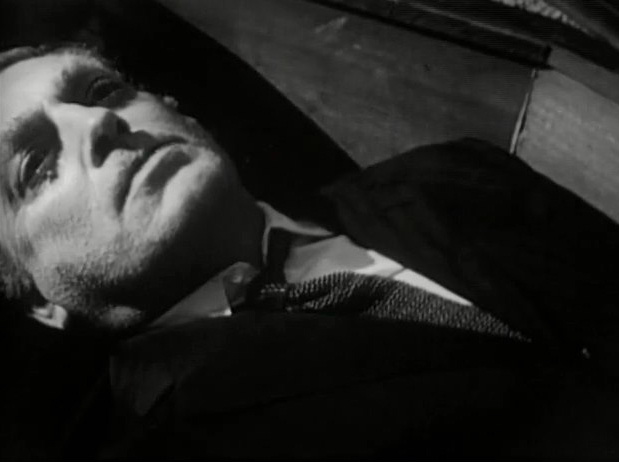
Rudolph Klein-Rogge
THE TESTAMENT OF DR. MABUSE (1933). Director: Fritz Lang.

A disgraced cop named Hofmeister (Karl Meixner), who is still involved in criminal activity, desperately tries to get a message to his former employer, Commissioner Lohmann (Otto Wernicke). Hofmeister tries to tell Lohmann that the notorious Dr. Mabuse (Rudolph Klein-Rogge) is behind the latest crime wave. But Mabuse is now an elderly man who has been in an asylum for years -- Mabuse's hypnotic influence has taken over the mind of the institution's head, Dr. Baum (Oscar Beregi, Sr.)! As Lohmann tries to track down the new mastermind behind the scenes, one gang member, Tom Kent (Gustav Diessl) has a crisis of conscience, mostly to do with his beloved, Lilli (Wera Liessen). Tom and Lilli then find themselves trapped in a warehouse by "Mabuse," with a time bomb ticking away and water filling up the room -- the movie's best sequence. Fritz Lang had already made a long silent film about the German master criminal, Mabuse, and this was his follow-up for the sound era. The film has brief spurts of action and interest -- the murder of Dr. Kramm (Theodor Loos) when his auto stops at an intersection, for instance -- bu it's rather slow as well, and the Commissioner, although well-acted by Wernicke, borders on a buffoon. Mabuse in this is essentially an anarchist and terrorist whose main scheme is to set fire to a plant and unleash poisonous gases on the population. Lilli's reaction to the revelation of Tom's murderous past makes her seem like a sap! There are some flavorful supporting performances in this. Lang followed this up many years later with The 1000 Eyes of Dr. Mabuse. Made in 1933, Testament was not released in the US until nearly twenty years later. A remake made by others was alternately titled The Terror of Dr. Mabuse.

Verdict: So-so Mabuse with interesting moments. **1/2.

THE TERROR OF DR. MABUSE

Wolfgang Preiss as Mabuse
THE TERROR OF DR. MABUSE (aka Das Testament des Dr. Mabuse1962). Director: Werner Klingler.

"Mabuse -- the criminal? No -- Mabuse the genius!"

"Dr. Mabuse will very much enjoy this -- watching you squirm, hearing you shriek."

This remake of The Testament of Dr. Mabuse follows the story pretty closely. A series of ingenious robberies -- of everything from armored cars to banks -- befuddle Inspector Lohmann (Gert Frobe of Goldfinger) and his assistant, Kruger (Harald Juhnke). Mortimer (Charles Regnier) leads the men on their assignments, but they all answer to "Dr. Mabuse," who has resided in an institution for many years. Mabuse's strong will and hypnotic powers have turned Professor Pohland (Walter Rilla ), the head of the institution, into a carbon copy of himself. In the meantime, Mortimer enlists a washed up boxer, Jonny (Helmut Schmid), into the gang, but he has a crisis of conscience, and winds up imprisoned with his girlfriend, Nellie (Senta Berger of The Spy with My Face). The chief differences between both films is that in the latter Mabuse is strictly a criminal mastermind while in the earlier film he is an out and out terrorist. There is no scene in the remake equivalent to the sequence involving the room with a bomb that fills with water in the original, although this version has a suspenseful bit in regards to a descending elevator car. Unlike the first film, Lohmann winds up tortured by electroshock by the professor. The main problem with this film is that it doesn't improve on Fritz Lang's version, which itself was not exactly a masterpiece. The acting in this isn't bad, and Anneli Sauli makes a brief impression as the prostitute, Heidi.

Verdict: So-so Mabuse. **1/2.