Lively, entertaining reviews of, and essays on, old and newer films and everything relating to them, written by professional author William Schoell.
Showing posts with label 1975. Show all posts

Thursday, August 31, 2023

AT LONG LAST LOVE

Burt Reynolds and Cybill Shepherd
AT LONG LAST LOVE (1975). Written and directed by Peter Bogdanovich. 

Brooke Carter (Cybill Shepherd) and her maid, Liz (Eileen Brennan of Jeepers Creepers), are wondering when mother will send the check to pay the hotel bill. She meets a handy millionaire named Michael (Burt Reynolds), but he becomes smitten with Broadway star Kitty O'Kelly (Madeline Kahn), who turns out to be an old high school pal of Brooke's. But Brooke has a consolation prize in handsome Italian Johnny (Duilio Del Prete) who, unfortunately, is a gambler with no money. Meanwhile Liz develops a yen for Michael's good right hand, Rodney (John Hillerman). As the entire cast sing nothing but Cole Porter songs -- Friendship, Did You Evah, I Get a Kick, DeLovely, You"re the Top, Just One of Those Things and more -- the affections among the foursome transfer and confuse until you don't really know (even at the end) who will wind up with whom. 

Madeline Kahn and Duilio Del Prete
At Long Last Love was Peter Bogdanovich's second stab at an old-fashioned kind of screwball comedy and it is much less successful than his first, What's Up Doc? The movie may not be as awful as many have suggested, but it does have some serious problems. The biggest is the direction and editing. The actors perform their numbers live before the camera, no dubbing, but that should not have precluded there being cuts in these numbers so that they have a cinematic panache. Even the kitschiest old Hollywood musical has more of a sweep and flow to the production numbers -- it's as if they were simply shot on a theater stage with the camera nailed to the ground. (The camera moves at times but there are very few actual cuts and no mix of close ups and medium and long shots.) 

John Hillerman, Eileen Brennan and cast
Then there are the performances. I can certainly think of two leads who would be more appropriate for a homage to Cole Porter than Burt Reynolds and Cybill Shepherd. Both are perfectly pleasant and even reasonably adept, but no more. Shepherd reveals a nice voice and uses it well, while Reynolds can carry a tune without disgracing himself but little else. Eileen Brennan is, of course, as terrific as ever and also can sing quite well, while Kahn also shows off her considerable talents. Del Prete has a lot of ability and a great deal of charm -- he is quite appealing in the picture. (By the way when he sings the title tune he does not say "luff" instead of "love" as some critics suggested back in the day.) 

And the music. One is reminded of all the glorious melodies and amusing sophisticated lyrics written by the great Cole Porter. Some of the numbers are pretty much muffed, but others survive the production back drops and the singers. Cary Grant played Cole Porter in the fictional biopic Night and Day

Verdict: Those long, long takes nearly sink this from the first, but it's also stylish and pretty good to look at. **1/2. 

Thursday, January 6, 2022

THE FORTUNE

Warren Beatty and Jack Nicholson
THE FORTUNE 
(1975). Director: Mike Nichols. 

In the 1920's Nicky Wilson (Warren Beatty) wants to marry heiress Freddie Bigard (Stockard Channing) for her money, but his divorce from his wife hasn't come through. He importunes zany buddy Oscar Sullivan (Jack Nicholson) to marry the lady so he won't get in trouble over the Mann Act, which prohibits moving a woman across a state line for "immoral purposes." The three set up housekeeping in a cottage where Nicky pretends to be Oscar's brother. The two men both vie for the charms of Freddie, but then decide they will have a better chance of getting her money if the woman is dead. The two dim-bulbs then hatch a plot ... 

Our "heroes" with Stockard Channing
Old-time screwball comedies, of which The Fortune is an imitation, often featured "heroes," such as Groucho Marx, who were reprobates and scallawags, decided con artists, but Nicky and Oscar are essentially sociopaths who have no hesitation in deciding to off the woman who loves them. Admittedly, Freddie can be shrill and overbearing, and might be considered an unsympathetic victim. A bigger problem is that director Mike Nichols again uses the long take approach, when comedies like these need expert cutting and pacing. A manic three-way fight sequence doesn't work at all. In spite of that, The Fortune is frequently amusing -- thanks to the performances, with Nicholson taking top honors -- and has at least one hilarious scene set on an airplane. While the film is farcical enough not to be offensive, it perhaps needed to be even more farcical. 

I suppose there are those who will argue that underneath the comical tone The Fortune is about cynical human nature, women who can't accept reality when it comes to their men, how relationships are instantly disposable when things go awry, and so on. But I think The Fortune doesn't really have that much on its mind. I shouldn't like the film at all, but I confess I found it quite entertaining. But, yes, it could have been a lot better. Stockard Channing gives it the Old College Try, but for better or worse this is the boys' show. 

Verdict: For once Nicholson is the character he plays instead of himself. ***. 

Thursday, September 3, 2020

CONDUCT UNBECOMING

Michael York
CONDUCT UNBECOMING (1975). Director: Michael Anderson.

In Colonial India, two young British men whose fathers were also in the military, arrive to begin a three month probationary period in their distinguished regiment. Arthur Drake (Michael York) is anxious to make good while blase and cynical Edward Millington (James Faulkner) hopes to get thrown out as soon as possible. But there may be more serious consequences when Millington is accused of assaulting Marjorie Scarlett (Susannah York), widow of a legendary hero, and Drake is tapped to defend him in a special private hearing. As the trial progresses, many disturbing revelations come to light ...

James Faulkner and Susannah York
Although based on a stage play, Conduct Unbecoming is not stage-bound or overly talky but is suspenseful, intriguing, and holds the attention throughout. Part of this is due to a compelling story line, and part to some excellent performances.  Michael York and Faulkner are perfection, and Georgia-born Stacy Keach does a dead-on English accent and is absolutely splendid as Captain Harper, who oversees the private hearing. Christopher Plummer, Michael Culver [Goodbye, Mr. Chips], and Richard Attenborough offer riveting portraits of various officers, and Trevor Howard makes a strong and convincing Colonel Strang. Persis Khambatta of Star Trek: The Motion Picture appears briefly as a woman who may have been another victim.

Stacy Keach and Michael York
Susannah York [The Killing of Sister George] is not quite up to the level of the gentlemen, unfortunately, and a stronger actress should have been chosen. York just does her scenes as written in the script but never adds any nuances or layers -- she doesn't make the most of her one big climactic outburst; she has given better performances elsewhere. One could also argue that the inexperienced Drake manages to arrive at certain conclusions as if he were a veritable Perry Mason! -- undoubtedly he has a legal career in front of him. An interesting touch is the role reversal between the two young soldiers, as well as the examination of how keeping one's "honor" is not always so honorable. Director Michael Anderson directed the much less successful Doc Savage the same year and worked with Michael York again the following year on Logan's Run.  By the way, Michael York and Susannah York were not related and were never married to one another.

Verdict: Absorbing, very well-acted courtroom-military drama with some interesting twists. ***. 

Thursday, January 24, 2019

CHANGE LOBSTERS AND DANCE

CHANGE LOBSTERS AND DANCE: AN AUTOBIOGRAPHY. Lilli Palmer. Macmillan; 1975.

Apparently without a ghostwriter, Lilli Palmer [Body and Soul] writes affectingly of her life and a bit of her career and writes so well that she proves as talented an author as she was an actress. Palmer tells of growing up a Jew in Berlin, leaving the country for France and then England when Hitler reared his ugly head, her early struggles to have a career as an actress and winding up as part of a singing act in sleazy nightclubs, her work in theater and films, and her marriage to Rex Harrison. From an insider's pov, Palmer tells of the effect Harrison's affair with Carole  Landis [Out of the Blue], a suicide, had on her and her husband's lives -- they essentially had to flee Hollywood for New York until My Fair Lady changed everything -- as well as the major impact of his affair with co-star Kay Kendall [Les Girls] , whom Harrison had to take care of as she was dying, a fact that was kept from her.  It was difficult for Palmer to continue co-starring with Rex Harrison in "Bell, Book and Candle" in London after he fell in love with Kendall, but the producer wouldn't let her out of her contract. She lied and told Harrison that she would return to him after Kendall's death, but told him the truth afterward. Palmer then had a happier marriage to Argentinian actor and author Carlos Thompson [Raw Wind in Eden]. Palmer provides interesting portraits of such folk as co-stars Gary Cooper, Clark Gable and close friend Laurence Olivier, as well as of Noel Coward, Greta Garbo, Helen Keller, and the malicious Hedda Hopper, but the best sections relate her impressions as anti-Semitic feelings grew in Germany, and her reactions when she returned to make films in her homeland many years later, wondering which of her co-workers were Nazis and which weren't.

Palmer goes behind the scenes of a couple of her movies, but most of her film work is only mentioned in passing. (She doesn't even mention stuff like The House That Screamed.) Interestingly, second husband Thompson did not want her appearing on the New York stage because, as she puts it, "I couldn't possibly ask him to sit around and twiddle his thumbs for a whole year ... " this coming not long after Thompson spent two years away from Palmer researching a book! Sadly, Palmer died of cancer about ten years after this book was finished, and Thompson committed suicide four years later.

Verdict: Absorbing and very well-written memoir. ***1/2. 

Thursday, October 4, 2018

THE LEGEND OF LIZZIE BORDEN

Liz Montgomery as Lizzie
THE LEGEND OF LIZZIE BORDEN (1975 telefilm). Director: Paul Wendkos.

In Falls River, Massachusetts in 1892, Andrew Borden (Fritz Weaver) and his wife, Abby (Helen Craig) are found axed to death in their home. The chief suspect immediately becomes Andrew's daughter, Lizzie (Elizabeth Montgomery), who maintains her innocence both in court and to her sister, Emma (Katherine Helmond). With flashbacks showing the troubled life of the family, the movie shows us the investigation, the trial, and the outcome. The Lizzie Borden story remains one of the most fascinating unsolved mysteries and double murders in history, and this early look at the case, sticking mostly to the facts, makes for a compelling TV movie. It leaves out the fact that a cousin was staying in the house at the time of the murders but he was apparently out of the house during the actual gruesome event. The movie's explanation for how Lizzie did not get blood on her clothing is somewhat suspect, however. The biggest problem with the telefilm is the lead performance, with Montgomery often acting as if she were in rehearsal, and hardly giving what could be called a committed performance for much of the film's length. Helmond is more on the mark as her sister, as are Weaver and Craig, and Fionnula Flanagan as the maid, Bridget. Ed Flanders [The Exorcist III] makes an efficient prosecutor, and John Beal [The Vampire] is fine as a doctor who ministers to family friend, Lizzie. Helen Craig, who plays the unpleasant stepmother, is better in this than she was as the evil nurse in The Snake Pit. This is superior to the Lifetime movie Lizzie Borden Took an Ax, (although the fictionalized series that followed, The Lizzie Borden Chronicles, was quite entertaining).  Paul Wendkos also directed the excellent telefilm The Brotherhood of the Bell. NOTE: A new Lizzie Borden theatrical film, focusing on the character's lesbianism, has just been released, and it seems based (without crediting him) on Evan Hunter's novel, Lizzie, which also posited the theory that Lizzie and maid Bridget were lovers.

Verdict: Entertaining, but just misses being really special. **3/4. 

Thursday, February 15, 2018

AUTOPSY

Mimsy Farmer and Barry Primus
AUTOPSY (aka Macchie solari/1975). Director/co-writer: Armando Crispino.

A doctor named Simona (Mimsy Farmer of Four Flies on Grey Velvet) works in a morgue in Rome. She encounters a woman named Betty (Gaby Wagner), who is apparently involved with Simona's playboy father, Gianni (Massimo Serato of Constantine and the Cross). When Betty is found murdered -- with the unknown killer trying to make it look like a suicide -- Betty's brother, Paul (Barry Primus), a former race car driver who is now a priest, shows up and winds up investigating this and other murders with Simona. Neither the priest nor Simona seem too tightly wrapped, however, with the former given to sudden rages and the latter developing a hankering for the priest (!) even though she has a sexy boyfriend named Riccardo (Ray Lovelock). Despite its title, Autopsy is not as bloody as other Italian horror-mysteries of the period, but it could be considered a nominal giallo film. The movie is absorbing and fast-paced for the most part but it bogs down in the final quarter, with a dragged-out finale, although there is an exciting rooftop confrontation at the very end. Crispino also directed the equally weird The Dead Are Alive, but Autopsy is somewhat better.

Verdict: At least there's the Roman scenery. **1/2.

Thursday, October 30, 2014

THE DEVIL WITHIN HER

Cute li'l fella
THE DEVIL WITHIN HER (aka Sharon's Baby/I Don't Want to Be Born/1975). Director: Peter Sasdy.

Lucy Carlesi (Joan Collins) does an act with a dwarf, Hercules (George Claydon), who tries to take liberties with her in her dressing room. When she doesn't comply, he puts a curse on her. The result is that Lucy becomes suspicious of, and terrified by, her adorable baby boy, Nicholas, who is apparently possessed by the still-living Hercules and runs about committing fiendish murders, such as beheading Lucy's doctor (Donald Pleasence) with a shovel! The Devil Within Her is utterly absurd but entertaining, greatly abetted by the very good performances of Collins, Pleasence, John Steiner as a sleazy club owner, Tommy; Ralph Bates [Horror of Frankenstein] as Lucy's husband, Gino; Caroline Munro [The Spy Who Loved Me] as her sister, Mandy; and especially Eileen Atkins [Madame Bovary] as her sister-in-law, Sister Albana. It's Alive, which was made the year before and also featured a killer baby, at least gave its monster fangs and claws and a hideous appearance, but aside from a couple of illusions of the infant resembling the dwarf, this baby is just an adorable little tyke, making the whole project even weirder (the child is so angelic-looking that his gruesome acts seem rather comical). Peter Sasdy also directed Hands of the Ripper and many others. The original title of the film was Sharon's Baby even though the mother is named Lucy. While this film is by no means intellectual, one could claim that it cleverly exploits parents' fears about children and the life/financial changes the little dears bring about. Ray Bradbury once contributed just such a story to an EC horror comic in the fifties.

Verdict: Ridiculous but has a good cast and even some suspense. **1/2.

Thursday, October 2, 2014

THE EIGER SANCTION

Clint Eastwood and George Kennedy
THE EIGER SANCTION (1975). Director: Clint Eastwood.

"Sorry about this, but twice a year all of my blood must be replaced." -- Dragon

"With what?" -- Hemlock

Jonathan Hemlock (Clint Eastwood) collects art treasures and can afford to pay for them by taking on assassination assignments for a strange agency headed by the bizarre "total albino," Dragon (Thayer David). Hemlock wants to retire but he's importuned into going after one last target, but all he's told is that it's one of the men on an international team attempting to scale the Eiger. Sounds intriguing? -- alas, the leisurely-placed Eiger Sanction takes forever to get going, and doesn't amount to much even when it finally gets to the mountain. Eastwood, who both stars and directs and is only passable at both, supposedly risked his life with location filming, so it's a shame that the results aren't more felicitous, as the movie has hardly any excitement or suspense. A type of semi-spy movie, Eiger not only has secret organizations but something about a germ warfare formula that comes to nothing. The supporting cast includes George Kennedy [Strait-Jacket] as a friend of Hemlock's; Gregory Walcott [The Steel Jungle] as Pope, a tough agent; Jack Cassidy [Richard Diamond] as an idiotic gay character who calls his dog "Faggot;" -- Hollywood's idea of a proud gay man? -- and Vonetta McGee as a lady spy who plays various games with Hemlock. Walcott is good, and McGee manages to retain her dignity despite the dumb proceedings.

Verdict: Macho meatheadedness is one thing, but at least make it entertaining! Stick with Play Misty for Me. *1/2.

Thursday, November 7, 2013

THE REINCARNATION OF PETER PROUD

Michael Sarrazin as Peter Proud


THE REINCARNATION OF PETER PROUD (1975). Director: J. Lee Thompson. Screenplay by Max Erlich, from his novel.

College professor Peter Proud (Michael Sarrazin) keeps having weird dreams of being murdered with a paddle by a woman in a boat, so he seeks help from everyone from shrinks to a sleep researcher named Sam (Paul Hecht). Of course, the title of the movie clues the viewer in early on that what Peter thinks are dreams are actually memories of his former life as Jeff Curtis (Tony Stephano), a war hero who played around a little too much on his wife, Marcia (Margot Kidder). Determined to find out what happened, Peter searches for the town he/Jeff grew up in, and encounters his former wife and daughter (Jennifer O'Neill of Scanners), with whom he ... well, let's just say it isn't incest if the two aren't biologically related. The acting in the film is perfectly okay [although Kidder is not especially convincing as a woman in her fifties], but the movie is just kind of blah. The best, very moving scene has Jeff's almost hopelessly senile mother seeing Peter in a nursing home and recognizing him as her son. Very downbeat ending and a somewhat strange score by Jerry Goldsmith.The picture came out at a time when the subject of reincarnation had once again become very trendy, as it does every few years or so. Stephano was a handsome male model who appeared in only one other film, Tron, seven years later. Hecht has had a busy career, mostly on television. Thompson also directed Happy Birthday to Me and many other movies.

Verdict: As this is currently being remade, maybe it will come back as a much better movie. **1/2.

Thursday, April 25, 2013

BEST FRIENDS (1975)

BEST FRIENDS (1975). Director: Noel Nosseck. Screenplay by Arnold Somkin.

"There's gonna be so many girls. This one ya got is just not that special."

Jesse (Richard Hatch) and Pat (Doug Chapin) have been best buddies since childhood. After a hitch in the Army, they decide to take one last road trip in a rented van with their girlfriends/fiancees, Kathy (Susanne Benton) and Jo Ella (Ann Noland). Pat, the eternal adolescent, wants Jesse to forget about marriage plans and just bum around the country on a motorbike with him, but Jesse is in love with Kathy and has a good job waiting for him. During the trip Pat does his best to break up the relationship between Jesse and Kathy, each attempt getting more desperate and crazy, until, ultimately, tragedy results.  This interesting picture can be analyzed in a number of ways. For one thing it illustrates the fact that for some [heterosexual] men, their friendships with their buddies are much more meaningful than those with wives or girlfriends, whom they primarily use for sex. On the other hand, some viewers see a homoerotic component to the movie, with Pat the dysfunctional closet case who is in love with his best friend [this possible aspect of the story is never made explicit, however, although Pat's attempts to break up the relationship between Jesse and Kathy are provocative to say the least and there may be other hints]. Best Friends looks at four people who are unsophisticated and not terribly intelligent but shows that this does not stop them from being complicated and having emotions that are often difficult for them to deal with. All four lead actors are excellent, with Chapin's sensitive, tortured, outwardly happy-go-lucky performance a stand-out,  and the film is well directed by Nosseck. Crown International, which released the film, didn't quite know what to do with something that wasn't typical drive-in fare, so their ad campaign made it seem as if it was something about vacationers encountering vengeful natives! Best Friends was the last acting role for Chapin, who became a producer instead. Hatch has had a long list of mostly TV credits.  The two women appeared in a few other films in the seventies and eighties. Rick Cunha contributed some snappy country-western type song numbers.

Verdict: Absorbing drama with interesting undertones. ***.

Thursday, April 18, 2013

TRILOGY OF TERROR

Karen Black and He-Who-Kills


TRILOGY OF TERROR (1975 telefilm). Director: Dan Curtis.

This made-for-TV horror anthology features Karen Black in three stories and several different roles. In "Julie," scripted by William F. Nolan from a Richard Matheson story, a student turns a teacher into a sex slave via blackmail, but which of them is really evil? "Millicent and Therese," (also Nolan from Matheson) deals with prim Millicent and her sexy sister; one woman with a dual personality. "Amelia," which Matheson scripted from his story "Prey," presents a woman with both boyfriend and mother troubles whose life gets worse when she gets a fetish doll that comes to life and attacks her. While this is the best -- and best remembered -- of the episodes, it almost plays like a parody, and the noises made by the doll are rather comical. In other words: lively but silly. Karen Black is quite good in all of the segments. Trilogy of Terror II was made for cable 21 years later.

Verdict: Okay, but where's the terror? **1/2.

Thursday, February 14, 2013

THE DAY OF THE LOCUST

The movie premiere that climaxes Locust
THE DAY OF THE LOCUST (1975). Director: John Schlesinger.

"I could only let a fabulously rich man love me. I could only love a man criminally handsome. Please try to understand."

In Hollywood of the 1930's, artist Tod Hackett (William Atherton) lives in the same complex with aspiring star Faye Greener (Karen Black) and her father, an old-time performer named Harry (Burgess Meredith). Although Tod is very drawn to Faye, she wants a man with money, and winds up sexlessly cohabiting with the somewhat strange but wealthy Homer Simpson (Donald Sutherland). There is a nasty-minded midget (Billy Barty) and a bratty Shirley Temple clone (actually played by the male Jackie Earle Haley), as well as two guys who run cockfights out of Homer's garage. After two hours of meandering, the film arrives at a climax at a movie premiere that seems intended to wake the benumbed audience out of their lethargy but is too little, too late. When The Day of the Locust was released, it was overpraised in some quarters because of the admittedly vivid climactic riot and a "daring" scene of a child being stomped to death, which fooled people into thinking this piece of treacle was more adult and "meaningful" than it really was. Time has, unfortunately, not made the movie any better. Karen Black probably gives her all-time worst performance, so irritating is she that she almost sinks the movie right from the first, and Burgess Meredith isn't that much better. Atherton isn't bad at all, but Sutherland gives the best performance as Homer. Barty can do nothing to make his character less of a caricature, but Haley in drag is certainly vivid and memorable. Still, the movie presents unpleasant, and worse, uninteresting characters that you simply don't care about. Natalie Schafer, Nita Talbot, and William Castle [as a director] have small roles, as does Geraldine Page as an evangelist. A scene when a set collapses is well done from a technical standpoint. This was based on a novel by Nathaniel West; I don't know how faithful Waldo Salt's screenplay is to the source material, but it's pretty bad. The absolutely most disgusting scene shows poor Billy Barty kissing a rooster on its bloody beak. Dick Powell Jr., plays his father at the premiere-within-the-movie, which explains why he looks so much like the actor. Although Schlesinger was considered a "serious" director as, say, compared to Robert Aldrich, this movie is in reality little better than Aldrich's atrocious Legend of Lylah Clare! This is almost as bad as Schlesinger's Darling.

Verdict: Just a mess -- and boring to boot! **.

Thursday, January 10, 2013

ONE FLEW OVER THE CUCKOO'S NEST

Jack Nicholson and company
ONE FLEW OVER THE CUCKOO'S NEST (1975). Director: Milos Forman.

Author Ken Kesey reportedly hated this film version of his novel, which takes place in a state mental institution. McMurphy (Jack Nicholson), arrested for statutory rape, is sent from a work farm to the institution, but it is suspected that he is faking his alleged mental illness. McMurphy provides some inspiration and leadership for other inmates, and finds himself in a deadly tussle with head nurse Rachet (Louise Fletcher). The odd thing about the movie is how conventional it is in many ways, despite the lead character being an anti-hero (and despite some intelligence and good qualities he is basically a loser -- I mean look where he is!) Some of the sequences are dramatically dubious to say the least, and the movie comes off (deliberately, I believe) as more of a black comedy than a serious expose of conditions and attitudes in mental hospitals. Nicholson won an Oscar and is fine, although the role is not in any way out of his range. Louise Fletcher also won an Oscar and is excellent as the nurse, who is less evil than misguided. The film introduced Brad Dourif as young Billy, and he's been playing odd types in the movies ever since. Danny De Vito (who is only adequate) and Christopher Lloyd later wound up on Taxi, where their talents, especially the former's, were better utilized. William Redfield, Scatman Crothers, and especially Sydney Lassick are all quite good in important supporting roles. The movie presents women and black men, traditionally oppressed and victimized, in positions of authority over the exclusively Caucasian patients, but really does nothing with the premise, and the other female characters, such as hooker friends of McMurphy's, are presented basically as cartoons. Fletcher's next film was the ill-received Exorcist 2: The Heretic.

Verdict: At times quite arresting, but nothing really special here. **1/2.

Thursday, August 9, 2012

THE DROWNING POOL

Paul Newman as Lew Harper
THE DROWNING POOL (1975). Director: Stuart Rosenberg.

Private detective Lew Harper (Paul Newman) is contacted by a woman, Iris (Joanne Woodward), with whom he'd once had a fling, to come to her estate and help her with some problem. Iris' husband is interested elsewhere, her teenage daughter Schuyler (Melanie Griffith) is running around doing whatever she wants, and then her harridan mother-in-law (Coral Browne) is murdered. Has it something to do with Kilbourne (Murray Hamilton), who wanted the dead woman's property for its oil, or the recently discharged chauffeur (Andrew Robinson), who was diddling around with Schuyler? While investigating, fending off Schuyler's advances, and being kidnapped and beaten, Harper tries to get at the unsavory truth. The cast, including a laid-back Newman, is good, but you never really connect with any of the characters. Tony Franciosa and Richard Jaeckel are cops with secrets of their own. Hamilton and Gail Strickland as his wife are notable. The revelations of the story may have had more impact when Ross Macdonald's novel, upon which this was based, was first published. Newman essayed Lew Harper [originally Lew Archer] once before in Harper nine years earlier. The climax in a water-logged hydrotherapy room is fairly exciting.

Verdict: No more than acceptable private eye fare. **1/2.

Thursday, April 26, 2012

THE RETURN OF THE PINK PANTHER

THE RETURN OF THE PINK PANTHER (1975). Director: Blake Edwards.

12 years after making The Pink Panther [and its sequel A Shot in the Dark] Peter Sellers and Blake Edwards revived their careers by re-teaming in another Inspector Clouseau comedy. The Pink Panther diamond has again been stolen, and fingers point at the Phantom (now played by Christopher Plummer), who is married and retired and innocent of the crime. He determines to discover who it is, just as Clouseau (Peter Sellers) is put on the case at the request of the museum from which the gem was lifted. [There's no attempt at continuity with the original films. Clouseau is seen as the man who "solved" the pink panther case, even though he was actually arrested for the crime at the end of The Pink Panther.] Catherine Schell is the Phantom's wife, and Herbert Lom is back as Inspector Dreyfus (his murder spree in A Shot in the Dark being similarly forgotten). Sellers and Lom are wonderful, Schell is competent, and Plummer, running around breaking fingers in a sadistic fashion you can't imagine David Niven [who played the part originally] employing, exhibits all the charm of a rabid skunk. Despite that, the movie is a welcome addition to the Clouseau filmography.

Verdict: Imperfect but very amusing. ***.

Thursday, October 20, 2011

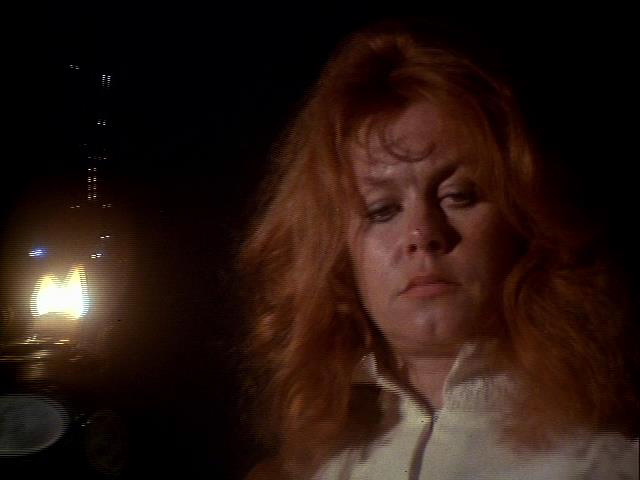
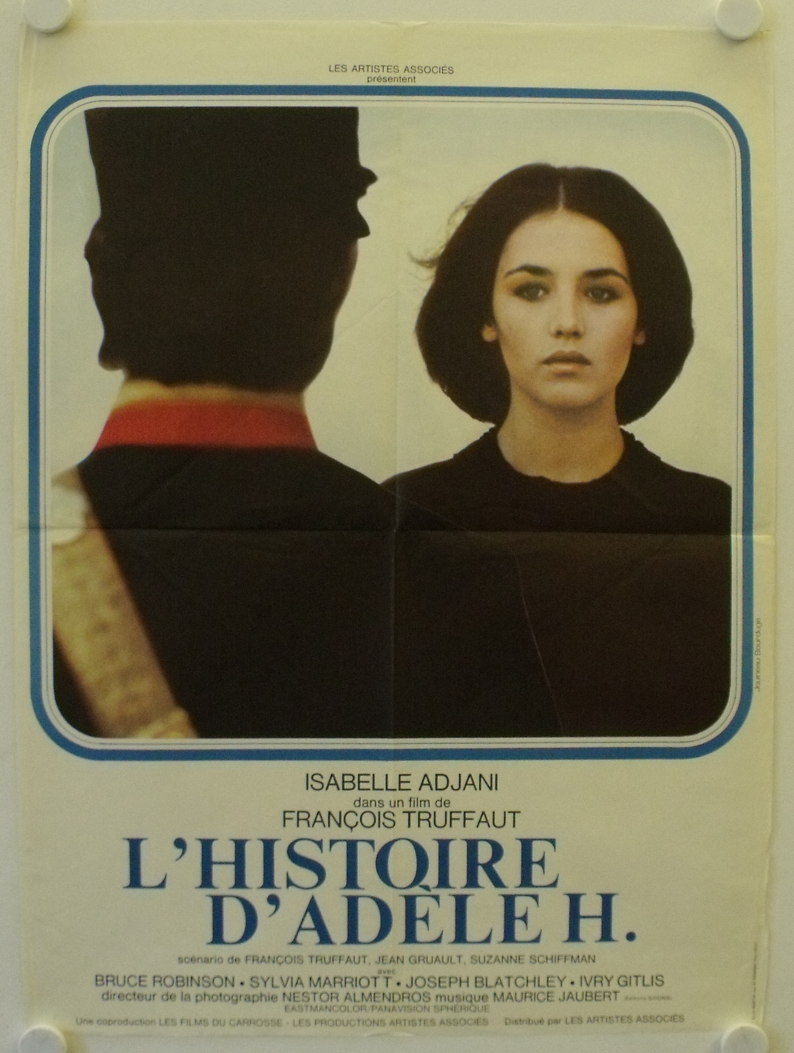
THE STORY OF ADELE H.

THE STORY OF ADELE H. (1975). Director: Francois Truffaut.

Based on true events in the life of Adele Hugo, daughter of Victor Hugo, this absorbing movie shows how the young Adele (Isabelle Adjani) follows a man with whom she had a fling, Lt. Albert Pinson (Bruce Robinson), to Nova Scotia where he has been stationed. The trouble is that Pinson no longer has any feelings for Adele, which the emotionally disturbed woman at first refuses to acknowledge and then simply disregards altogether. Pinson's rejection only seems to exacerbate and hasten the mental instability that was already lurking inside Adele's sensitive mind, and she descends into a pathetic and desperate state. Adjani gives an adept, restrained performance that doesn't clue us in to her incipient dementia too quickly, and Robinson as the object of her obsession, Sylvia Marriott as a sympathetic landlady, Joseph Blatchley as a bookstore owner, and Ivry Gitlis as an alleged hypnotist are all excellent support. The film follows the basic facts pretty closely. Other films of romantic obsession and tragedy include Letter from an Unknown Woman and A Summer Story.

Verdict: One of the over-rated Truffaut's better movies. ***1/2.

Monday, June 30, 2008

THE DEVIL'S RAIN


THE DEVIL'S RAIN (1975). Director: Robert Fuest.

A small town is beset by a satanic cult run by Jonathan Corbis (Ernest Borgnine), who has indoctrinated several members of the Preston family into the cult against their will. Mark and Tom Preston ( William Shatner and Tom Skerritt) do their best to fight Corbis after their mother (Ida Lupino) and others have succumbed. It all leads to a seemingly interminable climax where the title downpour melts all the satanists into blobs of flesh and putty. Keenan Wynn and Eddie Albert are also on board. The performances are certainly good, but the movie has no horrific or taut atmosphere and director Fuest never really works up enough suspense. The satanists all sport pasty faces with empty eye sockets and look like -- pun intended -- Hell. But isn't the whole point of devil worship to improve your life and, presumably, your appearance? It's enough to make one wonder why anyone would have willingly joined the group.

Verdict: We won't tell the Devil if you don't watch it. **.

Monday, April 14, 2008

THE STRONGEST MAN IN THE WORLD


THE STRONGEST MAN IN THE WORLD (1975). Director: Vincent McEveety.

Even a host of veteran comics and character actors can't save this Disney comedy that takes a workable premise -- a super-strength formula increases a rivalry between two cereal companies -- and beats it into the ground. Student Dexter Riley (Kurt Russell) is the first one to inadvertently ingest the formula, but the Dean (Joe Flynn) demonstrates its efficacy to a cereal board presided over by no less than Eve Arden. Phil Silvers plays the head of the rival cereal company. It all leads to a weight-lifting competition which will supposedly prove which cereal is the best. Fritz Feld is a board member, Kathleen Freeman plays a cop, Mary Treen is the dean's secretary, and Cesar Romero is a hired crook -- all of them (and Silvers) deserved a better script. Flatly directed by McEveety. A few amusing bits but not enough to sustain a feature. Michael McGreevey is the kid who supposedly invented the formula.

Verdict: A waste of a great cast.

Wednesday, March 5, 2008

GREY GARDENS


GREY GARDENS (1975). Directed by Albert and David Maysles, Ellen Hovde, Muffie Meyer.

A look at the lives of elderly Edith Bouvier Beale and her 56-year-old daughter (pictured) "Little Edie," the aunt and cousin of former first lady Jacqueline Bouvier Kennedy Onassis, who live alone together in a ramshackle, mostly empty mansion in the Hamptons. This fascinating documentary starts slow, but builds in interest as it presents a warts-and-all portrait of these two women who clearly love each other but are also highly resentful of one another. That is the movie's strength, the way it illustrates the way people re-write their own histories and blame each other for their own failings. Mother Edith suggests that her husband never came back to her because her daughter would have moved out and never returned if he did, but it's more likely that the man had no intention of leaving his second wife and coming back to Edith. For her part, middle-aged Edie is furious because she feels she gave up her show business ambitions to return home and take care of her mother; in truth, she was probably just another show biz causality who had nowhere else to go. Although the film tries its level best to make the two seem as grotesque as possible, the main problem is that they just don't have the fortune of the Kennedys (albeit Edie seems slightly pixillated at times). Both mother and daughter emerge as likable people, and mother Edith is no dummy. Whether you see the women as freaks or human beings probably depends on your age and your level of empathy. A major flaw with the film is that we don't see or learn nearly enough about the women's early lives, especially Edith's career as a talented singer, which would have provided more balance.


Verdict: Unusual and absorbing. ***