Lively, entertaining reviews of, and essays on, old and newer films and everything relating to them, written by professional author William Schoell.
Showing posts with label Paul Wendkos. Show all posts

Thursday, August 20, 2020

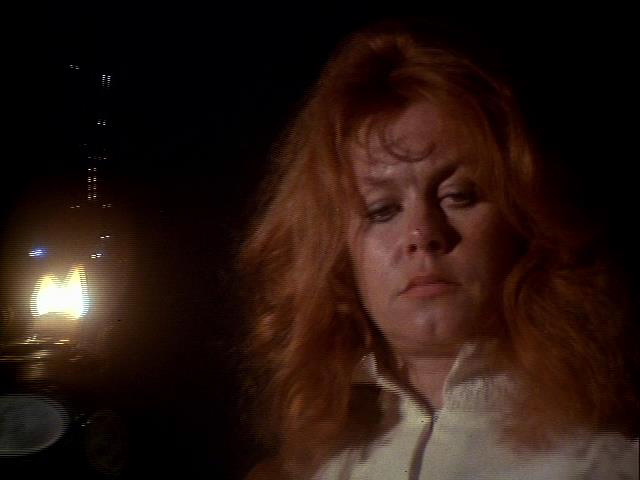
THE EXECUTION

Loretta Swit, Sandy Dennis, Valerie Harper
THE EXECUTION (1985 telefilm). Director: Paul Wendkos.

In San Diego in 1970, several women who were survivors of the Birkenau concentration camp and who somehow met up with each other years later, get together each week to play mah jongg. Elsa (Sandy Dennis) spots a restaurant owner named Walter Grauman (Rip Torn of Sweet Bird of Youth) on a TV ad and is afraid that he may actually be Wilheim Gehbert, who raped and brutalized the women at Birkenau and was responsible for several thousand deaths. Marysia (Loretta Swit) agrees to find out if Walter has a certain scar on his back, and winds up sleeping with him when he doesn't. However, she is in for a rude awakening the next morning. The ladies decide that one of them will secretly murder Grauman, but things get complicated when an innocent man is arrested for the crime ...

Rip Torn with Loretta Swit
The Execution has an excellent premise but in its second half it becomes overly complicated, ignores points of law, and is almost sunk by its contrivances; even a final twist doesn't quite make up for the script deficiencies.  In fact, it becomes ridiculous at times. Loretta Swit, however, gives an outstanding performance, giving 150% to the role. The other ladies -- including Valerie Harper, Barbara Barrie and Jessica Walter  -- are good but a notch below Swit. Dennis indulges in her usual quirky all-tics-and-mannerisms acting style and is actually not that compelling. Of the male actors, Torn gives a good if second-rate performance, although Alan Miller and Peter White are fine as two of the spouses. Paul Wendkos also directed theatrical films such as The Burglar.

Verdict: No one expected Judgment at Nuremberg, but a film with this premise should have been much, much, more powerful -- Swit can not be faulted, however. **3/4. 

Thursday, December 12, 2019

THE BURGLAR

Jayne Mansfield and Dan Duryea
THE BURGLAR (1957). Director: Paul Wendkos.

Nat Harbin (Dan Duryea) leads a small gang of criminals, including Gladden (Jayne Mansfield), the girl he was raised with. They steal a very valuable necklace from a old lady spiritualist, Sister Sarah (Phoebe MacKay), who lives in a sprawling mansion. Now the question is whether to sell the necklace at a great loss or wait until the heat is off, a suggestion that does not sit well with Baylock (Peter Capell of The Fury of the Cocoon), who is desperate to get out of the country. None of them are aware that another person is watching them and scheming ...

Martha Vickers and Dan Duryea
The Burglar is an interesting crime melodrama that just misses being special. Duryea gives a solid performance, although Mansfield comes off like an amateur, and one doesn't buy that she "hungers" for Duryea (the only actor billed above the title). Stewart Bradley, who was "introduced" in this picture (he had had previous TV credits but this was his first movie role) makes a definite impression as the cop, Charlie. Martha Vickers (one of Mickey Rooney's ex-wives and who also appeared in The Big Bluff) also makes an impression as Della, a woman who picks up Nat in a bar and has a few secrets of her own. Mickey Shaughnessy  plays Dohmer, another member of the gang who is a little too trigger-happy. The Burglar features interesting settings in Philly and Atlantic City, such as a shack on the lonely coast and a fun house where the climax takes place. Paul Wendkos also directed the excellent Brotherhood of the Bell.

Verdict: Not quite top-drawer but it does hold the attention. **3/4. 

Thursday, October 4, 2018

THE LEGEND OF LIZZIE BORDEN

Liz Montgomery as Lizzie
THE LEGEND OF LIZZIE BORDEN (1975 telefilm). Director: Paul Wendkos.

In Falls River, Massachusetts in 1892, Andrew Borden (Fritz Weaver) and his wife, Abby (Helen Craig) are found axed to death in their home. The chief suspect immediately becomes Andrew's daughter, Lizzie (Elizabeth Montgomery), who maintains her innocence both in court and to her sister, Emma (Katherine Helmond). With flashbacks showing the troubled life of the family, the movie shows us the investigation, the trial, and the outcome. The Lizzie Borden story remains one of the most fascinating unsolved mysteries and double murders in history, and this early look at the case, sticking mostly to the facts, makes for a compelling TV movie. It leaves out the fact that a cousin was staying in the house at the time of the murders but he was apparently out of the house during the actual gruesome event. The movie's explanation for how Lizzie did not get blood on her clothing is somewhat suspect, however. The biggest problem with the telefilm is the lead performance, with Montgomery often acting as if she were in rehearsal, and hardly giving what could be called a committed performance for much of the film's length. Helmond is more on the mark as her sister, as are Weaver and Craig, and Fionnula Flanagan as the maid, Bridget. Ed Flanders [The Exorcist III] makes an efficient prosecutor, and John Beal [The Vampire] is fine as a doctor who ministers to family friend, Lizzie. Helen Craig, who plays the unpleasant stepmother, is better in this than she was as the evil nurse in The Snake Pit. This is superior to the Lifetime movie Lizzie Borden Took an Ax, (although the fictionalized series that followed, The Lizzie Borden Chronicles, was quite entertaining).  Paul Wendkos also directed the excellent telefilm The Brotherhood of the Bell. NOTE: A new Lizzie Borden theatrical film, focusing on the character's lesbianism, has just been released, and it seems based (without crediting him) on Evan Hunter's novel, Lizzie, which also posited the theory that Lizzie and maid Bridget were lovers.

Verdict: Entertaining, but just misses being really special. **3/4. 

Thursday, September 20, 2012

THE BROTHERHOOD OF THE BELL

Dean Jagger and Glenn Ford
THE BROTHERHOOD OF THE BELL (1970 telefilm). Director: Paul Wendkos.Screenplay by David Karp.

In one of the first and best of the made-for-television movies, Andrew Patterson (Glenn Ford) is the long-time member of the "Brothers of the Bell," a secret society associated with a fraternity at the College of St. George. The society helps its members get a leg up in the world, and in return they are on occasion asked to do a favor for "the Bell." But now Patterson has been asked to blackmail a dear friend of his (Eduard Franz) from accepting a certain post and has been given the names of people who helped this man defect -- of course revealing those names will mean their torture and deaths. Although Patterson tries his best to dissuade his friend from taking the post before revealing that he has the list of names, his actions nevertheless lead to tragedy. A guilt-wracked Patterson decides to take action by exposing the brotherhood, but finds his life turning into a nightmare as almost everyone thinks he's crazy. Although at times he could have been a bit more impassioned, Ford gives a notable performance in this; one of the best of his latter-day career, in fact. Eduard Franz as the blackmailed professor; Dean Jagger as a higher-up in the Bell; Rosemary Forsyth as Patterson's wife; Will Geer as his father; and Maurice Evans as his father-in-law, are all excellent, but the whole movie is nearly stolen by William Conrad as a Joe Pyne*-like talk show host who has Patterson on his show just to berate and humiliate him [this is also one of the best scenes in the movie.] Virginia Gilmore [in her last film role]  also scores as a nutty woman in the audience who calls herself "Patriot." Also notable is the uncredited black actor who says the Bell is simply the White Power Structure that has always oppressed black people. Jerry Goldsmith contributed an unusual baroque-like score.I didn't spot Robert Clarke of The Hideous Sun Demon and The Man from Planet X as a psychiatrist.

* Joe Pyne was a forerunner of Jerry Springer.

Verdict: Ultimate paranoia and a darn good movie. ***1/2.


Tuesday, March 11, 2008

THE MEPHISTO WALTZ


THE MEPHISTO WALTZ (1971). Director: Paul Wendkos.

Based on a novel by Fred Mustard Stewart, this was one of a slew of big-studio supernatural films that were released in the wake of Rosemary's Baby. Miles, a journalist (Alan Alda) is given a chance to interview the reclusive pianist genius Duncan Ely (Curt Jurgens), who remarks upon Alda's hands as being “the hands of a great pianist.” After Ely's death, Alda, who inherits most of the man's fortune, himself becomes a great pianist while Alda's wife, Jacqueline Bisset, develops the perhaps not-so-paranoid delusion that Ely, a Satan worshiper, is inhabiting her husband's body. But what is she going to do about it? The idea is terrific, but the execution is mediocre and much of the acting insufficient; the film hasn't a single outstanding sequence and isn't memorable. Alda from Mash isn't bad as the journalist Miles, and Jurgens is at once authentically sinister and charming. Bradford Dillman, Kathleen Widdoes, and Pamelyn Ferdin also appear, the last as the young couple's likable doomed daughter. Barbara Parkins plays Jurgens' daughter/lover. Jerry Goldsmith's score is a bit too loud and jangling, although it makes good use of Lizst's fascinating piece "The Mephisto Waltz."

Verdict: Not so hot. **.