Lively, entertaining reviews of, and essays on, old and newer films and everything relating to them, written by professional author William Schoell.
Showing posts with label Sophia Loren. Show all posts

Thursday, June 7, 2018

ARABESQUE

Sophia Loren and Gregory Peck 
ARABESQUE (1966). Produced and directed by Stanley Donen.

"I'm sorry to have to tell you this, my dear, but Mr. Pollock is as poor as a church mouse." -- Beshraavi

"He was rather strange, even for an American."

Professor David Pollock (Gregory Peck) is drafted by an Arab Prime Minister, Hasson Jena (Carl Duering) to enter the home of the sinister Beshraavi (Alan Badel of Salome) and decode a cipher on a piece of paper with a Hittite inscription that my reveal the man's plans. The house is apparently owned by Yasmin Azir (Sophia Loren), Beshraavi's mistress, and to Pollock's befuddlement her role keeps changing even as she seems to switch sides with the drop of a hat. Before long he and Yasmin are on the run, dodging bullets and trying to get back the cipher so they can figure out what is happening. But David is never sure if he can fully trust Yasmin. Arabesque was Stanley Donen's follow-up to the more successful Charade, but the film's first big problem is the miscasting of the two leads. Peck tries to approximate but fails to deliver the light touch of a Cary Grant, and Loren is also a bit too heavy-handed, although she tries. Arabesque has a solid plot but the script has too many silly, indeed stupid, detours, and some of the action scenes are completely muffed by Donen, who is no Hitchcock. On the other hand, there is some exciting business near the end, including an attack on the principals at a construction site, an attempt to stop an assassination, and a race across a bridge while a helicopter is firing live ammunition at the couple. Another problem is that Alan Badel looks too much like Peter Sellers impersonating an Indian (which he did more than once in his career, such as in The Millionairess, which he did with Loren) and you keep expecting -- or hoping -- he will suddenly indulge in some hilarious shtick. No such luck. Henry Mancini's score does little to help. A much better thriller for Peck was Mirage.

Verdict: So so comedy-thriller with a few good sequences, but not nearly enough. **1/2.

Thursday, September 7, 2017

PETER SELLERS (1925 - 1980)

Peter Sellers as Inspector Clouseau
PETER SELLERS (1925 - 1980).

Peter Sellers -- terrible to think that this genius died at only 55 years of age when there was so much else that he could have done. Sellers started out as a radio and TV comedy star, and appeared in early pictures as a kind of portly schnook. Losing weight, he was transformed into a leading man with the likes of no less than Sophia Loren and others. He became known as a brilliant comic actor, but he was just as good in his rare dramatic roles, and the height of his fame came when he played Inspector Clouseau in a number of Pink Panther movies. Sellers could be difficult in his private life, having mercurial relationships with his wives and children, although he was also said to be a loyal friend and often committed acts of extreme generosity.  In any case, the most important thing about the man is his talent, which is on display in so many movies, including some of which we examine this week. For a large number of Sellers' films that have already been reviewed on this blog, type his name in the search bar on the upper left hand corner. Thank you!


THE MILLIONAIRESS

Sophia Loren and Peter Sellers
THE MILLIONAIRESS (1960). Director: Anthony Asquith.

Ephifania Pererga (Sophia Loren), the daughter of a late magnate, is a spoiled, haughty heiress who has already had one bad marriage. For her next husband she hopes to land Ahmed el Kabir (Peter Sellers), a selfless doctor who ministers to the poor. Ahmed seems more confused and amazed by the strange woman than especially interested in her, but Ephifania tries to win him over by making something of herself with only a small pittance to start with, and by hoping he'll win her hand by doing the same. Can these two people on such different wavelengths ever get together? Based on a play by George Bernard Shaw, one can only assume that this is a gross bowdlerization and extreme vulgarization of Shaw's original concept, as neither Ephifania or Kabir come off like real people, which is especially true in the former's case. Loren [Boy on a Dolphin] manages to do a nice job even though she's playing an impossible role, and Sellers also acquits himself nicely, with an excellent Indian accent, but it's a wonder that the two actors manage to play so well together in spite of everything. Alistair Sim [The Ruling Class] nearly steals the picture as Ephifania's lawyer, while Gary Raymond, as her first husband, has little to do but run away from the lady while sher's throwing everything she can get her hands on at him. Vittorio De Sica, who later directed Sellers in After the Fox, has a supporting part as Joe, a sweatshop owner, and he's quite good, and Pauline Jameson is also notable as Sim's secretary, Muriel. In addition to a lousy script, the film suffers from the fact that the heroine, if that's what you can call her, despite some admirable qualities, is never a nice person. Judging from the outfits Loren is caparisoned in, one imagines the clothes budget for the picture was roughly equal to her salary.

Verdict: Sellers is far superior to the material in this. **.

Thursday, August 18, 2016

THE FALL OF THE ROMAN EMPIRE

THE FALL OF THE ROMAN EMPIRE (1964). Director: Anthony Mann.

A dying Marcus Aurelius (Alec Guinness), great Caesar of the Roman empire, must make a choice of who will replace him, and chooses not his son, Commodus (Christopher Plummer), but Commodus' friend, the leader of the Roman army, Livius (Stephen Boyd). Obviously this does not sit well with Commodus, and before you can say "Ben-Hur" -- this film's obvious model -- the two men are caught in a lifelong love-hate rivalry. The emperor's daughter, Lucilla (Sophia Loren), who is in love with Livius and vice versa, is also not happy that she is forced to marry another man, Sohamus (an unrecognizable Omar Sharif). Livius hopes to unite the barbarians who are ill-treated by Rome and periodically try to seize the city, while an uncaring Commodus -- who becomes emperor only due to his father's untimely death -- basically wants to turn everyone in the outlying areas into slaves. Whatever historical accuracy this movie does or does not possess, it is well-made and quite entertaining even if nearly three hours long (with an intermission). It lacks the great story of Ben-Hur, but Mann's direction is good, the pace never flags, and the performances are mostly expert, with Guinness, Boyd, and especially Plummer [Dracula 2000] at the top of their game. Loren is also fine, and there is notable work from James Mason (especially during a harrowing torture scene, although, oddly, he seems to recover from the ordeal much too quickly), Anthony Quayle, Mel Ferrer [Born to be Bad] , and others. Naturally there's a fairly well-done battle between the two major antagonists on the expected chariots, and the climactic duel between the two men in an arena is the film's highlight. There is some stunning scenic design, an excellent score by Dimitri Tiomkin, and some striking widescreen photography by Robert Krasker.

Verdict: Essentially a Roman soap opera, but quite entertaining on that level. ***.

Thursday, November 1, 2012

NINE

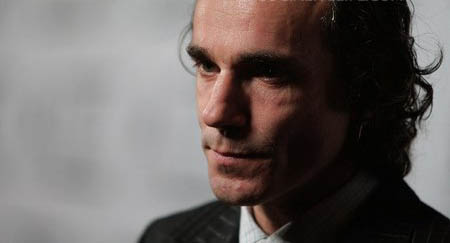
Daniel Day-Lewis as Fellini-Contini
NINE (2009). Director: Rob Marshall.

"My body's nearing fifty and my mind is nearing ten."

Famous Italian director Guido Contini (Daniel Day-Lewis), whose last couple of films have been flops, is trying to come up with a script for his new one -- his ninth -- while juggling a wife, Luisa (Marion Cotillard), a mistress named Carla (Penelope Cruz), who is also married, and other women as well. This is  based on the Broadway show of the same title, which in turn was inspired by Federico Fellini's semi-autobiographical film 8 1/2 [which has never been one of my favorite Fellini films]. The trouble with the script, which tries to deal with the conflict artists have with a repressive church and friction between their personal and professional lives among similar matters, is that it has nothing new to say on those subjects. Contini is the stereotypical neurotic ladies man with a big ego and a few moments of sensitivity, and while he's very well played by Day-Lewis, he ultimately isn't very interesting on his own. What we're left with is an entertaining adaptation of something that probably played better on the stage. Maury Yeston's songs are tuneful enough without being spectacular, and there are some well-done and sexy production numbers, such as the hookers singing "Be Italian." Cruz and especially the very lovely Cotillard are excellent, and there is good support from Nicole Kidman as a movie star, Judy Dench as a costumer-assistant to Contini, and Sophia Loren as Contini's mother! Not to put it crudely, but many see this film [and 8 1/2 as well] as less a celebration of womanhood than a paean to the arrogant male ego and his obsession with "pussy."

Verdict: Flawed and minor in most ways, but also colorful and well-produced with a fine lead performance. ***.

Thursday, February 11, 2010

BOY ON A DOLPHIN


BOY ON A DOLPHIN (1957). Director: Jean Negulesco.

Let's see. This movie has spectacular scenery shot on location in Greece, the spectacular body of Sophia Loren (pictured) whose every outfit shows off her great figure, a story about sunken treasure and some skulduggery -- and it's still a deadly bore! Loren, who gives a saucy and credible performance, plays Phaedra, who tries to team up with more than one man -- Alan Ladd and Clifton Webb are the guys -- to bring up the title statue of gold whose location is known only to the "Greek" beauty. Webb and Laurence Naismith add some zest to the picture, but most of this is talk, talk, talk and little suspense or action. Loren and Ladd have absolutely no chemistry. Loren sings -- lip-syncs actually -- a sexy song in a tavern scene.

Verdict: Not even Sophia can save everything. *1/2.

Friday, June 27, 2008

DESIRE UNDER THE ELMS


DESIRE UNDER THE ELMS (1958). Director: Delbert Mann.

An interesting and absorbing, if imperfect, screen adaptation of Eugene O'Neill's licentious play. Ephriam Cabot (Burl Ives) is a miserable old man who brings home a pretty Italian wife, Anna (Sophia Loren), who married him so she'd finally have a home of her own. At first Anna and Ephriam's son Eben (Anthony Perkins), who despises his father, fight their attraction to one another, but eventually they fall in love -- with extremely dire consequences. Ives doesn't quite dig beneath his character's surface bluster, and Loren, while good, feisty and credible in her early scenes, isn't quite up to the much more difficult moments later on. Perkins gives the best performance in the film as the troubled, determined and tormented Eben. Pernell Roberts and Frank Overton are fine as Eben's half-brothers, and Rebecca Welles -- and especially Jean Willes -- offer spirited performances as their wives. Anne Seymour has some good moments at the opening as Eben's mother, who's determined that the land -- which originally was hers -- will someday belong to her son. Well photographed by Daniel L. Fapp and with a fine score by Elmer Bernstein.

Verdict: Passionate if flawed. ***.

Sunday, March 23, 2008

LEGEND OF THE LOST


LEGEND OF THE LOST (1957). Director: Henry Hathaway.

The strange trio of Joe January (John Wayne), Paul Bonnard (Rosanno Brazzi) and Dita (Sophia Loren) trek from Timbuktu into the Sahara desert in search of a lost city and treasure that Bonnard's father went to look for -- although he never returned. There's a sand storm, a big spider that crawls over Loren's body, and not a hell of a lot of action in a dull, leisurely "adventure" film that never catches fire. There's some good art direction when it comes to the lost city itself, but it makes no sense that it wasn't spotted from the air long before! Wayne looks tired and bored. At one point Dita shouts out the hilariously cliched line: "I'm no good -- everything I touch turns rotten!" [The weak script is by Ben Hecht and Robert Presnell Jr.] Hathaway directs as if he was half asleep throughout filming. Sexy Loren's hair cut makes her sort of look like a plucked chicken, not an image you normally associate with the busty Italian actress. Her acting is fine, as is Brazzi's and Kurt Kasznar's in a small role as a policeman. All in all, however, the whole enterprise is just a waste of time.

Verdict: For insomniacs only. *.

Tuesday, January 8, 2008

AIDA


AIDA (1953). Director: Clemente Fracassi; Conductor: Giuseppe Morelli.

An Italian film version of Verdi's great opera that stars Sophia Loren in the title role, Luciano Della Marra as Radames, and Lois Maxwell (yes, Miss Moneypenny of the James Bond films) as Amneris, the other woman who adores Radames. The roles are actually sung by Renata Tebaldi, Giuseppi Campora, and Ebe Stignani, respectively. The emphasis in the film is on spectacle -- battle scenes, marches, big sets of temples with pillars and the like, long ballet sequences with long-stemmed beauties in colorful costumes and so on. Unfortunately, the opera itself is occasionally severely cut to make room for these scenes, with narration telling the audience what they might have missed in the meantime. The acting by the two ladies is quite good; Della Marra comes off as handsome and heroic and noble (and is almost prettier than Loren) but a bit stiff in the more emotional moments. The singing is simply superb. Loren's delicate lip-syncing doesn't quite match the powerful vocal performance of Tebaldi. Although quite attractive, Loren in Ethiopian colorings is not as beautiful as she became in later films; Maxwell, however, looks so gorgeous that you can't imagine James Bond wouldn't have taken her up on her offers if he saw her in this movie (made a few years before the first Bond film). Musical highlights that have not been cut include Radames' “Celeste Aida” (sung magnificently by Campora); the great martial chorus from act one; the Grand March and choruses from act two; Amonasro's act two aria; Aida's “O patria mia” from act three; Amneris' aria and the final duet for Radames and Aria from act four.
Verdict: An interesting curiosity featuring much of Verdi's great score. ***.