Lively, entertaining reviews of, and essays on, old and newer films and everything relating to them, written by professional author William Schoell.
Showing posts with label Audrey Hepburn. Show all posts

Thursday, May 26, 2022

BLOODLINE

Audrey Hepburn
BLOODLINE
(1979). Director: Terence Young. 

"People who don't pay up end with their knees nailed to the floor." 

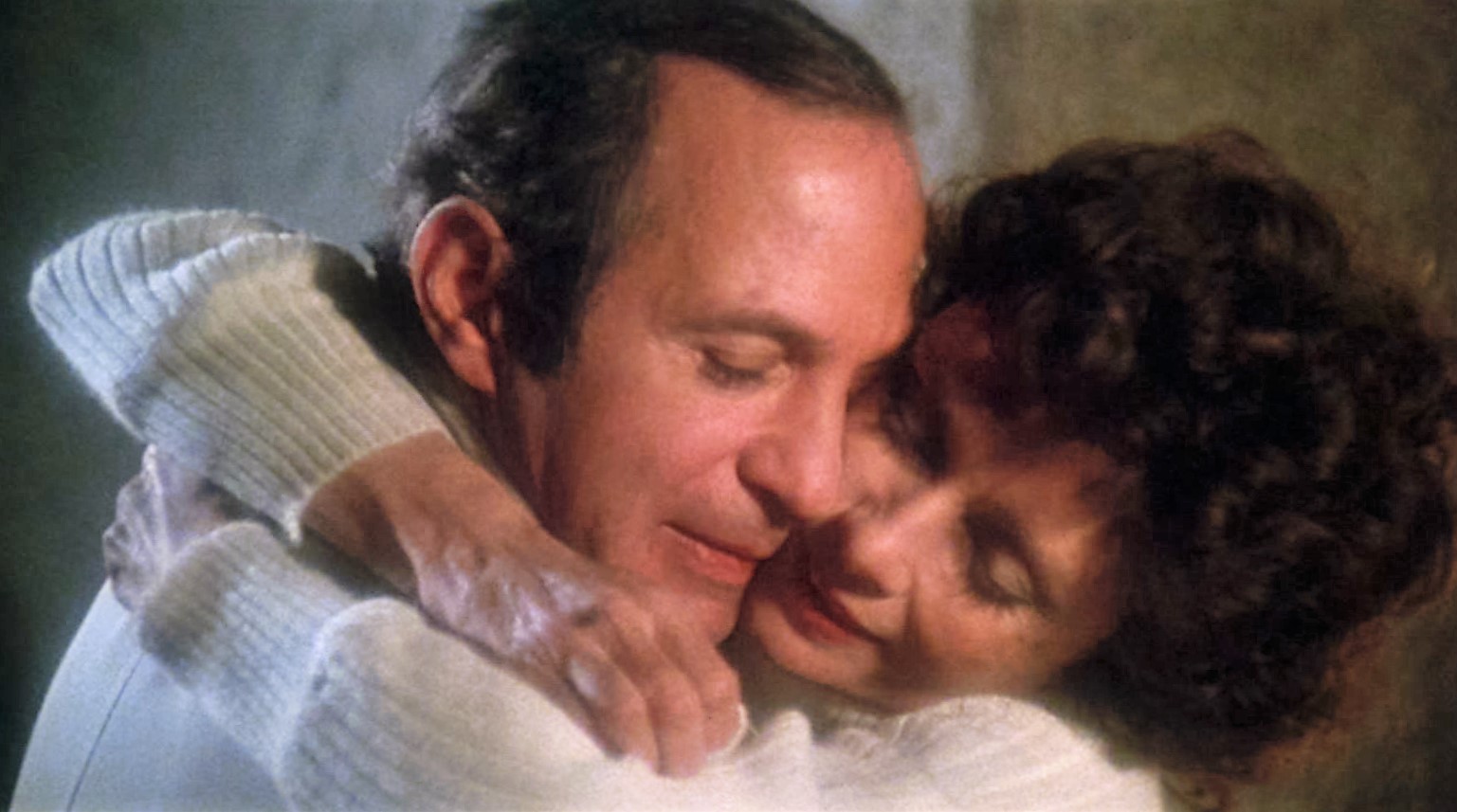
When her father, the head of an international pharmaceutical firm, is murdered, Elizabeth Roffe (Audrey Hepburn of The Unforgiven) takes over the company with the help of Rhys Williams (Ben Gazzara of The Young Doctors), whom she marries. But virtually all of the board members, all of whom are Elizabeth's relatives, are desperate for money, and appalled that she refuses to make the firm public, whereupon they could get ready cash. Before long, there are several attempts on Elizabeth's life, including an elevator crash that kills her secretary (Beatrice Straight). Who is the culprit: Ivo (Omar Sharif), whose mistress is demanding money; Helene (Romy Schneider), a ruthless race car driver; Sir Alec (James Mason), whose wife (Michelle Phillips) has run up huge gambling debts; or someone else? And who is responsible for the murders of several young women in snuff films? 

Ben Gazzara and Audrey Hepburn
Certainly an entertaining movie could have been made from Sidney Sheldon's absorbing page-turner, but this is a by-the-numbers effort with some unfortunate casting, slack direction, and an obnoxious musical score by Ennio Morricone, who simply layers the same treacly tune over every scene whether it is appropriate or not.  Director Young seems to have forgotten all he knew about directing, and despite an okay climax, Bloodline has virtually no suspense. The aforementioned elevator crash sequence is so brief and inept that it's positively comical. The best passages in the book, which concern Elizabeth's grandfather's ordeals in a Polish ghetto and the origins of Roffe Industries, get only a little screen time. This was sort of the second "comeback" picture for Hepburn, who gives a competent performance and looks good, if a little scary-skinny with, as one viewer put it, "ribs up to her neck." Gert Frobe from Goldfinger plays an inspector who tries to track down the culprit, but James Mason positively walks off with the picture, which is no surprise. 

Verdict: So much happening and still so dull. **.

Thursday, June 7, 2018

FUNNY FACE

Sexless glamour: Audrey Hepburn (with Fred Astaire)
FUNNY FACE (1957). Director: Stanley Donen.

Fashion magazine editor Maggie Prescott (Kay Thompson of Manhattan Merry-Go-Round) and photographer Dick Avery (Fred Astaire) invade a Greenwich Village bookstore with a dumb model (hoping all the books will make her look intellectual) and a camera crew, overwhelming the bright if pretentious clerk, Jo Stockton (Audrey Hepburn). Later they get the idea of turning Jo into a high-fashion model where she will be the cornerstone of a campaign in Paris and help introduce designer Paul Duval's (Robert Flemying of The Horrible Dr. Hichcock) new line. Jo has always wanted to see Paris and meet her idol, Professor Emile Flostre (Michel Auclair), the founder of "empathacolism," who preaches empathy but would rather make time with Jo. Almost grudgingly, Dick and Jo fall in love while the others hope that she and the new collection will be a hit. Hepburn, who exudes her famous "sexless glamour" throughout the movie (even before she's made over), had starred in several films by this time, and she gives a superior performance, radiating charm, but her singing is for the birds and she was wisely dubbed by the time My Fair Lady came around. Astaire is Astaire, making everything seem effortless. One can only assume that Eve Arden wasn't available to essay the role of Maggie, because the casting of Kay Thompson -- even though the woman could sing and dance -- is perplexing. Thompson is by no means terrible, but she completely lacks the light tough, and hasn't an ounce of charm; indeed she's rather off-putting. Admittedly, you won't find many close ups in most wide screen productions of the era, but the camera wisely stays as far away from Thompson's face as it can. The songs consist of some Ira and George Gershwin classics and new tunes by producer Roger Edens and collaborators."Bonjour Paris" has Astaire, Hepburn and Thompson extolling the virtues of the great city. Hepburn and Thompson clown around for "How to Be Lovely;" and Astaire warbles the title tune, "He Loves and She Loves" and "S'Wonderful." Ray June's cinematography is first-rate and makes the most of Parisian locations, especially a pastoral forest where Hepburn and Astaire have a dance -- the film's highlight. Funny Face is good to look at and generally well-performed, but for some reason it just doesn't emerge as a real classic, and the script is trite and dated. The score is very jazzy, and at one point Astaire and Thompson (who reportedly did not enjoy working with Astaire) team up for a beatnik number that frankly, doesn't add much to the picture.

Verdict: Attractive fluff. **3/4.

Thursday, April 26, 2018

THE UNFORGIVEN (1960)

Murphy, Lillian Gish, Doug McClure, Audrey Hepburn  
THE UNFORGIVEN  (1960). Director: John Huston.

A mysterious man named Abe Kelsey (Joseph Wiseman) wanders around the ranch of the Zachary family, and his presence causes consternation in old Mattilda Zachary (Lillian Gish). Apparently Abe is spreading stories that Mattilda's adopted daughter, Rachel (Audrey Hepburn), is not white but a "red injun." Members of the Kiowa tribe seem to think the stories are true, and want Rachel returned to them. Neighbor Zeb Rawlins (Charles Bickford) wants the truth, too, or there'll be no more business dealings with the Zacharys. Then one of Zeb's sons is murdered, Abe Kelsey is captured, and the whole thing comes to a boil ... The Unforgiven has a fascinating but ultimately contrived premise that doesn't make nearly enough of the situation and operates on an almost shamefully superficial level. There are some powerful scenes in the movie, but too many questions remain unanswered. It all ends in a bloodbath wherein the one-dimensional Indians are pretty much picked off like flies and a supposedly "happy" ending is tacked on. For a movie that some feel is about racial intolerance, it is staggeringly racist itself. The acting is generally good, although of the once-removed Hollywood variety, which is particularly evident in the climax. Wiseman is excellent as Abe, demented by loneliness and grief, and Gish [The Cobweb] has a tremendously good moment confronting him for what turns out to be the final time. Burt Lancaster plays Rachel's step-brother, who is secretly in love with her, this being one of the new breed of psycho-sexual westerns (while still being stubbornly old-fashioned as regards Native Americans). Doug McClure overdoes the boyish posturing a bit as Lancaster's youngest brother, but Audie Murphy is effective as his other brother, Cash. John Saxon also makes his mark as a cowboy who may be an Indian, as does Carlos Rivas [The Black Scorpion] in a nearly silent role as a tribe member who may be Rachel's true brother. Kipp Hamilton [War of the Gargantuas] is also good as Zeb's daughter, who is anxious to marry one of the Zacharys, and June Walker is excellent as her mother, Hagar. For obvious reasons, Audrey Hepburn was hardly the best casting choice for the role of Rachel. The attack on the ranch at the climax is admittedly exciting and well-staged, but in some ways unconvincing, while Franz Planer's widescreen cinematography doesn't make the most of the settings, and Dimitri Tiomkin's score, aiming for the unusual perhaps, is one of his worst, only serving to muff some sequences that could have been moving. Apparently director John Huston was hampered from really making the film he wanted to make, resulting in this rather hypocritical exercise.

Verdict: Hollywood Cowboys and Indians -- when it could have been so much more. **.   

Thursday, April 6, 2017

BREAKFAST AT TIFFANY'S

Audrey Hepburn as Holly Golightly
BREAKFAST AT TIFFANY'S (1961). Director: Blake Edwards.

Paul Varjak (George Peppard) is an author being kept by the married Mrs. Fallenson (Patricia Neal). Paul meets his slightly kooky neighbor, Holly Golightly (Audrey Hepburn), who has no desire to talk about her past. Holly makes her living accepting gifts from men. Will these two hustlers triumph over their demons and find true love? Breakfast at Tiffany's is the kind of utterly artificial movie that only Hollywood could churn out, not dealing with reality on any particular level. Part of the problem, of course, is that the film is a complete bowdlerization of Truman Capote's novella, on which this was very loosely based. (In turn, Holly was inspired by Christopher Isherwood's Sally Bowles). Hollywood needed to "straighten" out the Paul character so a romance between the two main characters was fabricated. Hepburn's performance is more than adequate for this, but Holly never seems like a real person. Often through the movie Hepburn is self-consciously "cute" and seems over-rehearsed without a moment of spontaneity. Peppard [The Carpetbaggers] does the best he can with his own underwritten and dishonest role. Patricia Neal [Diplomatic Courier] adds a degree of class in the thankless role of the "cougar" (as we would say today) with a hankering for Paul. To say she is one-dimensional is a major understatement. Mickey Rooney is surprisingly good in his way as Holly's excitable upstairs neighbor, but others have also noted that he is an hysterical Japanese caricature. The movie does have some nice moments, such as an excellent scene between Holly and her ex-husband, Doc (Buddy Ebsen, who would star in The Beverly Hillbillies one year later), when they say farewell at a bus station. And cat fanciers will go "ahh" over the shot of Holly's poor cat sadly looking after her after she (temporarily) sets her free. Mercer and Mancini's "Moon River" is possibly the best thing about the movie.

Verdict: Bohemians strictly from Hollywood. **1/2.

Thursday, January 14, 2016

LOVE IN THE AFTERNOON

Audrey Hepburn and Gary Cooper
LOVE IN THE AFTERNOON (1957). Director: Billy Wilder.

Ariane (Audrey Hepburn), the daughter of a private detective, Chavasse (Maurice Chevalier), saves a playboy, Frank Flannagan (Gary Cooper), that her father has been tracking, from a jealous husband (John McGiver). Ariane and Frank eventually begin seeing each other, and she tries to make him jealous by reciting all of the mythical men she has been with before (even though she's hardly old enough to have had so many affairs). Wanting to know the truth about Ariane, and not knowing her true identity, he hires her own father to find out more about her. Said to be Wilder's tribute to Ernst Lubitsch, this lacks the "Lubitsch Touch" and is rather slow at times. If it was meant to be a screwball comedy it doesn't work on that level, and the characters are too one-dimensional to make them really interesting. The whole bit with the aging playboy who finally finds the right girl is as old as "The Affairs of Anatol" and then some, and the whole movie has a distinctly old-fashioned quality even for the fifties. A big problem is that Hepburn [The Children's Hour] was 28 but looks ten years younger, and Cooper was 56 but (due to illness) looks ten years older -- Cooper is given only two closeups and they are not good --  so it looks as if Ariane is in love with a man old enough to be her grandfather. Exploring the sexuality of senior citizens is a perfectly worthwhile project, but Flannagan is not supposed to be as old as he looks, and he would come off much better with a more age-appropriate female on his arm. A bigger problem is not the age difference, but that Flannagan is a bit of a pig, even a vulgarian, making the allegedly "happy" ending more tragic than anything else. He is also an uncultured nincompoop (a la Donald Trump) who acts like an eight-year-old during the gorgeous overture of Tristan and Isolde in the opera house, another example of someone who has lots of money but absolutely no taste. The film never explores the reality that Flannagan's millions and ostentatious lifestyle would certainly influence Ariane's feelings toward the man. Hepburn may be bony, but she's wonderful in the movie, as are Chevalier and McGiver. Cooper does his familiar "cutesy" act but it's especially off-putting by this time; he basically just walks through the movie. Wilder directed some great movies, such as Double Indemnity and Witness for the Prosecution, but this picture hasn't aged at all well.

Verdict: Given the talent involved, this is a major disappointment. **.

Thursday, October 22, 2015

A TALENT FOR TROUBLE: WILLIAM WYLER

A TALENT FOR TROUBLE: The Life of Hollywood's Most Acclaimed Director, WILLIAM WYLER. Jan Herman. Putnam's; 1995.

This memorable biography of the great director looks at his private life; his work during the war making documentaries which often put him into dangerous situations; and the wonderful movies he made, including The Heiress, The Letter, The Good Fairy, Ben-Hur, The Big Country, The Children's Hour, These Three, Carrie, Dodsworth, Jezebel, Detective Story, and many, many others, most of which are certified masterpieces. Herman not only examines the director's private life, but shows what made him great by examining his movies (although Herman is not enamored of everything). Wyler got his start directing quickie silent westerns, but it was clear that there were much greater things in store for him. He directed Dead End, a stand-alone picture that became the first of many Eastside Kids films; directed Bette Davis in some of her best roles (and had an affair with her); survived the communist scare of the fifties and stood up for blacklisted individuals; introduced Audrey Hepburn in Roman Holiday; and remained married to actress Margaret Tallichet for many years. The book goes behind the scenes of virtually all of the movies, with comments from his fellow actors and others, as well as from his wife. Wyler was a superb director, my favorite after the perhaps showier and more publicity-driven Hitchcock, and it's very good that he's been given his due in this fine biography.

Verdict: Excellent biography of a gifted artist. ***1/2.

Thursday, June 25, 2015

THE CHILDREN'S HOUR

Shirley MacLaine and Audrey Hepburn
THE CHILDREN'S HOUR (1961). Producer/director: William Wyler. Note: some plot points are revealed in this review.

William Wyler had already directed These Three, a sanitized film version of Lillian Hellman's play The Children's Hour, when he decided it was time to tackle the play and its sub-theme head on. Karen Wright (Audrey Hepburn) and Martha Dobie (Shirley MacLaine) co-own a young girls' boarding school in a small but wealthy community. Karen has held off her marriage to Joe Cardin (James Garner of They Only Kill Their Masters) because she wants to make sure the school is a success before she leaves. With the unwitting aid of Karen's miserable Aunt Lily (Miriam Hopkins), a hateful child named Mary (Karen Balkin) tells a malicious lie about the two women. Her grandmother, Amelia Tilford (Fay Bainter), believes the lie and spreads it around that Karen and Martha are lovers, with the result that all of the parents take their daughters out of school. Does Martha have deeper feelings for Karen than she wants to admit? Hellman's play was certainly ahead of its time, and some of the dialogue that may have seemed "politically correct" in the sixties was actually already in the play, produced about thirty years earlier. Martha goes on about people "who believe in it, who want it, who've chosen it for themselves," but this is something she just can't do. (Of course today it's more accurate to say gay people choose to accept themselves.) The dated, but not unrealistic for the period, line is Martha saying "I feel so sick and dirty I just can't stand it anymore," which is roughly equivalent to "Show me a happy homosexual and I'll show you a gay corpse" from The Boys in the Band. However, I've never felt Children's Hour was as offensive as Boys, because the latter is a mostly negative depiction of acknowledged gay characters while the former not only looks at the devastating results of gossip and innuendo but functions, whether intended or not, as a trenchant study of both external and internalized homophobia. These women's lives are ruined simply because people think they're lesbians, a revelation which Martha only acknowledges at the very end. The suicide in the film may strike modern-viewers as horribly dated but it's also quite moving, as is the conflicted character of Martha. John Michael Hayes' [Rear Window] script is excellent, William Wyler's direction is sensitive and splendid, and the acting from virtually the entire cast is simply incredible. Hepburn and MacLaine are perfection, Bainter and Hopkins come close to stealing the show, James Garner (whom I've never much cared for) gives probably the best performance of his career, and the little girls, including Veronica Cartwright as Rosalie, are so good it's almost scary. Add a lovely score by Alex North, fine cinematography by Franz Planer (who also shot Wyler's The Big Country), and expert editing from Robert Swink and you've got a near-masterpiece.

Verdict: Whatever its flaws, this picture plays. ***1/2.

Thursday, October 10, 2013

HOW TO STEAL A MILLION

Peter O'Toole and Audrey Hepburn
HOW TO STEAL A MILLION (1966). Director: William Wyler.

Nicole (Audrey Hepburn) lives in a big house in Paris with her father, Bonnet (Hugh Griffith of Craze), who forges paintings and sculptures and sells them to the highest bidder. Now Bonnet has agreed to lend a phony Cellini statue to a museum, which Nicole warns him is a mistake. It sure is -- the statue has to be authenticated for insurance purposes and it is sure to be exposed as a fake, which will also ruin Bonnet's reputation and call into question every sale he ever made. Nicole decides to steal the statue before the inspection can take place, and enlists the aid of a burglar, Simon (Peter O'Toole of The Ruling Class), that she caught apparently trying to steal one of her father's paintings. There's an undeniable attraction between the two, but can they actually steal the sculpture from such a heavily guarded museum ... ? Although director William Wyler [The Heiress, The Letter, Carrie, four star movies all] wasn't exactly a suspense specialist and was an odd choice for this assignment, he had worked with Audrey Hepburn more than once, and the film still has entertainment value, although it's hardly one of Wyler's best. Hepburn gives another terrific performance, matched by O'Toole, Griffith, and Eli Wallach as a suitor and art collector. Charles Boyer is fine in a brief bit as a colleague of Simon's. Bonnet is in many ways a reprehensible character with no true appreciation of art or artists when you get right down to it. Wyler directed Funny Girl after this, another odd choice.

Verdict: Light and fun if minor. ***.

Thursday, October 3, 2013

WAIT UNTIL DARK

Alone in the dark with a killer
WAIT UNTIL DARK (1967). Director: Terence Young.

Blind Susy Hendrix (Audrey Hepburn) is unaware that some men who have come to her apartment pretending to either be friends of her husband or police officers are actually crooks looking for a drug-filled doll that a woman handed off to Susy's unsuspecting husband, Sam (Efrem Zimbalist Jr.). Gradually she realizes that something is wrong, and prepares to fight for her life when the gentlemen come back from a wild goose chase she's sent them on. The main trouble with Wait Until Dark -- which was based on a stage play by Frederick Knott (Dial M for Murder) -- is that the suspense is minimal because the audience is clued in to what's going on from the very beginning. Hepburn gives a very good performance and the rest of the surprisingly C List cast are fine, although Alan Arkin seems about as threatening as Boris Badenov. Julie Herrod is excellent as the neighbor child Gloria who is alternately helpful and bratty. Henry Mancini's score does what it can to increase the limited excitement. It's hard to figure why Arkin and Crenna were billed above the title along with Hepburn.

SPOILER ALERT: Susy has been encouraged by her husband to be as independent as possible despite her blindness, which leads to two problematical developments. We already know she can walk by herself to her husband's office, so instead of barricading herself in her apartment, why doesn't she just leave and ask for someone to help her get to the nearest precinct? [St. Luke's Place where this takes place runs right into Seventh Avenue and the men watching her place have gone off on the wild goose chase.] At the very end when Sam sees her bloodied and huddled by the refrigerator, he waits for her to get up and make her way towards him, but surely in a situation like this he would forget his independence edict and go hug the woman he's supposed to be in love with after such an ordeal? Also, in a moment that made some nervous nellies in the audience jump in fright, Alan Arkin leaps out of the darkness at Susy after he's been stabbed and falls to the ground unconscious. Maybe he might have been able to painfully lurch after her, but leap? The moment is ludicrous instead of startling.

Verdict: If you want to see a better Frederick Knott adaptation watch Dial M for Murder instead. **.

Thursday, September 26, 2013

ENCHANTMENT: THE LIFE OF AUDREY HEPBURN Donald Spoto

ENCHANTMENT: THE LIFE OF AUDREY HEPBURN. Donald Spoto. Harmony; 2006.

Spoto doesn't spend too much time detailing the terrible childhood and awful privations Belgium-born Hepburn suffered during the Nazi occupation of Arnhem before we're off exploring her rapid rise to stardom and her many memorable film roles. Originally trained to be a dancer, Hepburn's deportment and good looks earned her the title role in the play Gigi and many accolades from the critics of the day, although Hepburn thought she was still learning how to act throughout the lengthy run. [Whether or not she was disappointed that the role of Gigi went to Leslie Caron in the big-screen musical adaptation, Spoto doesn't say.] She had already had a good role in the British film Secret People, but now found herself working with such famed directors as William Wyler and Billy Wilder and such actors as William Holden, with whom she had a brief affair, and Humphrey Bogart and Fred Astaire, who were not always easy to work with. She was most often paired with much, much older men, such as Gary Cooper and Gregory Peck, and later, Cary Grant in Charade. She won an Oscar, had what she considered her greatest role in The Nun's Story [befriending the real-life nun and the book's author, who apparently were a long-time lesbian couple], and "stole" the role of Eliza Doolittle from Julie Andrews in My Fair Lady where she spent hours on singing lessons only to learn Marni Nixon had already dubbed all of her songs. Although Hepburn wasn't much different from other actresses in that she had affairs even while married to actor Mel Ferrer [who directed her in Green Mansions and appeared in such films as Born to Be Bad and Eaten Alive, not to mention a solid role on Falcon Crest], Spoto treads lightly, as if not wanting to spoil her image; he's very tough on Ferrer, however. Hepburn left films to become a full-time wife and mother, made a few movies of varying quality some years later [Robin and Marian; Bloodline], then had perhaps her most fulfilling role as a hands-on goodwill ambassador for Unicef, flying on military planes to such desperately hungry nations as Ethiopia and witnessing the starvation and its effects first-hand. She had two disappointing marriages, but found some happiness with companion Robert Wolders in her final years before succumbing to cancer. Enchantment is a good read, fast-paced, well-researched, and makes it clear that movie stardom is not always a recipe for lasting happiness.

Verdict: Solid and very readable biography. ***.

Thursday, December 27, 2012

GREEN MANSIONS

GREEN MANSIONS (1959). Director: Mel Ferrer.

Abel (Anthony Perkins) comes to South American looking for treasure, and learns that a certain forbidden area in the jungle is home to a mysterious bird-girl, Rima (Audrey Hepburn), whom the natives see as a kind of witch and wish to destroy. Abel finds the real woman behind the legend and the two fall in love to face danger and tragedy together. This adaptation of the novel by William Henry Hudson has always had the reputation of being a stinker [by people who have never seen it] primarily due to the miscasting of the leads. Sensitive Tony Perkins as a fortune-hunting adventurer? Sophisticated Audrey Hepburn as a South American native girl? The casting is slightly ridiculous, but both actors manage to rise above it and give not only decent but effective performances, as do Lee J. Cobb (the old man who raised Rima), Nehemiah Persoff, Sessue Hayakawa (king of the natives), and especially Henry Silva, in perhaps his most memorable role, as the rather malevolent Kua-Ko. Joseph Ruttenberg's cinematography is stunning, as is the art direction by E. Preston Ames and William Horning. [Although the credits boast that this was filmed in South America, most of the sequences were shot on colorfully dressed sound stages.] Bronislau Kaper did the score, with some additional music from Heitor Villa-Lobos. Perkins sings "Green Grow the Mansions" not too badly. One particularly memorable scene details the natives' trial-by-insect! Director Mel Ferrer, better known as an actor, was married to Hepburn at the time of filming, and crafted a creditable showcase for his lovely wife.

Verdict: Incurable romantics will probably love the movie; others approach with caution. ***1/2.

Friday, June 20, 2008

MY FAIR LADY


MY FAIR LADY (1964). Director: George Cukor.

George Cukor, primarily concerned with actors and not with being "cinematic," may not have been the best choice to helm the film adaptation of the smash Lerner and Loewe musical, but the film is still so entertaining and well-acted that there seems little point in complaining about its static, theatrical aspects. Audrey Hepburn, Rex Harrison, and Stanley Holloway are all superb, and they are bolstered by an outstanding supporting cast made up of the likes of Gladys Cooper as Henry Higgins' mother (wish we saw more of her) -- Cooper, of course, was the dragon-mother of Now, Voyager -- Wilfrid Hyde-White as Pickering; Mona Washbourne as the housekeeper Mrs. Pearce; and Theodore Bikel as that "ruder pest" from Budapest, Zoltan Karpathy etc. This is probably one of the few (only?) film adaptations of a Broadway musical that includes all of the songs (the adaptation of Fanny dropped the songs entirely, although you at least heard the music in the background). Great story, great score, great entertainment. Eliza's haunting refrain of "what's to become of me?' echoes -- along with a great sense of loneliness -- as she returns to the place where she once sold flowers and none of her old companions fully recognize her. You really can't go home again.

Verdict: Loverly. ***1/2.