Lively, entertaining reviews of, and essays on, old and newer films and everything relating to them, written by professional author William Schoell.
Showing posts with label Myrna Loy. Show all posts

Thursday, October 29, 2020

THIRTEEN WOMEN

THIRTEEN WOMEN (1932). Director: George Archainbaud. 

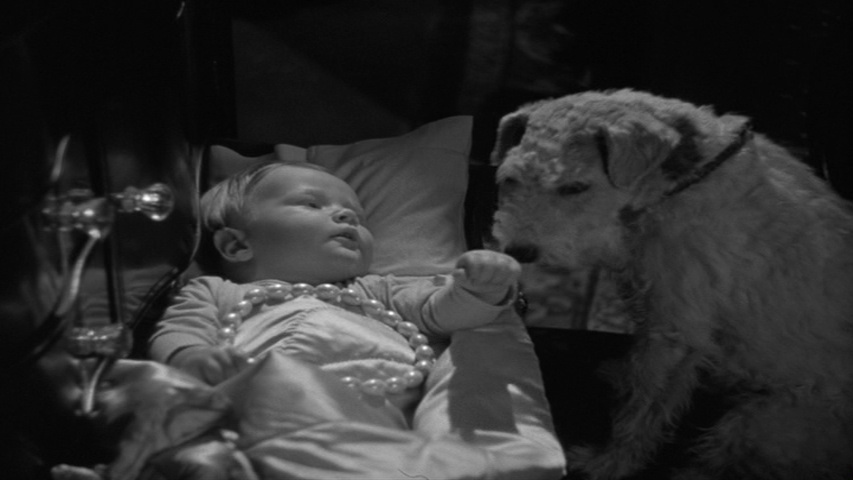
The racist girls at a fancy finishing school, St. Alban's, weren't very nice to the Eurasian gal Ursula Georgi (Myrna Loy, pictured), so years later she's determined that every one of them who snubbed her will come to an exceedingly bad end. Using a fake swami (C. Henry Gordon) she sends letters of doom to her victims and then watches as her sinister predictions come true. Now she's after Laura Stanhope (Irene Dunne), planning to blow up Laura's adorable little boy, Bobby (Wally Albright) with a bomb in a ball. Ricardo Cortez is the police investigator on the case, and Edward Pawley is the chauffeur who's become Ursula's love slave. Peg Entwhistle, who threw herself off the Hollywood sign, is one of the young ladies. There's an interesting climax on a train, but this plot with its subway shoves and falls off of trains needs the Hitchcock finesse to do it justice. Archainbaud pretty much just covers the action although there are some exciting scenes. Loy, Dunne and Kay Johnson are the cast stand-outs. 

Verdict: Minor but reasonably absorbing. **1/2.

Thursday, December 12, 2019

MYRNA LOY: THE ONLY GOOD GIRL IN HOLLYWOOD

MYRNA LOY: THE ONLY GOOD GIRL IN HOLLYWOOD. Emily W. Leider. 2011; University of California Press.

This absorbing, well-written and well-researched biography of Loy traces her roots in Montana, her early years doing movie after movie, often cast as "exotic" Orientals [The Mask of Fu Manchu], her indentured servitude working for studios that hardly ever gave her a day off, her eventual emergence as a major star with a wider range than expected who commanded some respect from fellow filmmakers, and her final days when she turned to the theater and became a character actress in a few late movies [Midnight Lace]. Along the way we meet Loy's four husbands, most of whom treated her badly (and most of whom were plug-ugly, although Leider refers to one potato-head as "catnip to women!"). Loy had liberal politics, seemed to care about people other than herself (which alone makes her different from most movie stars) and decided after her fourth divorce that it was not so terrible not to have a husband. The bio also delves into Loy's many friendships with people famous and not so famous, her relationships with various family members, and analyzes most of her films and her approach to her roles, which included co-starring in the Thin Man movies, The Best Years of Our Lives, Cheaper by the Dozen, The Animal Kingdom, and many, many others.

Leider resuscitates this business about Loy possibly having had some kind of relationship with Montgomery Clift while they were making Lonelyhearts and after (first brought up in Patti Bosworth's bio of Clift). Loy denied this vehemently in her own memoir, and also denied it (in my presence) to Lawrence Quirk, who wrote The Films of Myrna Loy. Considering that she was no longer married to her husband at that time years later, it makes little sense to deny it if it were true. Also, Clift was essentially gay, Loy was 15 years older, and as this book makes clear, she was not the type to sleep around indiscriminately or cheat on her husband. (I also knew Jim Kotsilibas-Davis, who worked on Loy's memoirs with her.)

Verdict: Excellent biography and quite possibly the last word on Loy. ***1/2. 

Thursday, November 14, 2019

INDECENT / VANITY FAIR

Myrna Loy as Becky Sharp
INDECENT (aka Vanity Fair/1932). Director: Chester M. Franklin.

"I do hope I'm going to give satisfaction." -- Becky.

Becky Sharp (Myrna Loy), who has beauty and brains but no money, gets a taste of the good life when she is taken in by her wealthy friend, Amelia (Barbara Kent). Amelia's brother Joseph (Billy Bevan) has a yen for Becky, but while she almost tricks him into marriage, he manages to get out of the trap. Becoming a governess for Sir Pitt Crawley (Lionel Belmore), Becky is caught between the lustful advances of Sir Pitt and the more refined passes of Crawley's son, Rawdon (Conway Tearle), whom she marries. But things don't go smoothly for the couple after Rawdon is disinherited by his jealous father. And things get worse after that ...

Billy Bevan and Myrna Loy
Indecent is a credible, updated version of Thackeray's "Vanity Fair" which revises things due to the change in locale and time period -- there are no references to Napoleon or Waterloo in this version -- but remains fairly faithful to the basic events and spirit of the story. Although not as bombastic as Miriam Hopkins in the later Becky Sharp, Loy gives a very good performance in this, and she has a host of talented if lesser-known co-stars. There is some inventive camera work in the film, which is not that slow-moving, and the finale, with Loy facing her older self in the mirror, is quite grim.

Verdict: Entertaining pre-code drama. ***.

Thursday, October 3, 2019

WHEN LADIES MEET (1933)

Wife vs. mistress: Ann Harding and Myrna Loy
WHEN LADIES MEET (1933). Director: Harry Beaumont. NOTE: Some plot points are given away in this review.

Novelist Mary Howard (Myrna Loy) has had a sort of long-time boyfriend in Jimmie Lee (Robert Montgomery), who is hopelessly in love with her. But Mary has fallen for her married publisher, Rogers Woodruf (Frank Morgan), and is examining the situation in her latest, unfinished novel. She thinks the heroine, who is also having an affair, should intelligently talk things out with her paramour's wife, an idea that the men who read her book, at least, think is crazy. But then Jimmie concocts a scheme where he manages to get both wife, Clare (Ann Harding of The Unknown Man), and mistress -- and eventually the husband -- in the same house during a weekend in the country, and the scenario Mary has envisioned may play out differently than she expects.

Robert Montgomery and Myrna Loy
When Ladies Meet is a frank, interesting and well-played comedy-drama whose best scene is when the two women talk about husbands, affairs, mistresses and infidelity without Clare being aware that Mary is her husband's latest girlfriend, and without Mary knowing that Clare is her lover's wife! Then the husband shows up ... Although Loy never quite seems bright enough to be a serious novelist (yet her character is rather naive) and Harding overplays a couple of moments, both ladies give good (not great) performances. Also notable are the boyish Montgomery as the mischievous Jimmie, and Alice Brady [Three Smart Girls] as the ever-talkative and amusing Bridget, who is hosting the country weekend along with her architect-boyfriend, Walter (Martin Burton).

Frank Morgan: a young woman's dream of bliss? 
A decided weakness of the film is the miscasting of Frank Morgan as the publisher. Not terribly attractive and with a distinctly negative aura in this, Morgan is a bad choice to play a lover boy. It might make more sense if Mary was an aspiring author, and wants Morgan's help and tutelage, but while pretty young woman do on occasion become attached to much less appealing older men, this pairing is a bit much to swallow. Woodruf turns out to be a real pig in any case. Harding has some very good moments coming to some hard conclusions abut her marriage, although Loy underplays her rejection scene way too much. Whatever its flaws, When Ladies Meet is absorbing and entertainingIt was remade eight years later with the same story, much of the same dialogue, but with a completely different cast. Loy and Harding also played rivals in The Animal Kingdom

Verdict: Illicit romances never run smoothly. ***. 

Thursday, April 13, 2017

MIDNIGHT LACE (1960)

Natasha Parry and Doris Day
MIDNIGHT LACE (1960). Director: David Miller.

Wealthy Kit Preston (Doris Day) lives in a beautiful London townhouse with her husband, businessman Anthony Preston (Rex Harrison). She hears creepy voices in the pea-soup fog threatening to kill her, and gets obscene phone calls that Inspector Byrnes (John Williams) thinks may be imaginary. Is Kit overly anxious for her busy husband's attention, or is somebody actually out to get her? If so, there are numerous suspects: Malcolm (Roddy McDowall), the maid's son, who is shiftless and threatening; Brian (John Gavin), who supervises the construction site next to the townhouse and may be overly solicitous; a weird stranger who follows Kit about (Anthony Dawson); and Tony's business associates, Charles (Herbert Marshall) and Daniel (Richard Ney). Doris Day gives one of her best performances in Midnight Lace, convincingly getting across her character's terror and nervousness throughout the movie. Okay, there are times Day rather rabidly masticates the scenery a bit -- especially when she has a meltdown on a staircase -- but her hysteria fits the character, who is so wimpy and helpless at times that you want to slap some sense into her. The other performers are all excellent as well, including Natasha Parry as Kit's friend, Peggy, and Myrna Loy, who adds some class as Kit's Aunt Bea. John Gavin, incredibly handsome in this picture, uses a British accent and is better than usual. Russell Metty's cinematography is first-rate and Frank Skinner's score certainly adds immeasurably to the tension of certain sequences. When Kit asks for bus directions to a London neighborhood, leading to her near-death, you have to wonder why such a fabulously wealthy woman would bother taking a bus in the first place! Williams and Dawson both appeared in Hitchcock's Dial M for Murder. David Miller directed Joan Crawford in an even better woman-in-jeopardy film, Sudden Fear.

Verdict: Smooth, solid, well-acted suspense film. ***.

Thursday, February 9, 2017

THE ANIMAL KINGDOM

Leslie Howard and Myrna Loy
THE ANIMAL KINGDOM (1932). Director: Edward H. Griffith. Based on the play by Philip Barry.

"A foolish virgin, me. Well, foolish anyway." -- Daisy.

Tom Collier (Leslie Howard), scion of the very wealthy Rufus Collier (Henry Stephenson), has had a casual if intimate relationship with aspiring artist Daisy Sage (Ann Harding) for years, a relationship of which his father does not approve. Tom seems to think that he and Daisy are, first and foremost, best friends and nothing more, but he discovers that Daisy is actually in love with him and wants to marry him just at the moment that he comes to tell her he's gotten engaged to the more "respectable" Cecelia (Myrna Loy). Tom just doesn't get that Daisy needs to be apart from him to mend her broken heart, but his feelings for her just won't recede even as he realizes he may have made the wrong choice. The Animal Kingdom begins quite well but it's mostly the wonderful acting from the three leads and supporting players alike that put this over, as its contrivances and false theatricality eventually do it in. Played sympathetically by Loy [Lonelyhearts], Cecelia is treated especially horribly by both Tom and the film, which contrasts her unfavorably with a prostitute. As usual in these triangle dramas, one wonders if the utterly weak man in the middle is really worth all the hand-wringing from the ladies, as Tom seems a superficial sort content to churn out bestselling potboilers even as Daisy and others seem to think he can and should be writing "literature." Stephenson [Tarzan Finds a Son] scores as the father; William Gargan is the comedy relief prizefighter turned butler; and Neil Hamilton is as bland and puffy as ever as a friend who is in love with Cecelia. Ilka Chase, Leni Stengel and Don Dillaway [Platinum Blonde] have smaller roles and are effective. The character of Cecelia is, I believe, intended to be the unloving, social climbing wife who cares little for what her husband wants as long as she's well-dressed, but Loy's playing gives the character much more dignity and subtlety than that, and in an early scene she admirably defends Tom against all the negative remarks made by his father. But these attempts to make things a little less black and white don't quite succeed.

Verdict: Interesting in spots, and very well-acted, but also pretentious and dated. **1/2.

Thursday, January 26, 2017

THE THIN MAN GOES HOME

Harry Davenport and Myrna Loy
THE THIN MAN GOES HOME (1945). Director: Richard Thorpe.

Nick Charles (William Powell), his wife Nora (Myrna Loy), and their little dog Asta (Nick Jr. is away at school) travel to Nick's hometown of Sycamore Springs for his unspecified birthday (Powell was 53 at the time). Nick has always had a difficult relationship with his father, Bertram (Harry Davenport), because he didn't become a doctor like his father did, and Nick aches for his approval. But his mother (Lucile Watson) is a peach. Nick gets to prove his skill at detecting when a dead man practically shows up on the Charles' doorstep. Bertram can't believe that one of his old friends might be the killer ... Powell and Loy are excellent, as usual -- Loy is especially notable in this entry -- and the supporting cast, including Davenport [Son of Fury] and Watson (cast against type, like Fay Holden in the Andy Hardy films, as a small-town housewife), could not be bettered. Special mention must go to Anne Revere [Body and Soul], who plays "Crazy Mary," the town's pathetic loony; Anita Sharp-Bolster as  the hilariously weird maid, Hilda; and Donald Meek as Willie Crump, who sells paintings for a living -- the plot revolves around a painting of a windmill that Nora buys for her husband's birthday. Other suspects and persons of interest are well played by Leon Ames, Donald MacBride, Irving Bacon, Morris Ankrum, Helen Vinson, Minor Watson, Lloyd Corrigan, and Gloria DeHaven as a breathlessly pretentious heiress. One very cute bit has Nick and Nora leaving Asta with the coat check girl as if he were a hat, but the funniest scene has Nora unexpectedly doing a wild, zippy dance with a sailor. This was the next to last Thin Man movie -- this was followed by the disappointing Song of the Thin Man.

Verdict: Very satisfying and amusing Thin Man movie. ***.


Thursday, January 19, 2017

LOVE ME TONIGHT

Maurice Chevalier and Jeanette MacDonald
LOVE ME TONIGHT (1932). Director: Rouben Mamoulian.

"I don't know what will come tomorrow, but love me tonight."

Tailor Maurice (Maurice Chevalier) is hoping to be paid a large bill for several suits by the deadbeat Viscount Gilbert (Charles Ruggles). To that end Maurice travels to the home of the man's uncle, the Duke d'Artelines (C. Aubrey Smith), whom he is visiting. There Maurice becomes smitten with the Princess Jeanette (Jeanette MacDonald), who finds him rude and brash. Not wanting his uncle to realize he has yet another creditor nipping at his heels, Gilbert tells everyone that Maurice is actually a baron, and then an even greater dignitary traveling incognito. Slowly, Maurice begins to wear the princess down, but what happens when she learns he's just a tailor ..? Love Me Tonight would have to go on the list as one of the best movie musicals ever made. The story is slight, and often zany, but this is cinematic, very well directed by Mamoulian, with superior cinematography (Victor Milner of So Red the Rose) and editing (Mamoulian and William Shea). Chevalier gives an excellent and charming performance, MacDonald is swell, and Smith as effective and fun as ever. Ruggles is fine, but Myrna Loy as a countess and Charles Butterworth as a hopeless suitor for the princess's affections are less memorable. Elizabeth Patterson, Ethel Griffies, and Blanche Friderici stand out as a trio of "old biddies" who almost serve as a Greek chorus and are very funny.

And then there's the music. Although this was based on a straight stage play and not a musical, Rodgers and Hart provided several songs that were written just for the movie. The best-known is Isn't It Romantic, a standard. and a classic Rodgers melody. It is first sung (not that well, frankly) by Chevalier, then picked up by a customer in his shop, a cab driver, moving on to several other people throughout the French countryside, until the tune is taken up by marching soldiers and finally McDonald, whose voice is very imperfect but who at least sings the tune better than Chevalier. (He could get across a song without having a great voice). We also have "Lover;" "Apache:" "The Son of a Gun;" the title tune; and "Mimi." Some of Hart's racy lyrics survive intact in this pre-code movie (the production code was formed two years earlier, but not really enforced until 1934 when pictures had to obtain a certificate of approval.) Chevalier sings of how his father and mother "weren't very well acquainted."

Now here's where things get odd. Chevalier sings "Mimi" to MacDonald but the song is never repeated. I could swear that the first time I saw this movie, "Mimi" was intoned by virtually everyone in the movie. Am I confusing it with what happened with "Isn"t it Romantic?" But in the wikipedia entry regarding the song, it says that the song is "later reprised by the entire company." Could this have happened in a later movie? I swear I remember dozens of people singing the tune in Love Me Tonight, and the DVD doesn't say anything about the film being cut. Anyone know what's up?

The movie has other notable scenes, such as a Foxhunt in which Chevalier winds up befriending a frightened stag, and MacDonald's racing on a horse to get ahead of a train. The film begins with all of the sounds of Paris combining to form a kind of music.

Verdict: A lovely and entertaining gem, if a little odd at times. ***1/2.

Thursday, December 29, 2016

SONG OF THE THIN MAN

William Bishop, Myrna Loy, William Powell
SONG OF THE THIN MAN (1947). Director: Edward Buzzell.

The gambling ship, S. S. Fortune, is the sight of the murder of band leader Tommy Drake (Phillip Reed). Suspects include songstress Fran (Gloria Grahame); her ex-boyfriend Buddy (Don Taylor of The Girls of Pleasure Island); gangster Al Amboy (William Bishop); Mr. and Mrs. Talbin (Leon Ames; Patricia Morison); and Phil Brant (Bruce Cowling), whom the police are after for the crime. His fiancee, Janet (Jayne Meadows of Enchantment), comes to Nick Charles (William Powell) for help, and he digs into the case with his usual jaunty style. Nora (Myrna Loy) tags along to no great purpose, while their cute little boy Nick Jr. (Dean Stockwell of The Werewolf of Washington) is left in the charge of Asta and the housekeeper, Bertha (Connie Gilchrist). Song of the Thin Man is not one of the better entries in the series -- in fact it was the last --  although it does have a lively and quite amusing finale. Gloria Grahame is completely wasted in her very small role as Fran, as is Marie Windsor, playing the gangster's wife in just one sequence. This has one of the dumbest murderers ever. The catchy song "You're not so easy to forget" is pleasantly warbled by whoever is dubbing Grahame. Ralph Morgan is Janet's grumpy father, and Morris Ankrum is the police inspector.

Verdict: Talky and dull with few bright spots. **.

Thursday, September 15, 2016

SHADOW OF THE THIN MAN

William Powell and Stella Adler
SHADOW OF THE THIN MAN (1941). Director: W. S. Van Dyke.

Nick and Nora Charles (William Powell; Myrna Loy) are enjoying a relatively quiet life with Asta and little Nicky (Richard Hall) when murder comes a'calling again. This time the victim is a virtually anonymous jockey who's dead practically before the film begins, but soon other bodies begin to pile up. Suspects and victims alike include reporter Paul Clarke (Barry Nelson); his girlfriend, Molly (Donna Reed); her boss, "Link" Stephens (Loring Smith); his mistress, Claire Porter (Stella Adler); and assorted underworld or otherwise shady characters such as Fred Macy (Joseph Anthony); "Rainbow" Benny (Lou Lubin); and "Whitey" Barrow (Alan Baxter). Then there's Major Sculley (Henry O'Neill of Scandal Sheet) and the excitable Lt. Abrahms (Sam Levene of Dial 1119). Gathering the suspects at the climax where everyone has a serious hate on, Nora is afraid that Nick is going to name her as the murderer. This is a typically convoluted, but amusing "Thin Man" movie with very good performances from all. Stella Adler, who is very saucy in this picture, did a lot of theater work, but her film and TV credits were limited to five; she later became best-known as an acting coach. Joseph Anthony later became a director for the stage and of such films as Career.

Verdict: Smooth and entertaining. ***.

Thursday, August 18, 2016

ANOTHER THIN MAN

Baby Nicky and li'l Asta
ANOTHER THIN MAN (1939). Director: W. S. Van Dyke II.

Back in New York with their new son, Nicky, and little Asta in tow, Nick and Nora (William Powell and Myrna Loy) are summoned to the Long Island estate of Colonel MacFay (C. Aubrey Smith). MacFay has been receiving weird death threats from an old employee named Church (Sheldon Leonard) and hopes to have Nick's protection. Naturally, as in most of these detective movies, the threatened man is murdered under the disinterested hero's nose, and the rest of the movie is concerned with finding out who done it. Another Thin Man is quite talky, but entertaining, with an intricate script and a denouement that is truly a surprise. Members of the supporting cast (as well as suspects in certain cases) include Virginia Grey [Jeanne Eagels] as MacFay's adopted daughter; Patric Knowles as her secret fiance; Tom Neal [Bruce Gentry] as a man carrying a torch for Grey; Otto Kruger as the detective on the case; Ruth Hussey as a kind of nanny; Muriel Hutchison as Church's paramour, among others, all giving adroit performances. The business with ex-cons being delighted to see Nick even though he sent them up the river gets tiresome, and leads into a party for little Nicky with the hoods each bringing their own baby! (Don't blink or you'll miss Shemp Howard.) Some of the subsequent victims certainly don't deserve to be murdered, but there's never any sympathy for them. However, there's a swell scene with Powell interacting with Marjorie Main [The Law and the Lady] as a landlady, and the ending is a pip! The killer in this is especially conniving and heartless.

Verdict: Things look up for the series with this entry. ***.

Thursday, August 11, 2016

AFTER THE THIN MAN

Myrna Loy and William Powell
AFTER THE THIN MAN (1936). Director: W. S. Van Dyke.

Nick Charles (William Powell) and wife, Nora (Myrna Loy) have returned from New York to California in this first sequel to The Thin Man, but discover that wherever they go murder follows. Nick learns that when it comes to intrigue and craziness, Nora's relatives are not much different from the thugs and ex-cons Nick hangs out with. This time Nora's cousin, Selma (Elissa Landi of The Sign of the Cross), is accused of murdering her philandering husband, Robert (Alan Marshal). The suspects include a nightclub owner named Dancer (Joseph Calleia); a dancer named Polly (Penny Singleton); her "brother," Phil (Paul Fix of The Bad Seed); Dr. Kammer (George Zucco), who thinks everyone is nutty: and David Graham (James Stewart), who has long carried a torch for Selma. Somewhat better than The Thin Man, this is arguably not a whole lot better than a typical mystery from a minor studio, but it is served up with relish, some very good acting, and has an effectively comic-dramatic ending. Singleton, who was billed as "Dorothy McNulty" back then, is vivid as Polly, and Jessie Ralph [David Copperfield] simply walks off with the movie as Nora's formidable Aunt Katherine, a harridan force of nature if ever there were one. Sam Levene is fine as Lt. Abrahms, the detective on the case. Asta has a bit more to do then he did in the first film.

Verdict: Nick Charles is no Perry Mason, but this is fun enough. ***.

Thursday, August 4, 2016

THE THIN MAN

William Powell prepares to question the suspects
THE THIN MAN (1934). Director: W. S. Van Dyke.

Nick Charles (William Powell) retired as a detective when his wife, Nora (Myrna Loy), inherited a fortune from her father. On a trip back to New York, Nick discovers he can't stay away from sleuthing when several people he knows are embroiled in murder. Dorothy Wynant (Maureen O'Sullivan) is worried when her father, Clyde (Edward Ellis), disappears, and things get more complicated when Clyde's mistress, Julia (Natalie Moorhead of The Curtain Falls) is found murdered. More deaths follow as the suspects pile up: Wynant's ex-wife Mimi (Minna Gombell of Babbitt); his weird son, Gilbert (William Henry of Nearly Eighteen); his lawyer, MacCauley (Porter Hall); Mimi's gigolo and second husband, Chris (Cesar Romero); and several other nefarious types. Nick gathers all of the suspects (he pronounces the word with the accent on the second syllable, which is kind of charming in an old-fashioned way) at a dinner party he hosts with an utterly baffled Nora. The Thin Man has good performances from all -- Gertrude Short is snappy in a small role as the shrewish girlfriend of a dead hood -- but one could argue that there's more silliness than humor and it often gets in the way of the not-very-memorable story, although it does manage to build up minor interest and suspense as it goes along. Nobody who watches this will especially care who the killer is. Powell does his usual suave shtick with aplomb; Loy is fine if typically arch; and the little dog Asta almost runs off with the show. There were five sequels to this popular film, most of which, if memory serves me, were superior to this first entry. The title refers to the vanished Wynant, described by police and papers as a "thin man with white hair." Nick, rarely without a drink in his hand, seems half-inebriated throughout the movie. Nat Pendleton is the detective on the case, and Henry Wadsworth is Dorothy's fiance, Tommy.

Verdict: Too self-consciously "cute" by half but not without its moments. **1/2.

Thursday, July 14, 2016

WIFE VS. SECRETARY

A pensive Jean Harlow
WIFE VS. SECRETARY (1936). Director: Clarence Brown.

Linda (Myrna Loy) is happily married to publisher Van (Clark Gable), who has a highly efficient and attractive secretary named Whitey (Jean Harlow). Linda doesn't see the pretty Whitey as a threat until her well-meaning mother-in-law, Mimi (May Robson of Bringing Up Baby), puts the thought in her head. As for Whitey, she has an adoring boyfriend in Dave (James Stewart), but she also realizes that she's developed feelings for Van. When Van and Whitey take an unscheduled trip to Havana for business, Linda jumps to conclusions and walks out, making the conflicted Whitey wonder if she has a future with her boss and if she really wants one. Wife vs Secretary is not a bad movie, but its chief appeal lies in the wonderful performances by the entire cast, especially Harlow in a more serious role of a very likable, appealing and decent woman. Myra Marsh of I Love Lucy fame plays a woman who consults with Van, and Gloria Holden of Dracula's Daughter plays Joan, a friend of Van and Linda's.

Verdict: Watch this one for Harlow and other excellent performances. ***.


Thursday, October 15, 2015

LONELYHEARTS

LONELYHEARTS (1958). Director: Vincent J. Donehue.

Adam White (Montgomery Clift) importunes publisher William Shrike (Robert Ryan) to give him a job on the paper, but all he winds up with is doing the "Miss Lonelyhearts" column. Shrike verbally abuses his wife Florence (Myrna Loy) because of an indiscretion in her past, despite the fact that Shrike has had numerous infidelities of his own. Adam is engaged to Justy (Delores Hart) -- short for Justine, one supposes -- but he has an indiscretion of his own when unhappy wife Fay (Maureen Stapleton) discovers that he's "Miss Lonelyhearts" and asks if she can come see him at his apartment to talk about her troubles ... The best thing about Lonelyhearts is the acting, with Clift giving a superb performance, and Loy, Stapleton, Ryan and Hart providing excellent support. Ryan's character is in some ways incomprehensible, and while his performance may lack the spontaneity of Clift's, it is still quite effective. One can't quite understand why Florence stays with Shrike, however. The whole business with Stapleton seems contrived, and the story, despite some minor incidents, never seems to go anywhere. This is a shame because the characters are compelling and the acting memorable. There are interesting parallels in the picture, however: Adam's father (a very effective Onslow Stevens) is in jail because he murdered his adulterous wife and her lover; Florence cheated on her husband and Fay wants to do the same. Stapleton had done mostly television and stage work before being "introduced" in this film. Despite its flaws, this is better than The Day of the Locust, another movie taken from a Nathaniel West novel.

Verdict: A mesmerizing Clift easily outshines his material. **1/2.

Thursday, August 14, 2014

THE GREAT ZIEGFELD

Fanny Brice almost steals the picture
THE GREAT ZIEGFELD (1936). Director: Robert Z. Leonard.

Florenz Ziegfield (William Powell) has a lot of great ideas and enthusiasm for the theater but is generally low on money. He finally hits it big with his Follies, with its beautiful show girls and elaborate production numbers, which had a new edition for 24 years. Powell married the French singer Anna Held (Luise Rainer) -- today it's still not clear if they actually tied the knot or were common-law -- but fell in love with actress Billie Burke (Myrna Loy; Burke herself was 52 at the time of filming). Just when everyone thinks Ziegfeld is washed up, he rebounds with such hits as Show Boat, but then there's the stock market crash to deal with and his own fading health... This biopic of the famous showman is almost as long as Ben-Hur, with an intermission and an entr'acte, and is composed of facts, myths and invention in equal measure. Despite Powell's good performance, Ziegfeld never seems entirely dimensional because he's defined by his shows and libido more than anything else. Luise Rainer won an Oscar, which has generally been attributed to her scene on the telephone when she congratulates Flo on his marriage to Burke even though her heart is clearly breaking; in general Rainer is quite good. Loy doesn't make the mistake of imitating the flighty, downright weird Burke, and also gives a very good performance. Wisely the producers chose to cast the real Fanny Brice as herself, and she almost walks away with the movie. The production numbers, like the movie itself, go on too long, but there are some highlights, such as one number that combines all kinds of different musical styles from jazz to opera in a surprisingly tuneful blend; and a bit with some cute dogs who nearly manage to stay stock still as dancers cavort among them on the stage. Frank Morgan [The Good Fairy] plays a friendly business rival of Ziegfeld's and Virginia Bruce [Pardon My Sarong] is a calculating dancer-turned-star.  Will Rogers is played by A. A. Trimble, while an unimpressive Ray Bolger plays himself. Dennis Morgan [River's End] sings one number but appears to have been dubbed by Allan Jones.

Verdict: Goes on and on and on and on but is often entertaining ... **1/2.

Thursday, January 3, 2013

BELLES ON THEIR TOES

BELLES ON THEIR TOES (1952). Director: Henry Levin.

Cheaper by the Dozen was so successful that a sequel was inevitable, despite the fact that the main character played by Clifton Webb died at the end of that movie. In Belles Myrna Loy and Jeanne Crain take center stage as the wife and oldest daughter. Loy's Mrs. Gilbreth, who we learn was also a doctor and engineer like her late husband, is sort of reinvented as an early feminist; Loy seems a little more at home playing the woman than she did in the first picture. Much of the movie details the romantic adventures of daughters Ann (Crain). Martha (Debra Paget), and Ernestine (Barbara Bates). The illegally good-looking Jeffrey Hunter plays a doctor who falls for Ann, and Martin Milner [13 Ghosts] has a smaller role as Al Lynch. The weird butler, Tom (Hoagy Carmichael), seems to have wandered in from a different movie! Verna Felton and Edward Arnold also have roles, the latter as a man who reluctantly goes into business with Loy and has romantic aspirations toward her. Little Jimmy Hunt, who was charming in the first movie, is given no dialogue in the sequel.  At one point the movie threatens to turn into a musical when the whole gang sings a forgettable song about, of all things, beans!

Verdict: Where is Clifton Webb when you need him? **1/2.


Thursday, December 27, 2012

CHEAPER BY THE DOZEN

CHEAPER BY THE DOZEN (1950). Director: Walter Lang.

Inspired by real events, this film takes a serio-comic (mostly comic) look at the Gilbreth family, which consists of father Frank (Clifton Webb), wife Lillian (Myrna Loy), and eleven children with a twelfth on the way. Ann (Jeanne Crain), the oldest, wants to join her peers in wearing modern fashions and make up, which her father, a bit of an old poop at times, rails against. The film misrepresents Planned Parenthood with a dumb scene in which Mildred Natwick plays a representative of the organization who finds Gilbreth and his brood "disgusting" -- although the sequence when he has all the children (and his own) tonsils removed in the living room is a little strange as well. Webb is fine as the virile husband, but Loy gives an odd, once-removed performance, as if telling the world that this drab, matronly character is definitely not the real Myrna Loy. Crain and Betty Lynn as Deborah are better, but the picture is nearly stolen by talented little Jimmy Hunt as their mischievous brother, Billy. Cheaper by the Dozen is pleasant and entertaining. Steve Martin did a farcical remake many years later. Followed by Belles on Their Toes.

Verdict: Anything with Webb in it ... ***.

Thursday, August 23, 2012

FROM THE TERRACE

FROM THE TERRACE (1960). Director: Mark Robson.

"I guess he hated me so much he couldn't even stand to be alive on the day I got married."

Alfred Eaton (Paul Newman) has always been in the shadow of his older brother who died, and has a terrible relationship with his father, Samuel (Leon Ames), who berates his neglected wife, Martha (Myrna Loy) for her drinking and her adulterous affair. Eaton's bad luck continues when he marries Mary (Joanne Woodward), who still has a big thing for old boyfriend Jim (Patrick O'Neal), but things look up when he meets Natalie Benzinger (Ina Balin). The trouble is that Eaton's boss thinks infidelity is worse than a divorce, Mary has no desire to stop being Mrs. Eaton, and Alfred has to choose between true love and his career. Newman saunters through the movie with aplomb and has several good moments, Woodward is sexy and interesting, Balin is lovely [if perhaps too understated at times], and Loy almost walks off with the picture as Alfred's lonely and alcoholic mother. Ames plays against type and is quite effective. This entertaining study and dissection of the American dream was based--probably loosely -- on a novel by John O'Hara. Nice score by Elmer Bernstein.

Verdict: Reasonably absorbing slice of Americana with some good performances. ***.

Friday, July 18, 2008

MAN-PROOF


MAN-PROOF (1938). Director: Richard Thorpe.
Mimi (Myrna Loy, pictured) is heartbroken when Alan Wythe (Walter Pidgeon), the man she loves, marries Elizabeth (Rosalind Russell) instead, and she swears that she'll never stop wanting him or hoping to land him, even though her wise mother Meg (Nana Bryant) tells her to spend her energies elsewhere, as does her mother's friend -- and Mimi's "dutch uncle" -- Jimmy (Franchot Tone). Mimi does go to work for a newspaper as a commercial artist, and eventually tells Elizabeth that she is over Alan and the two of them can just be friends. Unfortunately, things are not as easy as all that. A familiar, but nonetheless provocative, situation isn't developed with any particular skill, even though some of the dialogue is snappy and the performances good. The whole result may hold your attention but it's ultimately just blah. And very predictable.
Verdict: Not quite a waste of 75 minutes but almost. **.